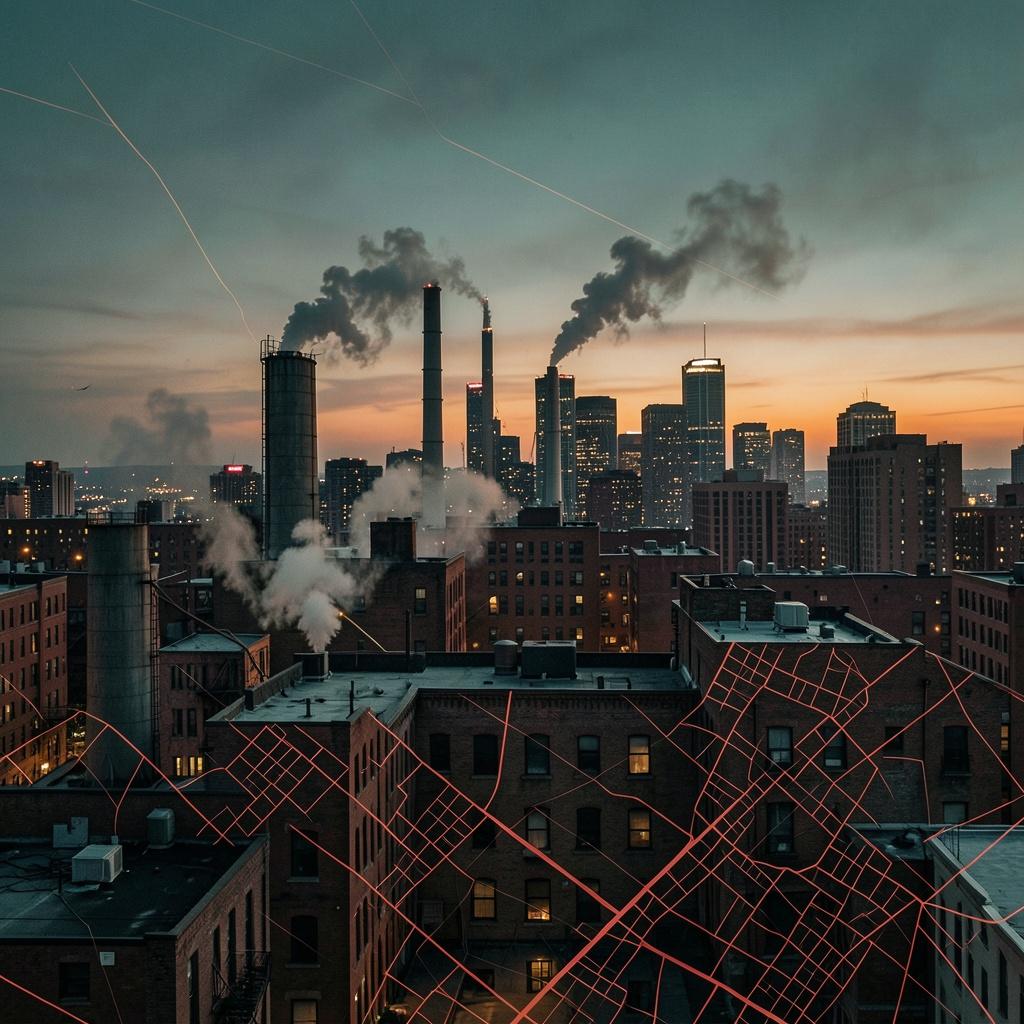

Chicago wasn’t built; it was imposed. The history of its neighborhoods is a brutal timeline of fire, industrial greed, ethnic warfare, and calculated segregation. If you're looking for a polite tale of a "melting pot," you’re in the wrong city. Chicago is a grid of silos, forged by people who fought—often literally—for every square inch of turf. ### The Ashes and the Swamp In 1871, the Great Fire did more than burn wood; it cleared the slate for the wealthy to dictate terms. While the downtown "Loop" rose as a monument to commerce, the surrounding neighborhoods were partitioned by class and odor. * **The Gold Coast:** Established by the Potter Palmers of the world to escape the "unwashed masses," it was an intentional fortress of Victorian wealth, physically separated from the grime of the city. * **The Stockyards (Back of the Yards):** On the South Side, the Union Stockyards became a bloody, chaotic ecosystem. Neighborhoods like Bridgeport and Canaryville weren't "communities" in the modern sense; they were industrial dormitories where Irish and Polish laborers lived in toxic squalor, breathing the literal scent of death from the rendering plants. ### The Great Migration and the Color Line The most ruthless chapter of Chicago’s geography is the "Black Belt." As Black Southerners moved north during the Great Migration for jobs, the city didn't welcome them—it hemmed them in. * **The Black Belt:** Confined to a narrow strip on the South Side (Bronzeville), Black residents faced artificial housing shortages. This wasn't accidental; it was enforced by **restrictive covenants**—legal contracts that forbade white homeowners from selling to Black buyers. * **The 1919 Race Riot:** When a Black teenager drifted into the "white" side of a segregated beach, he was stoned and drowned. The resulting week of violence saw white ethnic gangs from Bridgeport invading Black neighborhoods, cementing a boundary line that would define the city for a century. ### Redlining and the Death of the West Side After WWII, the federal government and local banks essentially drew a red line around Black and immigrant neighborhoods, marking them as "hazardous" for investment. * **Blockbusting:** Real estate speculators used fear as a weapon. They would move a single Black family into a white neighborhood, wait for "White Flight" to tank property values, buy the houses for pennies, and then resell them to Black families at predatory markups. * **The Dan Ryan Expressway:** Often called "The Wall," it wasn't just a road. It was strategically placed to serve as a physical barrier between the white South Side and the expanding Black neighborhoods, effectively using concrete to enforce Jim Crow in the North. ### Urban Renewal or "Negro Removal"? In the mid-20th century, the city leadership launched "Urban Renewal" projects. In reality, this was a bulldozer aimed at "blight"—which was often code for low-income Black or Latino communities. * **The UIC Campus:** The vibrant Italian and Greek neighborhoods of the Near West Side were razed to build the University of Illinois Chicago. Thousands were displaced to make room for brutalist concrete. * **Public Housing:** The city piled the displaced into massive high-rise projects like **Cabrini-Green** and the **Robert Taylor Homes**. These weren't meant to be permanent homes; they were warehouses for the poor, intentionally cut off from jobs and transit, surrounded by police and neglect. ### Gentrification: The New Displacement The modern history of Chicago is a story of "frontier" logic. As the Loop became a playground for the global elite, the inner-ring neighborhoods became the next battlegrounds. * **Wicker Park and Logan Square:** Once working-class Polish and Puerto Rican strongholds, they were rebranded. Artists moved in for the cheap rent, followed by developers, followed by $6 lattes. The original residents didn't "benefit" from the new amenities; they were taxed out or priced out. * **The West Side Paradox:** Today, neighborhoods like Austin or Garfield Park remain scarred by decades of disinvestment, while just a few miles east, the West Loop has transformed from a gritty meatpacking district into a luxury tech hub. ### The Bottom Line Chicago's neighborhoods are a masterclass in **spatial Darwinism**. The city’s famous motto, *Urbs in Horto* (City in a Garden), masks the reality: it is a city of invisible walls, where your zip code was often decided decades ago by a banker’s red pen or a politician’s bulldozer.
