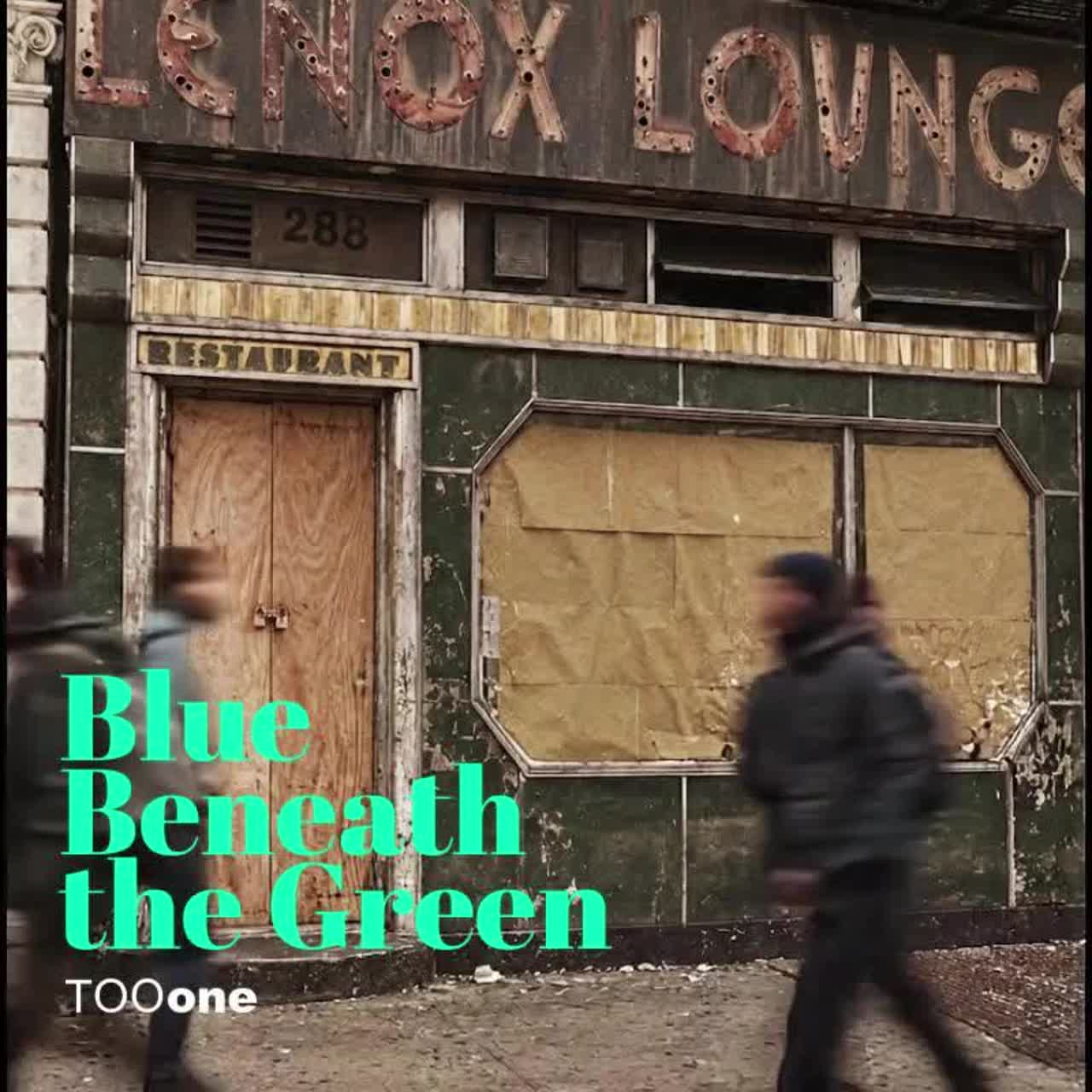

◎もう少しだけ詳しい記事はこちら⏬️ https://substack.com/home/post/p-219845146 ──────────────────── Blue Beneath the Green— コード進行からモードへの読み替え ──────────────────── 少々理屈っぽい曲解説です。興味のある方はお付き合いください。 もちろん、音楽だけでも楽しんでいただければうれしいです。 マイルス・デイヴィスのアルバム『Kind of Blue』に収録された「Blue in Green」を出発点に、特徴的な10小節構成とコード進行を参考にしてSunoに作曲を指示。 指定したKeyはDm、テンポは60 BPM。B♭maj7(#11)からA7(#9)、Dm9へ向かう流れを中心に、リディアンとミクソリディアンの色彩、半音進行、モード的な即興を組み合わせました。 当初はブルース・スケールも指定していましたが、ブルースのフィーリングが強く出すぎたため削除。ブルージーな音色やニュアンスは残しつつ、より抽象的で浮遊感のあるジャズを目指しました。 ところが、完成した曲のコードをMoisesやCubaseで解析すると、指定した進行はほとんど残っていません。テンポはMoisesの判定で128 BPM(半速換算64 BPM)。調性判定も一定せず、10小節構成も明確には再現されていない。 コード解析ではDmとE♭、CmとD♭など、半音関係にある和音が繰り返し現れる。一見すると複雑なコードチェンジが続く曲に思えます。 しかし、何度か聴き直してみると、印象は少し違ってきました。 ベースは比較的少ない音数と反復するフレーズによって、Dm系とCm系の二つのモーダルな領域を支えているように聴こえます。ドリアンを思わせるマイナーの響きを土台に、半音上の和音がフリジアン的、あるいはクロマティックな色彩を加えています。 その上でピアノは、テンションやボイシング、半音の動きを自由に展開し、ミュート・トランペットが即興的な旋律を重ねます。 つまり、Sunoは複雑なコード進行を一つひとつ再現するのではなく、少数のモーダルな和声領域を土台として、自由なジャズ・アンサンブルへと読み替えたのではないか。 もちろん、これは完成した音楽を聴いた上での私なりの解釈であり、Sunoが実際にどのような内部処理を行ったのかはわからない。 リズムも典型的なスウィングのハネは控えめで、ゆったりした拍の上に細かなリズムが重なる。ベースと打楽器が持続するグルーヴを作り、ピアノとトランペットが自由に動く。こうした役割分担には、『Kind of Blue』以降のモード・ジャズに通じる面白さがあります。 今回はピアノに不自然なシンセサイザー風のピッチベンドも目立たず、アコースティックな質感を保っている点も好ましいです。 指定したコード進行や小節構成には忠実ではないけれど、イメージしていた音楽にはかなり近い。 コード進行のコピーではなく、和声語法の翻訳。 複雑なコード指示からシンプルなモーダル構造を取り出し、その上で自由な即興を展開する。生成AIの作曲における「解釈の面白さ」を感じさせる一曲になりました。 ──────────────────── Blue Beneath the Green — From Chord Progressions to Modal Interpretation ──────────────────── This is a rather theory-heavy discussion of the track. If you're interested, I'd be happy to have you follow along. Of course, I'd be just as happy if you simply enjoyed the music. Starting with “Blue in Green” from Miles Davis's album *Kind of Blue*, I instructed Suno to compose a piece inspired by its distinctive ten-bar form and chord progression. I specified D minor as the key and 60 BPM as the tempo. The harmonic concept centered on a movement from B♭maj7(#11) through A7(#9) to Dm9, combining Lydian and Mixolydian colors, chromatic movement, and modal improvisation. Initially, I also included the blues scale in the instructions, but the result leaned too heavily toward a conventional blues feel, so I removed it. My aim was to retain bluesy tones and subtle inflections while moving toward a more abstract, floating kind of jazz. However, when I analyzed the finished track using Moises and Cubase, I found that very little of the specified chord progression had survived. Moises detected a tempo of 128 BPM (equivalent to 64 BPM at half-time). The key detection was inconsistent, and the ten-bar structure was not clearly reproduced either. The chord analysis repeatedly identified harmonies a semitone apart, such as Dm and E♭, or Cm and D♭. At first glance, the music seems to move through a series of complex chord changes. But after listening several more times, I began to hear it differently. The bass, with its relatively sparse notes and recurring phrases, seems to anchor two modal regions centered around Dm and Cm. Minor sonorities reminiscent of the Dorian mode provide the foundation, while chords a semitone above introduce Phrygian-like or chromatic colors. Over this foundation, the piano freely explores tensions, voicings, and chromatic movement, while the muted trumpet weaves improvisational melodic lines. In other words, rather than reproducing each of the complex chord changes individually, perhaps Suno reinterpreted the instructions as a freer jazz ensemble built around a small number of modal harmonic regions. Of course, this is simply my interpretation based on listening to the finished music. I have no way of knowing what kind of internal processing Suno actually performed. Rhythmically, the typical bounce of swing is also relatively restrained. Instead, intricate rhythmic figures overlap a relaxed underlying pulse. The bass and percussion establish a continuous groove, while the piano and trumpet move freely above it. This division of musical roles recalls some of the fascinating qualities of modal jazz that developed in the wake of *Kind of Blue*. Another welcome detail is that the piano largely avoids the unnatural, synthesizer-like pitch bends that sometimes appear in Suno's output. Its acoustic character remains remarkably intact. The result is far from faithful to the chord progression or bar structure I originally specified, yet it comes surprisingly close to the music I had imagined. **Not a copy of the chord progression, but a translation of its harmonic language.** By extracting a simpler modal structure from complex harmonic instructions and allowing free improvisation to unfold over it, the track offers an intriguing example of the interpretive possibilities of generative AI composition.
