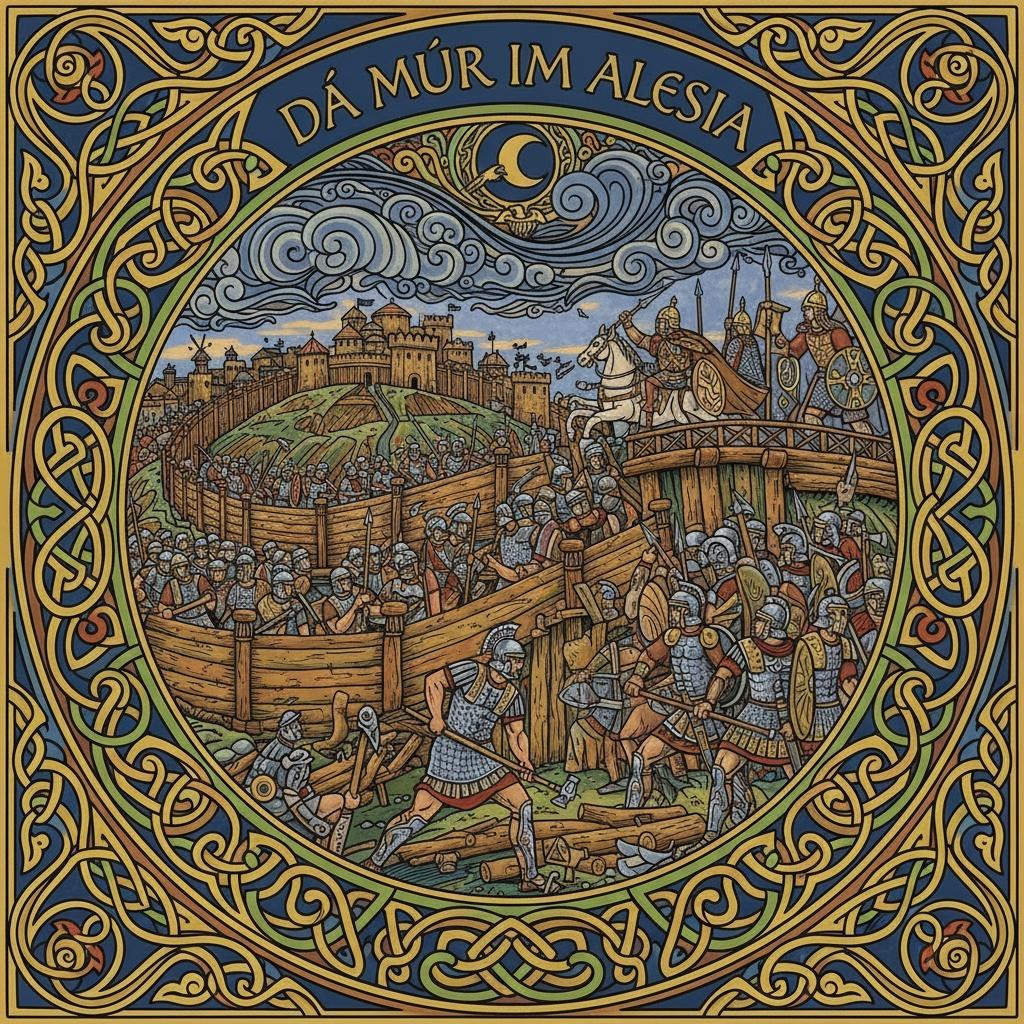
8. Dá Múr im Alesia (Ancient Celtic)
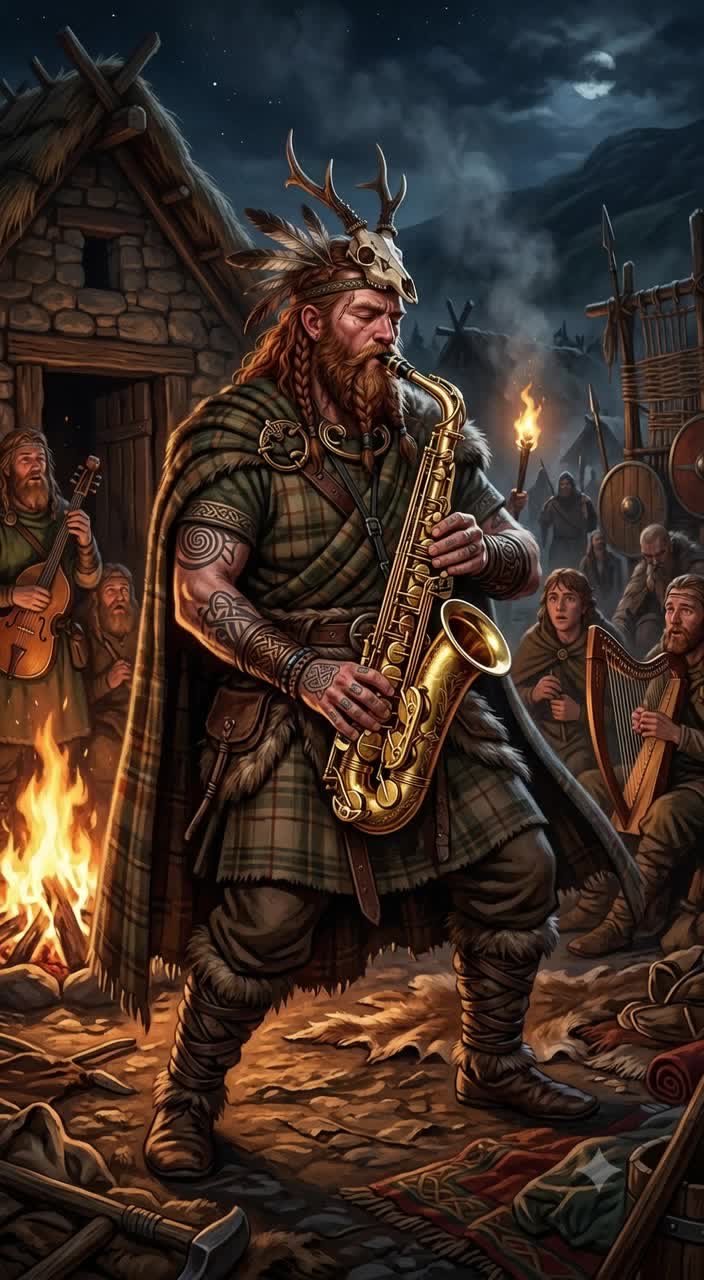
[Intro — the closing gate becomes the first hammer-blow] Dúnad in dorus. Tic in t-ilar re lá. Alesia ós na gleannta. Cloch ós cionn Róim. [Verse 1] Ar mullach ard in dúin atát slóig na nGall. Dá abainn fo chosaib, mag mór fri hucht. Caesar im cach cnoc, tene fri teine. Dúnán fri dúnán, faire co lá. [Pre-Chorus — hoofbeats cross the open plain] Rithit eich for mag. Freagraid eich Germánach. Brissid in marcshlóg. Cumang atá in dorus. Gairid fir ón múr. Teitid eich tríd cheó. Tócbai Vercingetorix lám: “Dúnad na doirse.” [Chorus 1] Múr im Alesia, iarn im in dún. In t-ilar féchain isteach, gorta oc teacht. Múr im Alesia, túr fri túr co lá. Ní gabid claideb in dún— gabid gorta é. [Verse 2] I dara faire osclaid dorus bec. Téit marcshlóg na Gall tríd bearna fon oích. “Co cach túath i gcéin, gairid fer fri arm. Trícha lá do bíd— tabraid in Gáil sund. Cuimnigid ár sairse. Cuimnigid ár móid. Ná fácaid ár guth i lámaib Róim.” [Pre-Chorus 2 — tools replace the frame drum] Claidid Róim trí clais, uisce i n-óen. Tócbait crann is cré, túr fri túr co lá. Blátha iarna fon fhér. Fiacla crainn fon talam. Féchaid in múr isteach— tócbait múr amach. [Chorus 2] Dá múr im Alesia, óen fri dún, óen fri Gáil. In t-ilar féchain isteach, in t-ilar féchain amach. Dá múr im Alesia, crann, cloch is iarn. Ní gabid claideb in dún— gabid gorta mall. [Bridge — close voice; the harp leaves long spaces] Cruinnigid cach grán. Rannid in búar. Cuit bec do cach fer. Fásaid gorta mall. Labraid in comairle: “Fosclaid in dorus. Fácaid fir cen arm. Mairfid lucht in chatha.” Téit Mandubii amach, mná, meic is senóir. Dúnad Alesia ina ndiaidh. Tost for múr na Gall. [Instrumental Break — solitary sax over distant digging and wind] [Verse 3 — the frame drum disappears] Ticid co múr Róim. Tuitid for glún. “Gabid sinn mar daor. Tabraid dúinn biad. Gabid ár lám. Gabid ár n-ainm. Tabraid blúire aráin do béal ár mac.” Ní osclaid Caesar dorus. Ní tuitid arán. Idir dorus is múr suidid fon spéir. Lám máthar folamh. Béal meic cen guth. Féchaid dá shlóg orra. Ní labair nech. [Final Chorus — communal voices enter one by one] Dá múr im Alesia, óen fri dún, óen fri Gáil. In t-ilar féchain isteach, in t-ilar féchain amach. Dá múr im Alesia, crann, cloch is iarn. Ní gabid claideb in dún— gabid gorta mall. Slóg cen arm i lár, idir dorus is múr. Alesia ós a gcionn. Róim ina n-aghaid. Tar cnocaib i gcéin éirgid guth na Gall. Ní chluin in dún fós— acht crithid in oích. Dá múr im Alesia Dá múr im Alesia (óen fri Gáil) Óen corn i gcéin. Alesia oc feitheamh. [Outro — the distant horn remains unresolved] Gorta fon chnoc. Faire for cach múr. Óen corn i gcéin. Alesia oc feitheamh. ———————— English Translation ———————— TWO WALLS AROUND ALESIA [Intro — the closing gate becomes the first hammer-blow] The gate is closed. The eagle comes with daylight. Alesia rises above the valleys. Stone stands above Rome. [Verse 1] Upon the fortress’s high summit the hosts of Gaul are gathered. Two rivers run beneath their feet, a broad plain lies before them. Caesar surrounds every hill, fire facing fire. Fort beside fort, watch maintained until dawn. [Pre-Chorus — hoofbeats cross the open plain] Horsemen race across the plain. The Germanic horsemen answer. The Gallic cavalry breaks. The gateway grows narrow. Men cry out from the wall. Horses flee through the mist. Vercingetorix raises his hand: “Close the gates.” [Chorus 1] A wall around Alesia, iron around the fortress. The eagle looks inward; hunger is approaching. A wall around Alesia, tower beside tower until dawn. The sword will not take the fortress— hunger will. [Verse 2] During the second watch, a small gate opens. The horsemen of Gaul ride through a gap beneath the night. “Go to every distant tribe. Call every man to arms. Thirty days of grain remain— bring Gaul to us. Remember our freedom. Remember our oath. Do not leave our voice in the hands of Rome.” [Pre-Chorus 2 — tools replace the frame drum] Rome digs three trenches, water filling one. They raise timber and earth, tower beside tower until dawn. Iron flowers beneath the grass. Wooden teeth beneath the ground. The first wall looks inward— another is raised facing out. [Chorus 2] Two walls around Alesia, one facing the fortress, one facing Gaul. The eagle looks inward; the eagle looks outward. Two walls around Alesia, timber, stone and iron. The sword will not take the fortress— hunger slowly will. [Bridge — close voice; the harp leaves long spaces] Every grain is gathered. The cattle are divided. A small portion for every man. Hunger slowly grows. The council speaks: “Open the gate. Send out those without weapons. Let the warriors endure.” The Mandubii leave, women, children and old men. Alesia closes behind them. Silence covers the Gallic wall. [Instrumental Break — solitary sax over distant digging and wind] [Verse 3 — the frame drum disappears] They come to the Roman rampart. They fall upon their knees. “Take us as slaves. Give us food. Take our hands. Take our names. Give a piece of bread to the mouths of our children.” Caesar does not open the gate. No bread falls. Between the fortress gate and the rampart they sit beneath the sky. A mother’s hand is empty. Her child’s mouth has no voice. Two armies watch them. No one speaks. [Final Chorus — communal voices enter one by one] Two walls around Alesia, one facing the fortress, one facing Gaul. The eagle looks inward; the eagle looks outward. Two walls around Alesia, timber, stone and iron. The sword will not take the fortress— hunger slowly will. An unarmed people in the middle, between the gate and the rampart. Alesia stands above them. Rome stands before them. Beyond the distant hills, the voice of Gaul is rising. The fortress cannot hear it yet— but the night begins to tremble. Two walls around Alesia Two walls around Alesia (one facing Gaul) A single horn in the distance. Alesia waits. [Outro — the distant horn remains unresolved] Hunger beneath the hill. A watch upon every wall. A single horn in the distance. Alesia waits.
