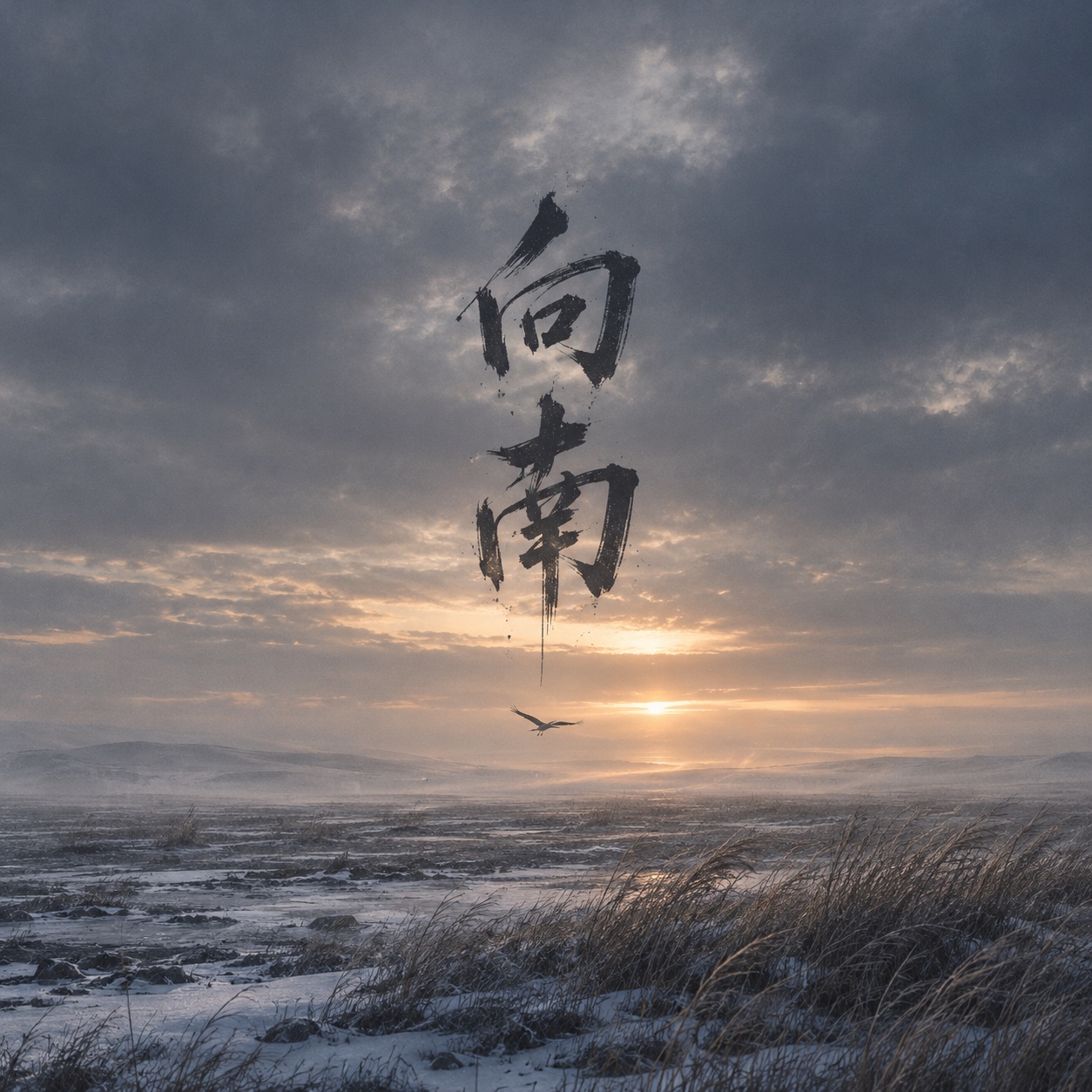

[Verse 1] 风穿过骨缝 大地在脚下折叠 万里长空 只剩一次告别 [Chorus] 向南,再向南! 归途无尽头! 羽翼已沉重—— 终点在远方! [Verse 2] 冰层在崩裂 候鸟无声飞掠 记忆里那片林海 是否还在等待 [Chorus] 向南,再向南! 归途无尽头! 羽翼已沉重—— 终点在远方! 关于这首歌 这首歌,源自一次草原旅途中写下的短诗。 站在那片辽阔的土地上,我第一次意识到,辽阔并不总意味着自由。有时候,它反而会让人更加清晰地感受到自己的渺小。 风穿过骨缝,大地仿佛在脚下折叠,抬头望去,万里长空,只剩下一次漫长而无声的告别。 后来,我把这种感受写成了一只候鸟的迁徙。 这首歌尝试做一件事:让尺八与人声,一起成为风。 尺八不再是背景点缀,而是整首作品的灵魂。气声、过吹与微分音,让它不只是演奏旋律,更像是在模仿风的呼吸与呜咽。 人声也不再只是传统意义上的演唱。主歌克制、冷峻,几乎不带抒情;进入副歌后,声音被推向极限,逐渐融入厚重的音墙,成为声浪的一部分。 整首歌是一条不断变化的情绪曲线:极静、爆发、坍缩、更深的静、绝对峰值,最后戛然而止。我想尝试的,是让苍凉一步步走向绝望,同时保持它完整的呼吸与力量。 我知道这种尝试有风险。 人声器乐化,可能会让它听起来不像一首传统歌曲;东方尺八与后摇滚式音墙的结合,也未必符合所有人的审美。但实验的意义,恰恰在于那些尚未确定的可能性。 还有一点,我特别希望你们能够感受到:即使你听不懂歌词,甚至完全不熟悉这门语言,也没有关系。 语言只是其中的一层表达。真正想传递的,是声音本身的力量——风的凛冽、迁徙的沉重、天地之间的荒凉,以及一双羽翼在漫长归途中几乎耗尽力量的挣扎。 有些情绪不需要翻译。即使听不懂,也能感受到。 结尾没有释然,没有抵达后的喜悦,只有风,以及一口仿佛即将断掉的气。 当然,这就是海风的另一面。 如果听完之后,你也曾有那么一瞬间,觉得自己正独自站在一片无边无际的天地之间,那么,这首歌就已经抵达了它应该去的地方。 ### この曲について この曲は、草原を旅したときに書いた短い詩から生まれました。 あの広大な大地に立ったとき、私は初めて気づきました。 広大さは、必ずしも自由を意味するわけではない。 ときには、その果てしなさが、自分という存在の小ささを、かえって鮮明に感じさせるのです。 風は骨の隙間を吹き抜け、大地は足元で折り重なる。 見上げれば、どこまでも続く空。 そこに残されているのは、ただ一度きりの、長い別れ。 やがて私は、その感覚を一羽の渡り鳥の旅に重ねました。 この曲で試みたかったこと。 それは、**尺八と人の声を、ともに「風」にすること。** - **尺八は単なる伴奏ではなく、この曲の中心です。** 息の音、オーバーブロー、微分音を通して、旋律を奏でるだけでなく、風そのものの呼吸やうめきのような音を表現しています。 - **人の声も、単なる歌声としては扱っていません。** Aメロでは感情を抑え、冷たく、淡々と。サビでは限界まで押し上げられ、重厚なサウンドの壁に溶け込み、波の一部になっていきます。 - **曲全体は、ひとつの感情の軌跡です。** 極限の静寂、爆発、崩壊、さらに深い静寂、そして絶対的な頂点。最後は突然、音が途切れます。荒涼とした感覚が絶望へと変わっていく過程を、ひとつの完全な呼吸として描けるか。それが今回の挑戦でした。 もちろん、こうした試みにはリスクもあります。 声を楽器のように扱うことで、普通の歌とは違って聴こえるかもしれません。東洋の尺八とポストロック的な重厚な音の壁との融合も、すべての人に受け入れられるとは限りません。 でも、実験する意味は、まだ成功するかどうかわからない可能性にこそあると思っています。 そして、ひとつ伝えたいことがあります。 **歌詞の意味がわからなくても、この曲を十分に感じることができます。言葉がわからなくても、どうかそのまま聴いてみてください。** 言語は表現のひとつにすぎません。 本当に届けたいのは、音そのものが持つ力です。 風の鋭さ、渡り続けることの重さ、果てしない大地の荒涼、そして長い帰路の果てに、力尽きそうになりながらも羽ばたき続ける姿。 感情のすべてに、翻訳が必要なわけではありません。 言葉がわからなくても、伝わるものがある。 結末に安らぎはありません。 ただ風と、今にも途切れそうなひとつの息だけが残ります。 これもまた、海風詩人のもうひとつの顔です。 聴き終えたあと、もしあなたがほんの一瞬でも、果てしなく広い世界の中に、たったひとりで立っているような感覚を覚えたなら、この曲はきっと、あるべき場所にたどり着いたのだと思います。 ### About This Song This song was born from a short poem I wrote during a journey across the grasslands. Standing in that vast landscape, I realized something: vastness does not always mean freedom. Sometimes, it makes you feel even more acutely aware of how small you really are. The wind cuts through the bones. The earth seems to fold beneath your feet. Above you, an endless sky stretches into the distance, leaving nothing but one final, wordless farewell. Later, I transformed that feeling into the migration of a lone bird. This song explores one central idea: **turning both the shakuhachi and the human voice into the wind itself.** - **The shakuhachi is not a decorative element. It is the soul of this composition.** Breath tones, overblowing, and microtonal inflections allow it to move beyond melody, becoming something closer to the breathing and lament of the wind. - **The human voice is treated as an instrument, rather than simply a means of singing.** The verses remain restrained, cold, and emotionally detached. As the chorus arrives, the voice is pushed to its limits, gradually disappearing into a massive wall of sound, becoming part of the sonic storm itself. - **The entire composition follows a carefully shaped emotional trajectory:** absolute stillness, eruption, collapse, an even deeper silence, an overwhelming climax, and finally, an abrupt ending. My intention was to guide the music from desolation toward despair, while preserving the feeling of one continuous, living breath. I understand that this approach carries risks. Treating the human voice as an instrument may make the song feel less like a conventional song. And combining an Eastern traditional instrument with the overwhelming walls of post-rock may not appeal to every listener. But to me, that uncertainty is precisely where the value of experimentation lies. **There is one thing I especially hope listeners will take away: you don't need to understand the lyrics to feel this song. You don't even need to understand the language.** Language is only one layer of expression. What I truly want to convey is the raw power of sound itself: the harshness of the wind, the weight of migration, the desolation of an endless landscape, and the struggle of wings that are nearly exhausted after an immeasurably long journey home. Some emotions need no translation. Even when you don't understand a single word, you can still feel their weight. There is no resolution at the end. No relief, no joy of arrival. Only the wind, and a final breath that seems almost ready to disappear. And of course, this is the other side of Seair. If, after listening, you find yourself feeling—even for just a moment—as though you are standing alone in an immense and boundless world, then this song has arrived exactly where it was meant to be.
