The Dialogue of Earth: Memories of the Red Soil

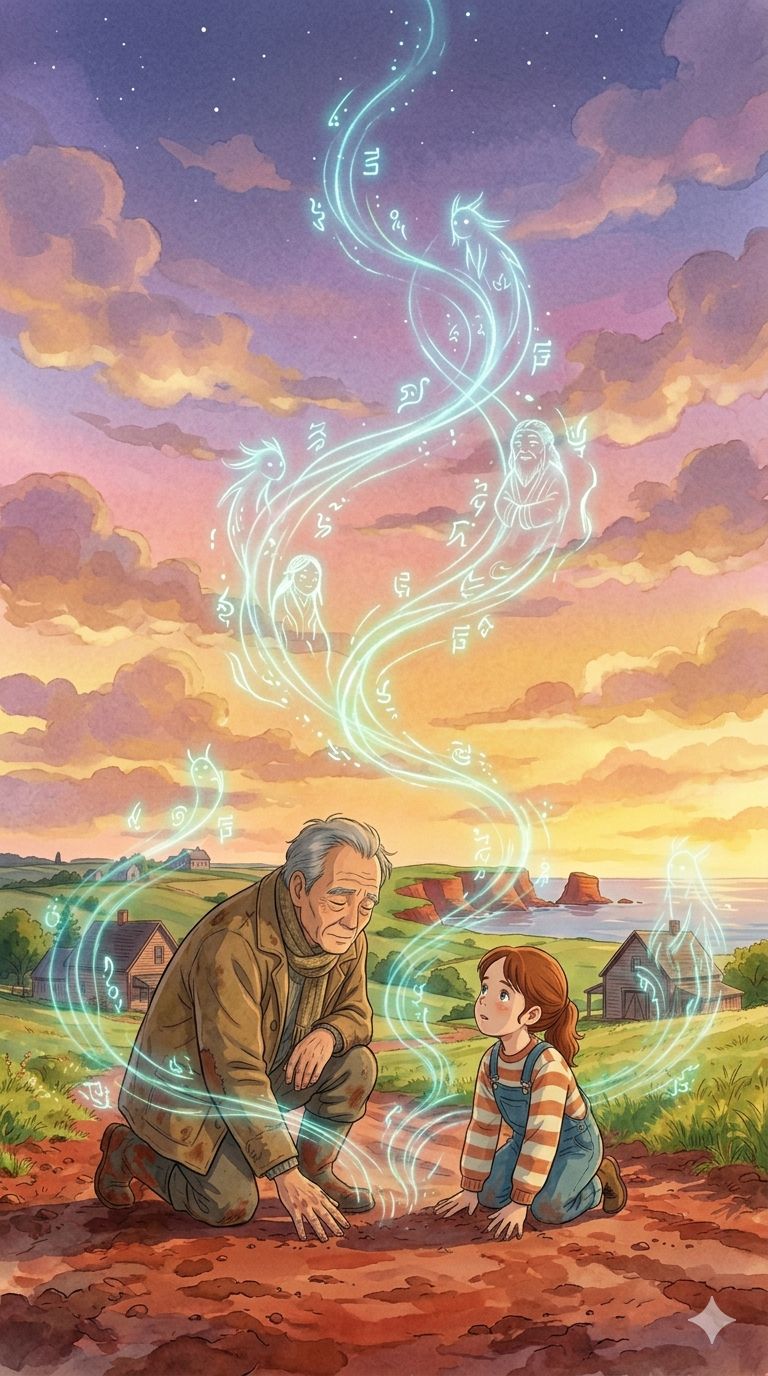
"Listen closely. Have you ever pitched a tent here and spent a single night upon this ground? In the silence of the night, can you not feel the earth beneath your back occasionally throb, like a heartbeat? That is the pulse of the spirits' uncontainable fury, suppressed deep below the surface. Look at my country, Hokkaido. There is a place called Sounkyo—the Ainu called it Pani-ke-ni-i ('The Place Where Driftwood Lies'), and they held a profound awe for the gods dwelling within its sheer cliffs. Or Lake Mashu—the Ainu called it Kintan-Kamuy-To ('The Lake of the Mountain God'), a sanctuary where humans dared not step lightly. To have a name is to have a 'personality.' If you were suddenly told tomorrow to throw away your name and were called 'Room 102' from now on, wouldn't your soul be torn apart? The same thing happened on this island. Names cherished for thousands of years by the Mi'kmaq people—given to every single tree and every single rock—were trampled upon and inked over by the settlers. They called the base of the cliffs 'Cavendish' instead of Kasuquek ('The White Cliffs'), simply to please some noble in their homeland. They imposed Western names smelling of gunpowder upon the forests, instead of calling them Piktuk ('The Place Where Gas Rises'). The difference was absolute: those who saw nature as 'equal gods' versus those who saw it as 'commodities to be sold.' That very difference makes this red soil burn with anger. Even now, beneath the feet of laughing tourists, the spirits are clawing and screaming: 'That is not my name!' Just as the Ainu ancestors fought with their lives to protect their rivers and forests, the spirits of this island are now attempting to let their fury explode through my song. You see, little girl... the redness of this soil is not merely the color of iron. It is the color of the blood of spirits who were robbed of their names and forced into silence. ...Forgive me. I became a bit too passionate. But you see, my dear, what truly saddens me is the side that took it all away. Your ancestors crossed the sea to reach this island. They, too, were people whose lifeblood was sucked dry by vampire-like landlords in their homelands; they were driven onto ships, not knowing if they would survive until tomorrow. I often wonder... didn't they want to talk to the spirits of this red earth? Didn't they want to feel awe and respect for these deep forests and the wild sea? Perhaps their hearts were frozen by the agony of survival. They had no room to see a tree as a 'brother dwelling with spirits'; they could only see it as 'firewood to survive the winter.' Instead of revering the sea as 'the grace of God,' they could only see it as a 'hunting ground to stave off hunger.' When I traveled through Hokkaido in my own country, I felt the earth speaking to me in the stillness of the night. But perhaps that was only because I was a 'traveler,' a free soul. If I were so desperate that I had nothing to eat tomorrow, I, too, might have ignored the voices of the spirits and wounded the earth. Were your ancestors so cornered that they forgot how to respect nature? Or had they been exploited for so long that even the sense of 'being kept alive by the world' was sucked out of them by those vampires? When humans lost the ability to converse with spirits, perhaps it was the humans who felt the loneliest of all. Maybe they rewrote the names just to drown out the anxiety of being 'strangers' on this island. Look at that vast sky. Can you not begin the dialogue that your ancestors forgot? By listening to this red soil and gently asking: 'What is your true name?'" (The Scene Description) On the red dirt road at dusk, an elderly Asian man kneels, his boots stained with mud. Beside him, a young girl with red hair kneels just as he does, and together they press their palms against the red earth to feel its texture. From the soil where their hands meet, a faint, pulsing spiritual energy rises in a spiral—quiet yet powerful—flowing from their palms into their bodies. The old man closes his eyes, his expression peaceful and compassionate as he listens to the voice of the earth. The girl looks on with innocent eyes, filled with a touch of surprise and awe at the heartbeat of the spirits she feels beneath her hand. The old man’s mud-stained boots, the girl’s small hand, and the pulse of the spirits flowing between them... this scene tells a silent yet powerful story: that the journey to reclaim the stolen names has begun, right here, through this "dialogue with the earth."
