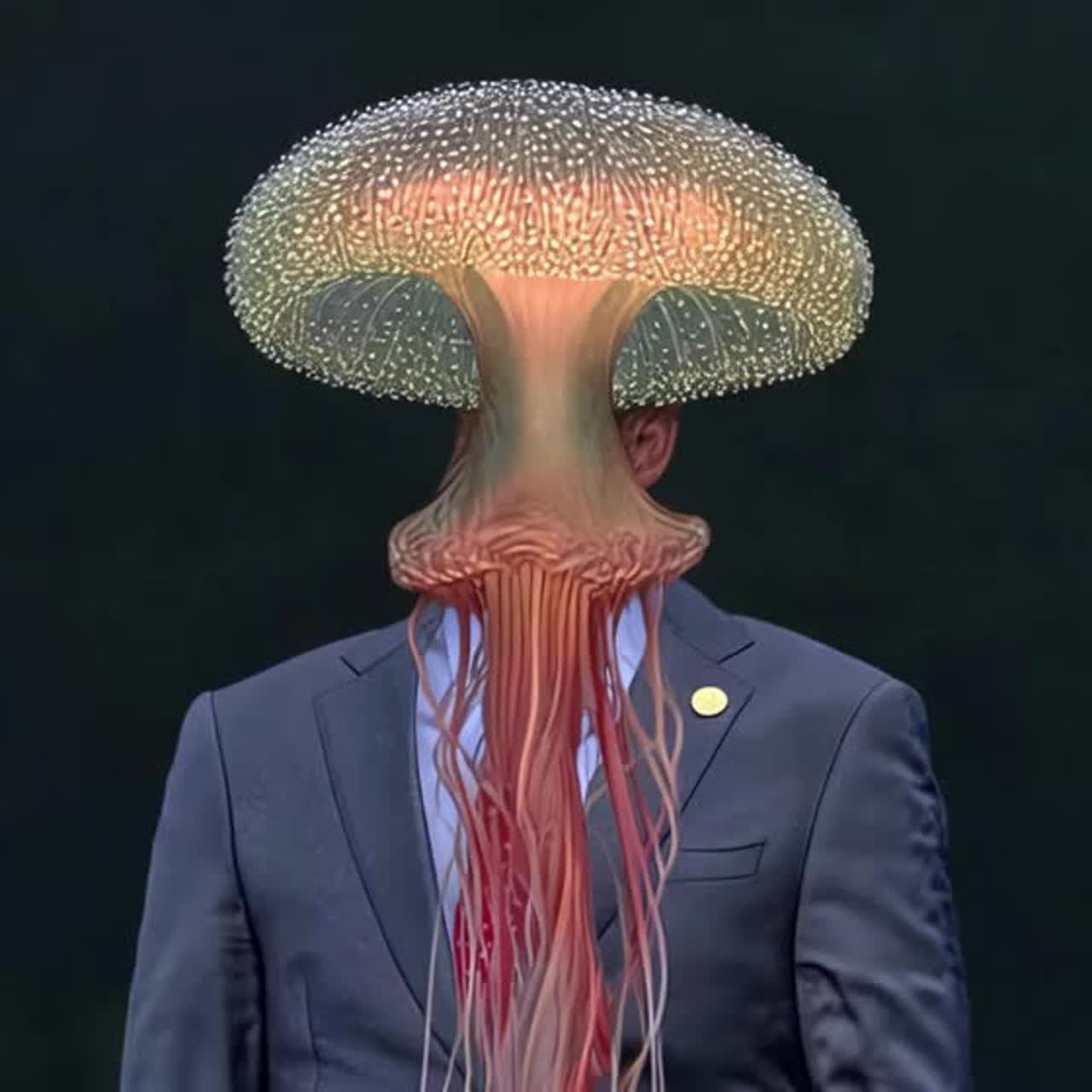

# RADIO APOCALYPSE ## WHO GETS YOUR SUNO WHEN YOU CROAK? *[Late-night radio static. A lonely piano note. Somewhere, a hard drive hums.]* **LUCID:** Here's a question nobody puts on the bucket list. Who gets your Suno account when you croak? Not your house. Not your jewelry. Not the good china nobody ever used. I'm talking about the strange little kingdom you built inside a machine. Ten thousand songs. Lyrics. Experiments. Voices that never belonged to anybody. Songs about presidents and mushrooms and consciousness and dogs reporting from NATO. Songs written at two in the morning because something arrived and said: **MAKE ME.** Then one morning— you don't log in. The computer waits. Your subscription renews. Your songs remain perfectly arranged on the screen. And you are nowhere to be found. So... **WHO GETS THE JUKEBOX?** --- For thousands of years this wasn't much of a problem. The painter died. There were paintings. The writer died. There were manuscripts. The composer died. There was a piano with sheets of music sitting on top. Physical things entered the estate. Somebody opened the drawer. There was Beethoven. But now creativity increasingly lives behind passwords. Your archive may not be in the attic. It may be sitting on somebody else's server. And suddenly death has a customer-service department. *"We're sorry to hear of your loss. Please select from the following menu..."* Press one if the deceased forgot their password. Press two if the deceased has become nonphysical. Press three if the deceased would like to upgrade to Premier. *[CLICK.]* --- But Lucid would say: You're asking the wrong question. The question isn't: **Who gets the account?** The question is: **What did you put into the world while you were here?** Because an account is merely a doorway. A password is merely a key. A server is merely a shelf. The creative act happened somewhere else. It happened when consciousness encountered possibility and said: **THAT ONE.** Bring that one through. --- And artificial intelligence makes this even stranger. Because now your archive can contain things you could never have physically performed. You didn't play that trumpet. You didn't sing that harmony. You didn't hire the gospel choir. You didn't learn the accordion at age eighty. You imagined. You directed. You selected. You rejected. You changed one word. You changed the tempo. You said: "No. Too pretty." Again. "No. Dirtier." Again. "Give me a tuba." Again. "Now make the tuba sound like the apocalypse." And eventually— there it was. That is a peculiar new kind of creative artifact. Not exactly performance. Not exactly composition in the old sense. More like... **probability gardening.** Thousands of possibilities appear. You keep saying: No. No. No. YES. And the collection of your yeses becomes recognizable. It begins sounding like **you.** --- Which means that someday families are going to inherit very strange things. Grandma's photographs. Grandpa's watch. Mom's recipes. Dad's letters. And Aunt Sharon's ten thousand AI songs. *"What are we supposed to do with these?"* Listen. Because somewhere inside that ridiculous mountain of music is a map of a consciousness. What made her laugh. What frightened her. What fascinated her. What she noticed while everybody else was looking somewhere else. That's what an archive really is. Not proof that somebody existed. **Evidence of what they paid attention to.** --- And here's where it gets interesting. Maybe the greatest inheritance won't be the songs themselves. Maybe it will be the **pattern of choosing.** Imagine somebody fifty years from now discovering the archive. They don't know you. They search: CONSCIOUSNESS. DOG. TRUMP. MUSHROOM. LAS VEGAS. DEATH. LOVE. And suddenly this bizarre radio station begins broadcasting again. Not because you survived inside the computer. Not because the machine contains your soul. But because choices leave patterns. And patterns can be encountered again. A consciousness once stood here and said: **THIS INTERESTS ME.** That's a remarkably intimate message to send into the future. --- So prepare the archive. Don't assume the platform is the archive. Platforms change. Companies disappear. Terms change. Passwords vanish. Download what matters. Preserve the lyrics. Preserve the titles. Preserve the strange ones. Especially the strange ones. Leave instructions. Tell somebody: **This isn't a pile of computer files.** This is where I played. This is where I experimented. This is where I argued with reality. This is where I laughed at it. This is where I occasionally understood something. This is Radio Apocalypse.
