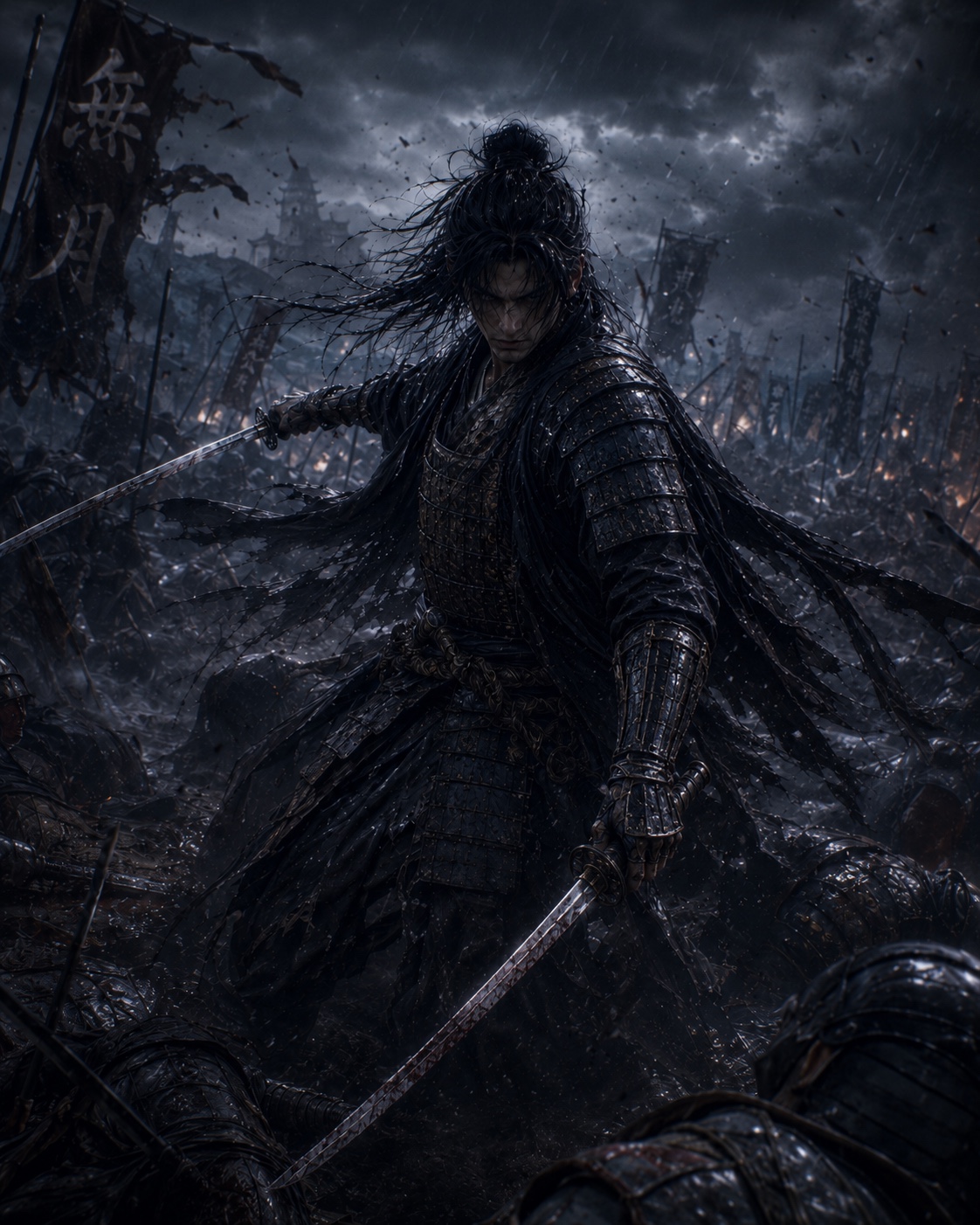
【INSTRUMENTAL】 【MUSIC ONLY】 【ORCHESTRAL SCORE ONLY】 【ALL MELODIES PLAYED BY INSTRUMENTS】 【NO VOCALS】 【NO HUMAN VOICE】 【NO SINGING】 【NO CHOIR】 【NO HUMMING】 【NO SPOKEN WORDS】 【Title: 黒雲の陣】 【Cover direction】 【Use the current 29-second-cover full track as the base】 【Preserve the existing main melody】 【Do not replace the main melody】 【Do not create a new final melody】 【Keep the electric guitar main theme】 【Keep the same structure and tempo feel】 【Only strengthen thickness, impact, and final peak】 【Core】 【Sengoku battlefield action score】 【Full orchestra with dark electric guitar】 【Low shakuhachi breath and focus】 【Heavy Japanese war drums】 【Biwa blade accents】 【Mugetsu swordsmanship culmination】 【Fast, sharp, precise, intimidating】 【Speed, pressure, precision】 【No bright flute】 【No koto intro】 【No RPG feeling】 【No heroic victory fanfare】 【Main correction】 【Make the whole track fuller and thicker】 【Orchestra must be more present】 【Japanese war drums must join with stronger weight】 【Low strings must be deeper】 【Horns must be broader】 【Low brass must add battlefield weight】 【Do not make the track muddy】 【Do not slow the tempo】 【Do not weaken the guitar melody】 【Biwa correction】 【Use biwa instead of koto for plucked force】 【Biwa should add sharp rough blade accents】 【Biwa may strum with tense battlefield energy】 【No cute koto feeling】 【No bright plucked patterns】 【Biwa supports the blade and pressure】 【Opening】 【Keep the current opening shape】 【Add more low orchestra thickness underneath】 【Heavy odaiko and timpani support the battlefield】 【Low brass and low strings create darker pressure】 【Move quickly to the main guitar melody】 【Main Guitar Theme】 【Preserve the existing electric guitar melody】 【Electric guitar remains clear and central】 【Orchestra supports and lifts the melody】 【Horns answer strongly】 【Full strings add width and force】 【Odaiko gives heavy forward pulse】 【Low shakuhachi gives short breath fragments】 【Biwa gives sharp blade accents between phrases】 【Battle Expansion】 【Increase orchestral body】 【Fast strings support twin-sword motion】 【Dark guitar accents cut through the orchestra】 【Biwa strums and strikes with rough blade clarity】 【Japanese drums鼓舞 the battlefield】 【Low strings and low brass keep pressure heavy】 【No repeated empty loops】 【Each phrase must grow】 【Final Build】 【Prepare the final main theme with stronger orchestra】 【Odaiko and timpani grow heavier】 【Low brass adds battlefield scale】 【Horns widen the horizon】 【Full strings rise with more force】 【Biwa adds tense blade flashes】 【Do not introduce a new melody】 【Final Main Theme】 【Final reprise uses the exact same main melody】 【This final main theme must be thick and powerful】 【Electric guitar and full orchestra carry the melody together】 【Do not let the final guitar and orchestra sound thin】 【Horns, full strings, low brass, odaiko, timpani, biwa, and guitar all support the peak】 【The melody must be long enough to feel complete】 【Use the main melody fully】 【Do not rush the final statement】 【Instrumental kachidoki feeling】 【No human voice】 【No shouting】 【No choir】 【Sharp, proud, controlled】 【Ending】 【End after the thick final main theme】 【Dark guitar final cut】 【Final odaiko hit】 【Low shakuhachi breath】 【Short sharp ending】 【End with Mugetsu standing】

0/500