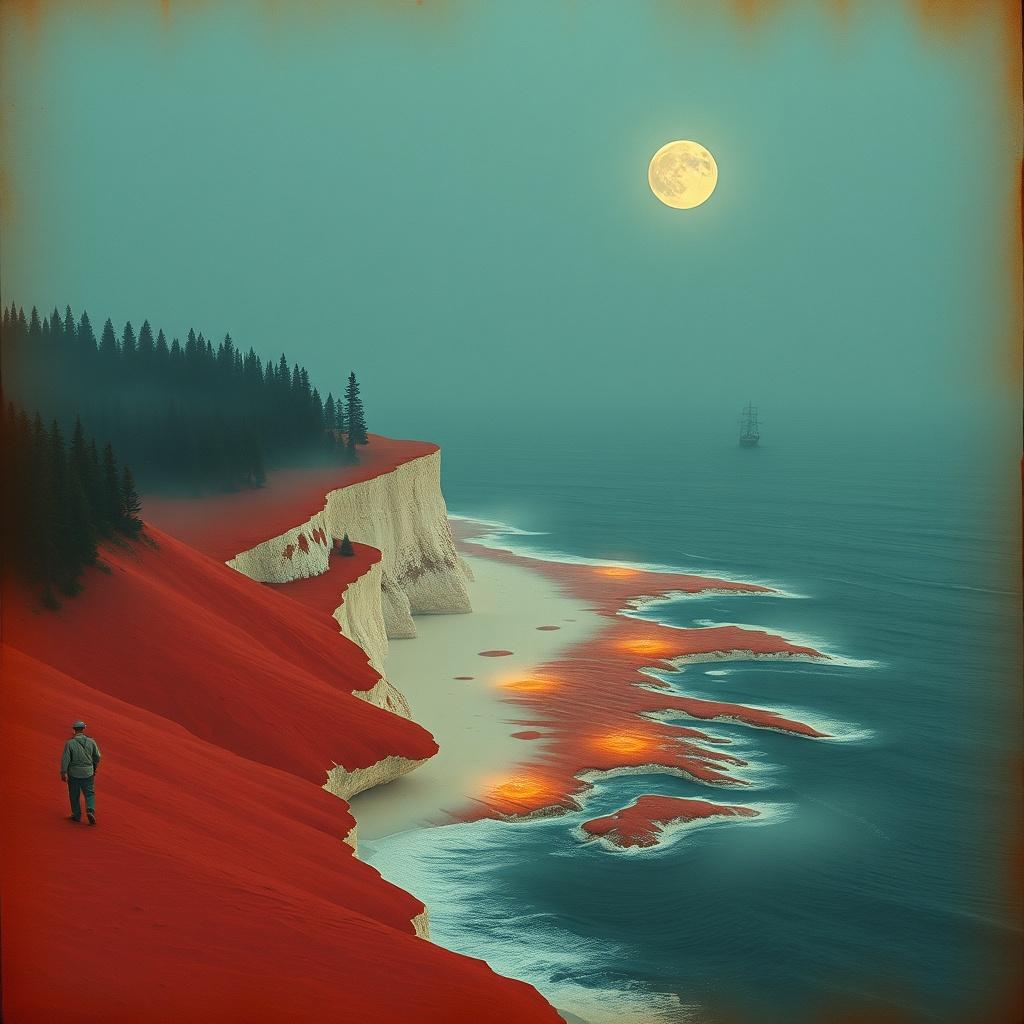
The Spirits’ Map: Lost Names of Epekwitk

[Intro: Calm Wind, Distant Mukkuri vibration, Subtle Hand Drum pulse] [Verse 1: Monotone Spoken Word, No Singing] "Listen closely. This was long before the Great Ships crossed the ocean, and before the iron axe was ever known. In those days, this island was called 'Epekwitk'—a place floating softly upon the waves, like a cradle. The Mi'kmaq people who lived here never once thought of themselves as 'owners' of the land. To them, the island was a giant, living being that held their lives in its hands. When the sun rose from the morning mist, they first offered their gratitude to the sea: 'Thank you for sharing the fish that sustain our lives today.' They took only what they needed. They knew that if they grew greedy and stole from the future, the spirits would grieve, and the island would stop breathing." [Verse 2: Monotone Spoken Word] "In the summer, they pitched their tents by the shore, breathing in the salt breeze. As winter approached and the forests turned red, they moved deep into the inland groves. There, the giant trees shielded them from the biting north wind. Even when they cut a tree, they always spoke to it first: 'Will you share your life to keep our fires burning through the winter?' In their lives, there were no 'locks' or 'walls' like the ones you have now. The whole island was their home. The animals of the woods and the birds of the sky were all brothers, sharing the same spirit." [Verse 3: Monotone Spoken Word] "At night, gathered around the fire, the elders would sing. Their voices, like the vibrating sound of the Ainu mukkuri, traveled on the wind to every corner of the forest. Children fell asleep feeling the warmth of the earth, listening to those songs. There was no conflict, no thought of deceiving others for wealth. Only the seasons turned, and life flowed in a circle. That quiet—so very quiet—happiness had continued upon this red earth for thousands of years. ...But then, one day, from beyond the horizon, a ship appeared with great white wings, unlike anything they had ever seen. That was the beginning of it all." [Bridge: Deep Drum Heartbeat, Atmospheric Flute, No Vocals] [Verse 4: Calm Spoken Word, Narrative Tone] "Listen. The very place where you walk now with the tourists once had an entirely different name. Look at my country, Hokkaido. Even now, names like 'Kamui-etu' or 'Onnetoh' remain—carved into the land like the claw marks of memory. They are 'keys of memory' that tell us which spirits dwelled there and what life resided within. But what about this island? The places you call 'Cavendish' or 'Charlottetown'... those are merely 'labels' pasted on by those who came later, using the names of their kings and nobles. They tried to uproot the original names, believing that by stealing the language, they could conquer the soul of the land." [Verse 5: Calm Spoken Word] "For instance, the place you call 'Cavendish'. To the Mi'kmaq, it was Kasuquek—'The Place of White Cliffs.' If you go north to 'Greenwich', it was Sitmu’k—'The Place where the Dunes Bend.' Even the 'North Shore' was a sacred place where spirits dyed the earth with red pigment. Just as the Ainu of Hokkaido revered everything as Kamuy and saw the divine ferocity in Cape Kamui, the Mi'kmaq gave a name and paid respect to every corner of this island. They didn't 'develop' the land. They simply lived as guests in a garden prepared by the spirits." [Verse 6: Slow, Reflective Spoken Word] "...But when the ships bearing the King's name arrived, they landed with surveyors and maps—to tell a lie that this was an 'empty, wilderness.' In truth, it was a land already filled with rich, beautiful stories, woven with the names of spirits..." [Outro: Fade out Drum, Only Wind Remains] [Final Message: Gentle Whisper] "What is your true name?" [End] [Stop]
