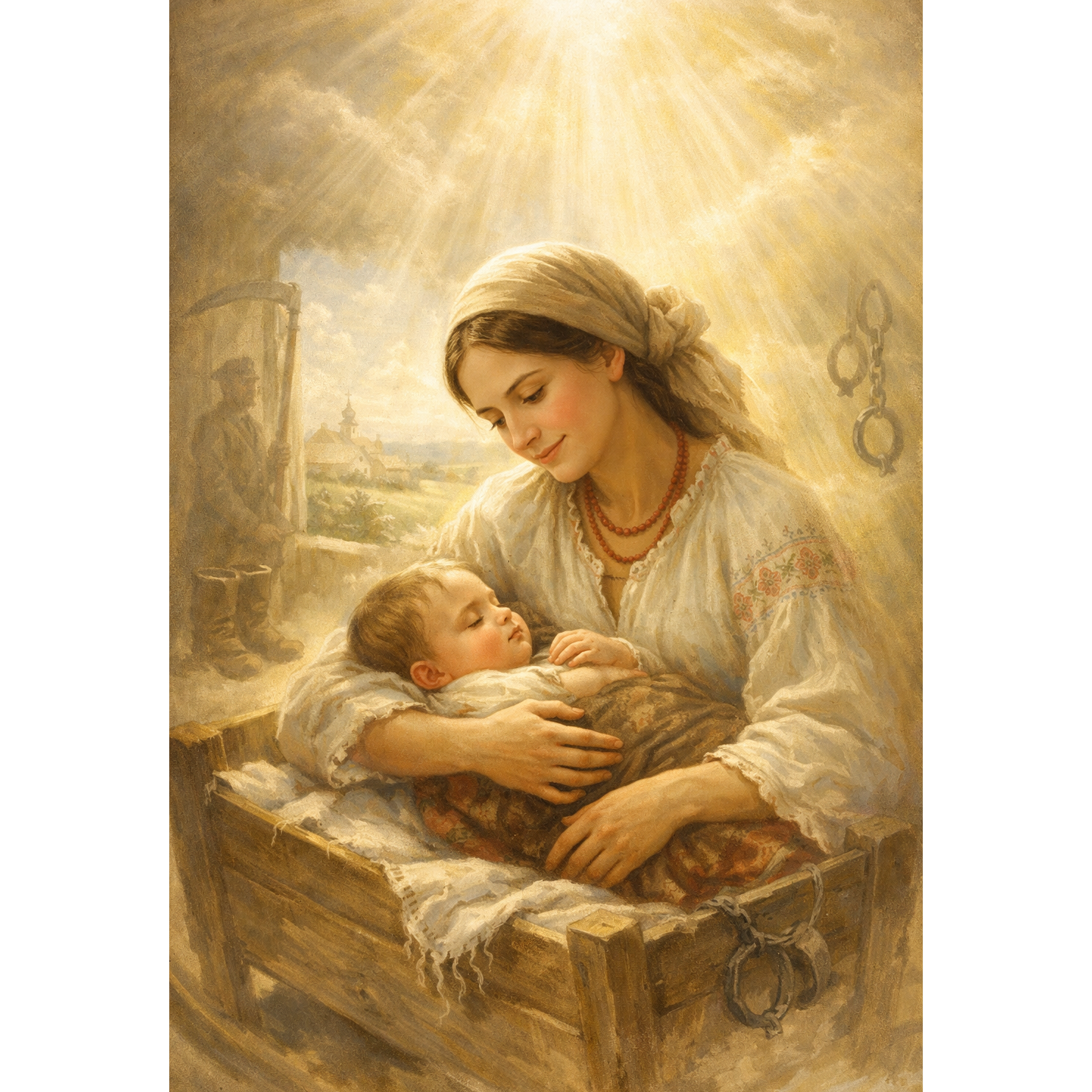

У середині ХІХ століття в Україні життя більшості людей було важким і безправним, тому такі пісні з’являлись: -Панщина і кріпацтво: селяни фактично належали поміщикам. Працювали від світанку до ночі, без вибору й без захисту. -Діти з народження були “чужою власністю”: син селянина автоматично ставав майбутнім робітником або солдатом. -Рекрутчина: хлопців забирали в армію на 20–25 років . -Безправ’я: за будь-яку “провину” — батіг, тюрма, приниження. -Заборона мови й культури. Тому ця пісня — не перебільшення і не поезія для сліз, а життя українців у складі російської імперії. --------------- Спи, дитя моє, ти житя моє! Спи, дитя моє красне! Поки сонечко не запа́лить ся, Поки місяць не згасне!… А я бідная над колискою Цїлу ніч не здрімаю, Про житя твоє нещасливеє Тобі пісню співаю. Спи, дитя моє, ти житя моє! Тілько щастя і долї! Будеш цїлий вік, як той чорний віл, У ярмі і в неволї. Тілько губонька залепе́четь-ся, Слаба ніженька стане, Слаба рученька перехрестить ся, — Твоє горе настане. Не підеш з дїтьми, не побавиш ся На мягенькім пісочку, Не прийдеш у сад, не положиш ся, Не заснеш в холодочку… Не з дїтьми підеш, — панську череду Поженеш ти на поле; Не пісок мягкий, — стерня гострая Босі ноги наколе… І від сонечка не сховаєш ся За від'орану скибу: Завялить тебе в полї сонечко, Як ту вялую рибу… І нераз сльоза із очий спаде На запалені груди, — І сльозу́ твою тілько Бог їден З неба видїти буде! Станеш хлопцем ти, станеш парубком, Тобі все їдна доля: Череда мине, найде панщина — І все тая-ж неволя. І що́ божий день осавула йде: Ти вставай до роботи! Ти вставай, роби від недїленьки До само́ї суботи… І що́ божий день будеш до́сьвіта До роботи вставати; Свою силоньку нї собі нї мнї, А панам виробляти. А там панови не вподобав ся, Писаринї якому, — Ноги здибають, руки сплутають І звезуть до прийому. Станеш голий ти у »Присутствії«, Як родила тя мати… І зачнуть тебе пани з дохтором Мов коня оглядати… І забриють лоб — і до церкви враз, Там присягу прикажуть; У мунди́р вберуть, оружжа́ дадуть, Сьвіт на віки завяжуть. Поженуть тебе в чужу сторону, І зачнуть муштрувати, І прика́з дадуть — мову рідную На чужую зламати… І наломиш ся, і забудеш ти Свою мову рідненьку, Спомяне́ш нераз не по рідному Свою рідную неньку… А прийде́ війна — зложиш голову… Де і хто поховає, Не згадає мир, не спитаєть-ся. Хиба Бог спамятає!… Спи ж, дитя моє, ти житя моє! Спи, дитя моє красне, Поки сьвіт стоїть, поки з місяцем Враз і сонце не згасне!… 25. VIII. 1857 ------------ In the mid-19th century, life in Ukraine for most people was harsh and without rights, which is why songs like this emerged: Corvée labor and serfdom: peasants effectively belonged to landowners. They worked from dawn till night, with no choice and no protection. Children were “someone else’s property” from birth: a peasant’s son was automatically destined to become a laborer or a soldier. Conscription: young men were taken into the army for 20–25 years. Lack of rights: any “offense” could mean the whip, prison, or humiliation. Bans on language and culture. Therefore, this song is not an exaggeration and not poetry meant to provoke tears — it reflects the real life of Ukrainians under the Russian Empire. ----------- Sleep, my child, my life, my own. Sleep, my beautiful one. Until the sun is lit again, Until the moon goes out. And I, poor soul, above your cradle Will not close my eyes all night. About your unhappy life I sing this song to you. Sleep, my child, my life, my own — Only happiness and fate! You will live your whole life Like a black ox, In yoke and bondage. As soon as your little lips begin to babble, Your weak little legs grow strong, Your weak little hand makes the sign of the cross — Your sorrow will begin. You will not go with children, You will not play On soft, warm sand. You will not come to the garden, You will not lie down, You will not fall asleep in the cool shade. You will not go with children — You will drive the landlord’s herd to the field. Not soft sand — Sharp stubble Will pierce your bare feet. And from the sun you will not hide Behind a plowed clod of earth; The sun will wither you in the field Like a dried fish. And more than once a tear will fall From your eyes Onto your burning chest — And only God alone Will see that tear from heaven. You will grow into a boy, into a young man — One fate for you alone: The herd will pass, corvée will come — The same bondage again. And every God-given day the overseer comes: Get up and go to work. Get up and work from Sunday Until Saturday itself. And every God-given day, before dawn, You will rise to labor; Your strength will not serve you, Nor me, But the masters. And then if you displease a master, Or some clerk, They will bind your legs, tie your hands, And drag you to the office. You will stand naked in the “presence,” As your mother bore you, And the masters with the doctor Will examine you Like a horse. They will shave your forehead — Straight to church; They will order you to swear an oath, Dress you in a uniform, give you a weapon, And blind the world to you forever. They will drive you to a foreign land, Begin to drill you, And command you To break your native tongue Into a чужa — foreign one.
