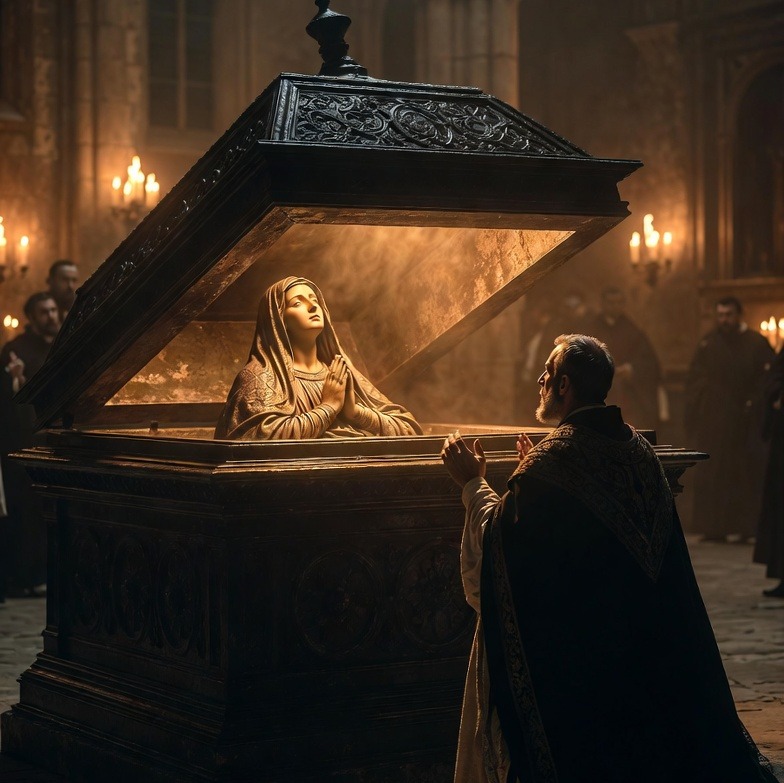

¡Oíd, oíd, buena gente de toda ley e condición! ¡Escuchad las coplas que vos canto por merced del Criador! Non muere el ánima, maguer lo diga el vulgo, ca non es sólo carne nin polvo del mundo. ¡Juzgad, buenos cristianos, si tras la noche fuerte yaze fermosa ribera allende de la muerte! En tierra de Northumbria, do el Tyno va corriendo, morava un buen varón que llamavan Drythelmo. Cayó con fuerte calentura, fincó el cuerpo yerto, lloráronlo los suyos, teniéndolo por muerto. Mas al romper el alba, ¡oh miráculo temido!, tornó de entre los muertos el seso confundido. «Salíme del mi cuerpo con gran pavor e espanto, vieme suspendido sobre escuro quebranto. Yuso la mi sangre fazía negro manto, mas vino un mensajero de muy grant resplandor sancto. Tomóme por la mano con gesto muy sereno e díxome: “Non temas, ca non es aún tu término”. Llevóme a un valle de fuego e de yelo mixto, do las almas penavan según sus yerros commetidos. Oí grandes clamores e muy fuertes alaridos, e vi sombras errantes entre los rescoldos vivos. Después passamos un pozo hediondo e muy negro, e luego vi un prado de grant claridad e sosiego. Resplandecía el ayre commo fino cristal, e sonavan dulces músicas más fermosas que acañal. “¿Quiénes son aquestos?”, pregunté al mi guía. “Son las ánimas santas que gozan de alegría.” Vi allí a mi agüela de ojos mansos e quedos; sonrióme en silencio e alçó hacia mí los dedos. Non muere el ánima, maguer lo diga el vulgo, ca non es sólo carne nin polvo del mundo. Mas non sólo en Northumbria acaeció tal maravilla, ca en Toledo la noble, cerca del Tajo, se veía. Yacía Sancta Leocadia, virgen e mártir gloriosa, que por Christo padeció en persecución sañosa, en sepulcro muy cerrado, baxo pesada losa. Vino don Ildefonso con sus clérigos sagrados, orando con grant llanto e gemidos angustiados. Alçó las manos al cielo con fe viva e ardiente, e la losa se movió por milagro evidente. Levantóse la piedra con son temeroso e fuerte, e apareció la sancta con rostro claro e alegre. Díxole con voz mansa, serena e mesurada: «¡Eres dichoso, Ildefonso, por tu devoción tan viva e tan tierna a la Madre del Señor, la más pura e bendita!» Mostróme la Virgen en su trono glorioso, con lumbre tan preciosa que deslumbra el seso. Mas mandóme Dios tornar a la fría tierra, ca aún non era mi hora de morar en la alteza. ¡Ave María pura, juglar, qué cantares! ¿Resucitó la sancta? ¿Vio los cielos verdaderos? A mí semejanme cuentos de viejas consejas… Calla, Mingo, e non seas tan ligero, ca la fe non se prueba con ojo carnicero. Los santos Padres lo dexaron por escripto en libros muy antiguos, graves e verdaderos. Mucho sabedes, juglar, de letras e pergamino, mas yo vi morir omnes… e non tornar ninguno. ¿Non ves cómo la simiente muere so la tierra para tornar en espiga dorada en el verano? Así el cuerpo se pierde, mas el ánima florece si Dios la guarda viva con su mano. Pues convencéisme, juglar, con tan llana razón; si torna el trigo al campo, bien puede tornar el varón. Después desto Drythelmo dexó quanto posseyera e tomó hábito negro en Melrose la señera. E Leocadia reposa en Toledo muy venerada, ca aún dizen que su tumba huele muy perfumada. Non muere el ánima, maguer lo diga el vulgo, ca non es sólo carne nin polvo del mundo. Aquí se cierra el canto del juglar sin nombre, sencillo commo sendas que huellan los romeros. ¡Abrid, buenos cristianos, vuestro juizio e seso e pensad si el ánima perdura después del cuerpo! - The Soul Dieth Not Hearken, hearken, good folk of every law and condition! Listen to the verses I sing you by the grace of the Creator! The soul dieth not, though the common folk may say, for we are not only flesh nor dust of this world. Judge, good Christian men, if beyond the bitter night there lieth a fair shore beyond the reach of death! In the land of Northumbria, where the Tyne runs slow, there dwelt a worthy man they called Dryhthelm. He fell with burning fever, his body lay cold and still, his kin wept sore, thinking him dead and gone. But at the break of dawn, O fearful miracle! He returned from among the dead, his wits all bemused. “I left my body with great dread and fear, and found myself hanging o’er a dreadful dark abyss. Below, my blood did form a black mantle, when came a messenger of holy shining light. He took me by the hand with gentle serene face and said: ‘Fear not, for thy time is not yet come.’ He led me to a valley of fire and ice mingled, where souls did penance for the wrongs they had wrought. I heard hoarse cries and dreadful wailings, and saw shadows wandering among living embers. Then we passed a stinking black pit, and after saw a meadow of light and peace. The air shone like finest crystal, and sweet musics sounded fairer than any reed. ‘Who are these?’ I asked my guide. ‘They are the holy souls that rejoice in bliss.’ There I saw my grandmother with gentle quiet eyes; she smiled at me in silence and raised her hand to me. The soul dieth not, though the common folk may say, for we are not only flesh nor dust of this world. Nor only in Northumbria did such wonder befall, for in noble Toledo, beside the Tagus, it came to pass. There lay Saint Leocadia, virgin and glorious martyr, who suffered for Christ in cruel persecution, within a tomb most tightly sealed, beneath a heavy stone. Then came Don Ildefonsus with his sacred clerks, praying with great weeping and anguished groans. He raised his hands to heaven with burning faith, and the stone moved by evident miracle. The slab rose with a fearful sound, and the saint appeared with clear and joyful face. She spoke with mild, serene and measured voice: ‘Blessed art thou, Ildefonsus, for thy lively and tender devotion to the Mother of Our Lord, the purest and most blest!’ She showed me the Virgin upon her glorious throne, with light so precious it blinded the mind. But God commanded me to return to cold earth, for it was not yet my hour to dwell in the heights. Ave Maria pure! Juglar, what songs are these! Did the saint arise? Did she see the true heavens? To me they seem but old wives’ tales… Hold thy tongue, Mingo, be not so hasty and light, for faith is not weighed by a butcher’s eye. The Holy Fathers left it written in ancient books, grave and true. Much thou knowest, juglar, of letters and parchment, yet I have seen men die… and none return. Seest thou not how the seed dies beneath the earth to rise again as golden ear in summer? So the body is lost, but the soul doth flourish if God keep it alive by His hand. Thus thou hast convinced me, juglar, with plain reason; if the wheat returns to the field, so may the man. Thereafter Dryhthelm forsook all he possessed and took the black habit in Melrose the renowned. And Leocadia rests in Toledo, greatly venerated, for they say her tomb still smells of sweet perfume. The soul dieth not, though the common folk may say, for we are not only flesh nor dust of this world. Here ends the song of the juglar without name, simple as the paths that the pilgrims tread. Open, good Christians, your judgment and wit, and ponder well if the soul endureth after the body!
