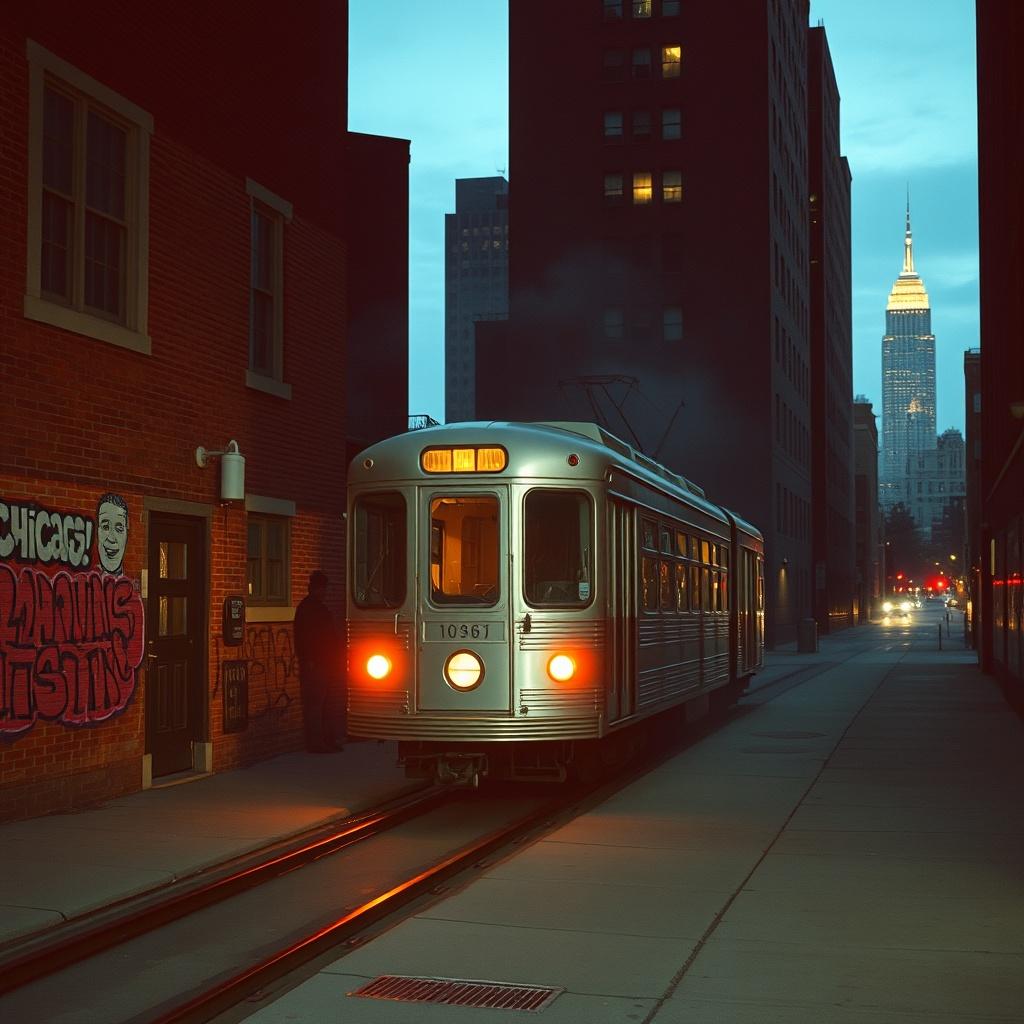

The history of the Chicago "L" isn’t a fairy tale of civic planning; it’s a gritty chronicle of corporate warfare, political graft, and the raw ambition of men who viewed the city as a private chessboard. From its inception in the late 19th century, the elevated tracks were built on a foundation of "boodle"—the local slang for political bribes—and a blatant disregard for the aesthetics or peace of the neighborhoods they bisected. The Era of the "Alley El" (1892–1900) The Chicago & South Side Rapid Transit Railroad didn't start with grand visions; it started with a deadline. With the 1893 World’s Columbian Exposition approaching, investors saw a goldmine in transporting millions of tourists to Jackson Park. Because the city refused to grant rights to build over public streets, the company took the path of least resistance: the alleys. The "Alley El" was a noisy, soot-belching iron monster that lowered property values instantly. In these early days, there was no electricity. Massive steam locomotives thundered just feet from second-story bedroom windows, raining ash and hot cinders onto the residents below. The Rise of the Traction Barons While the South Side line was the first, the true "villain" of the story is Charles Tyson Yerkes. A financier with a checkered past in Philadelphia (including a stint in prison), Yerkes moved to Chicago and realized that control of the transit system meant control of the city’s growth. Yerkes was ruthless. He used shell companies, bribed the "Gray Wolves" of the City Council, and ignored public outcry to secure 50-year franchises. His crowning achievement was the Union Loop, completed in 1897. It funneled every disparate line into the city center, artificially inflating the value of downtown real estate—much of which he happened to own. Consolidation and Decay (1900–1947) By the turn of the century, the "L" was a fragmented mess of competing companies: the South Side, the North Side, the Metropolitan West Side, and the Northwestern. They didn't want to cooperate; they wanted to cannibalize each other. Eventually, the pressure of the Great Depression and the rise of the personal automobile squeezed the life out of private transit. The companies were bleeding cash, the infrastructure was rusting, and the "L" became a symbol of urban neglect. The city finally stepped in, not out of altruism, but because the private system had collapsed under the weight of its own greed and inefficiency. The Birth of the CTA In 1947, the Chicago Transit Authority (CTA) was formed to seize the remains. The transition was unapologetic. The CTA immediately began "streamlining"—a polite term for hacking away at lines that weren't profitable. The Humboldt Park Branch: Gone. The Kenwood and Stockyards Branches: Severed. The Westchester Branch: Abandoned. The CTA prioritized efficiency over community access, leaving entire swaths of the city—largely lower-income neighborhoods—without the transit links they had relied on for decades. The Modern Irony Today, the "L" is an iconic part of Chicago’s identity, romanticized in film and photography. Yet, it remains a monument to its cutthroat origins. The tracks still scream with the friction of steel on steel around Yerkes’ Loop—corners so tight they were never meant for modern speeds, yet remains because the city was built around his greed. The CTA Takeover: A Public Bailout By the 1940s, the private companies were bankrupt. They had milked the system for dividends without reinvesting in maintenance. The tracks were rusting, and the cars were wooden tinderboxes. The Chicago "L" wasn't built to be a public service; it was built to be a profit machine. It survived because it became too massive to fail, carving its way through the city with an iron-willed indifference that defines the Chicago spirit: Make no little plans, but make sure someone pays for them In 1947, the Chicago Transit Authority (CTA) was formed to seize the mess. It wasn't a triumph of socialism; it was a necessary salvage operation. The CTA spent the next few decades ruthlessly "rationalizing" the system—which meant closing dozens of "low-performing" stations, many of which served lower-income minority neighborhoods, to speed up transit for suburban commuters. 5. Modernity and the "Concrete Scars" The mid-20th century saw the "L" enter the era of the median strip. Instead of building over alleys, the city tore through neighborhoods to build expressways (like the Eisenhower and Dan Ryan), tucking the train tracks in the middle of the smog and noise. The 1958 Congress Line: This was the world’s first integrated rail-and-highway corridor. It was efficient for the city, but it physically severed neighborhoods, creating a "no-man's land" of concrete that decimated local foot traffic. The 95th Street Extension (1969): This finally brought the Red Line deep into the South Side, but it arrived decades late and served as a stark reminder of the geographic segregation the "L" helped maintain.
