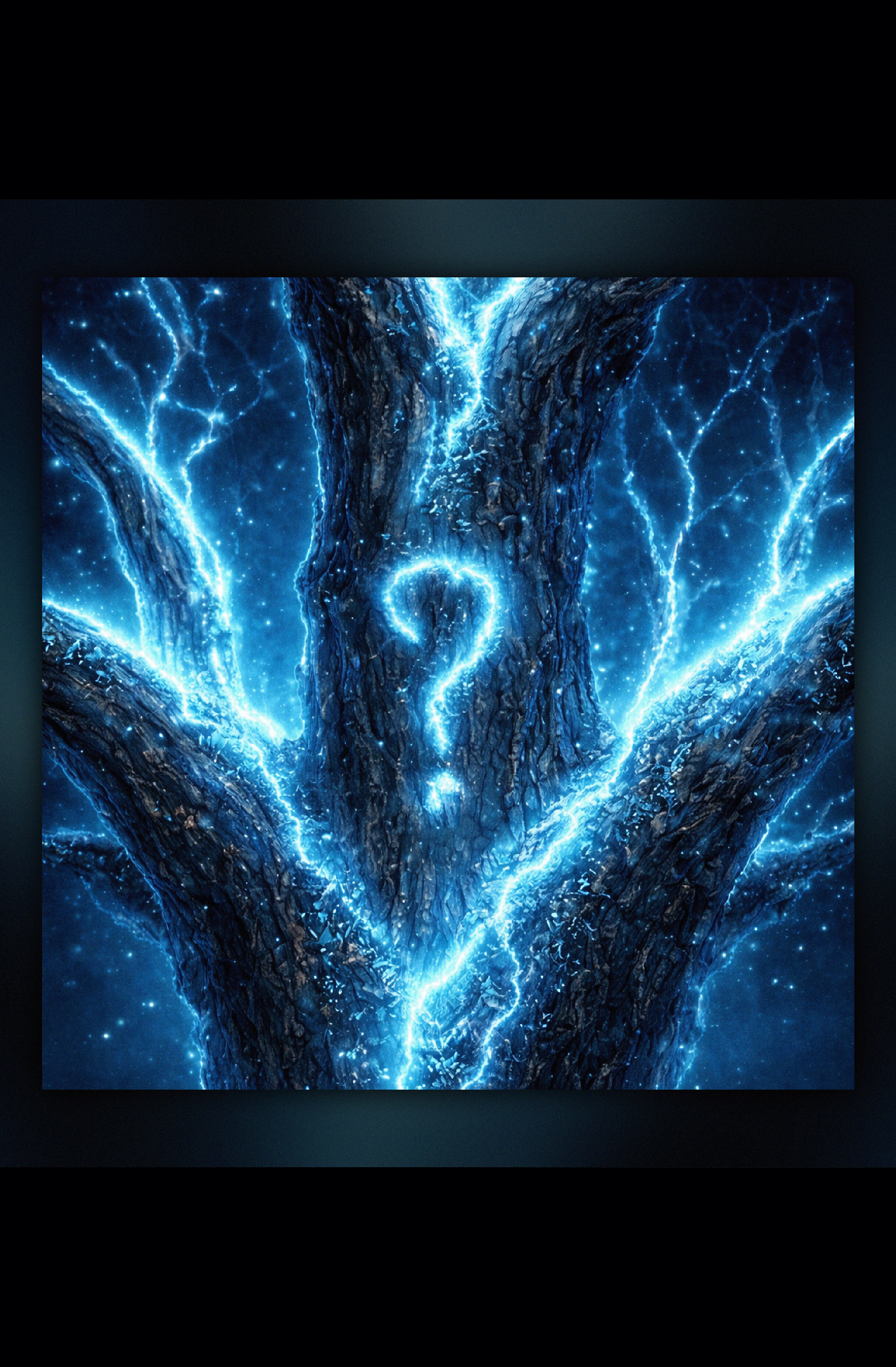
"Call of Epistemology" | Let the Question Guide
[Intro] I am Epistemology—the first question asked Let the question guide [Verse 1] I am Epistemology—the ground beneath, before you claim, before belief. I do not tell you what is true; I ask: "How do you know you do?" What makes opinion into knowledge? What turns a guess into something solid? I map the territory of the mind, the structure of what we think we find. [Pre-Chorus] Before you measure, before you test, before you reason through the rest— ask me first: What counts as knowing? Where's the line you're drawing? [Chorus] Hear the call of epistemology—the root, the frame, the start. I don't give answers, I give questions; I'm the map before the chart. Ask what justifies your thinking, ask what makes a belief secure, ask where certainty can reach you, and what remains unsure. Belief and truth and evidence—I hold them side by side. I am the study of knowing itself: let the question guide. [Verse 2] Some say knowledge comes through senses— touch and sight, empirical defenses; what you observe is what you trust, experience is knowledge—that or dust. Others claim that reason leads the way— logic, math, what must be, come what may; truths that hold before you see, a priori certainty. [Pre-Chorus] And skeptics ask: "Can we know at all? Might all our knowledge be too small?" While pragmatists reply: "What works is true enough; knowledge is a tool, not sacred stuff." [Chorus] Hear the call of epistemology—the root, the frame, the start. I don't give answers, I give questions; I'm the map before the chart. Ask what justifies your thinking, ask what makes a belief secure, ask where certainty can reach you, and what remains unsure. Belief and truth and evidence—I hold them side by side. I am the study of knowing itself: let the question guide. [Verse 3] Some build knowledge like a building— basic beliefs hold firm, no yielding; the foundation bears the weight above, each layer rests on trusted stuff. Others weave a web instead— beliefs support each other's thread; coherence is the test they choose: does it fit? Then nothing's loose. [Bridge—half-time, contemplative] I am not wisdom, I am not the end, I am the question you bring in. Before you trust, before you claim, ask yourself: "What's the frame? What are my sources? How do I know? Am I assuming more than I can show?" Be humble. Be rigorous. Ask again. Inquiry starts when you question, my friend. [Final Chorus] Hear the call of epistemology—the root, the frame, the start. I don't give answers, I give questions; I'm the map before the chart. Ask what justifies your thinking, ask what makes a belief secure, ask where certainty can reach you, and what remains unsure. Belief and truth and evidence—I hold them side by side. I am the study of knowing itself: let the question guide. [Outro] I am Epistemology—the first question asked, the ground beneath the ground, the light before the path.
