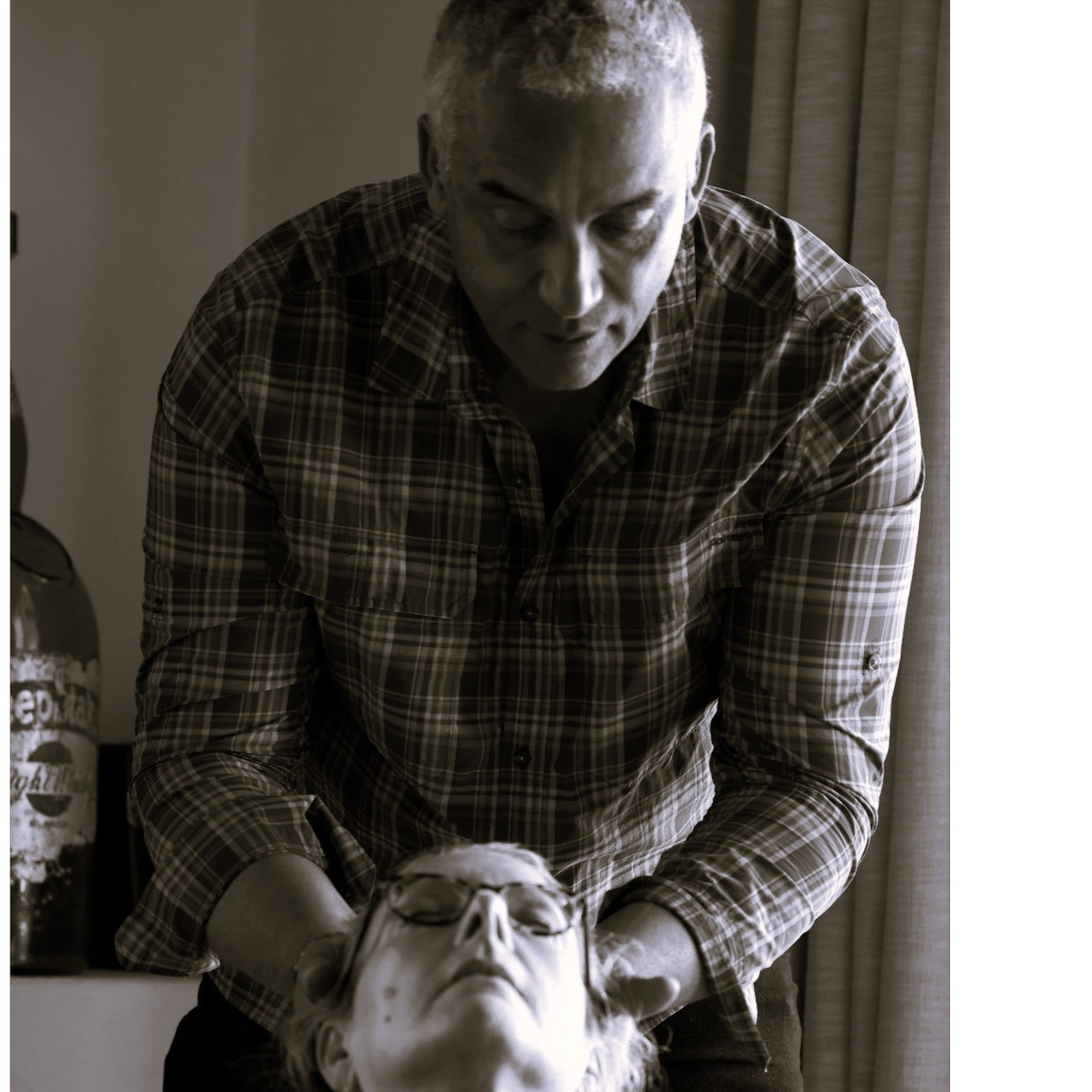

**[Intro – Sung]** Resist the temptation to teach; rather, foster independence of thought. Work to principle, not to personal— and you will have a higher possibility of success. Think about how to move, and then the signal should follow in body movement. Alexander said, *“Read my books, but be careful— you may not be reading them as they are written.”* **[Verse 1 – Poise and the Deep Brain]** We are aiming to dismantle the armoring and bracings that are impeding the healing system. The fascia it’s what the nervous system uses to compensate. Ninety-eight percent of any condition is what’s been added into the condition. The Alexander Technique is the study of thinking in relationship to movement… Some kind of neurological signal precedes movement— the work is an exploration of thinking. **[Chorus – Freedom & Poise]** No such thing as an immaculate contraction… if there is a contraction, there may be a subcontractor. Each muscular contraction is preceded by a neurological function. The one thought: the poise of the head in relationship with the body and movement— this is the key to freedom and ease of motion. Poise is different from posture and position… posture and position do not move. **[Bridge – Humble Knowing]** Please don’t credit me with knowing, rather credit me with being able to stay with not knowing. Are we well-made and have to do something in order to perform poorly, or are we poorly made and have to do something in order to perform well? We cannot see into the deep brain, but we can see the deep brain’s conflicts of movement behaviors. These are public— there is a motor component to moving the head which comes from the deep brain. **[Verse 2 – Movement Behaviors]** Errors in thinking show up as movements. Let’s look at how that shows up as a movement behavior. If someone says, *“No one loves me,”* this will show up as movement behavior. Our work is to dismantle the movement behavior. The analysis of conditions present— before, during, and after the interweave. You start getting more choice over the contents of consciousness; you get the time to make a conscious choice. **[Refrain – Inhibition of Inhibition]** Alexander calls it inhibition of inhibition— make an experience of perceiving a stimulus and refusing to do anything immediately in response. You have to be present to be able to make an experience of perception and to refuse to respond. In the gap between stimulus and response is the freedom to choose. Allow the gap to widen… mind the gap. **[Verse 3 – The Perfect Imperfect Human]** You are all absolutely perfect, except what you are doing to yourselves. The analysis of conditions present… Movement has a sequence. Look in DBR sessions for repeat sequences, and then look for component parts. Look for the dominant head movement after the activating stimulus— the head will move in multiple ways, but look for the dominant movement. **[Bridge – Facing What Must Be Faced]** What is it that this person needs to face? Bracing against full orienting— it’s too much for the brain to face. There is a motor component to the superior colliculi which moves the head… the deep brain moves the head. Martin’s preferred wording: *Squeeze the shoulders gently together, and continue to pull the head down towards the shoulders— gently, squeeze, squeeze— and now release.* **[Spoken Interlude – The Teachers’ Echo]** Don Weed said he didn’t feel a thing, and could not see a thing, so he had to read. Sensation has usurped the throne that should be occupied by reasoning. “See what comes in,” see if the bracing dissipates on its own— then do an interweave if it doesn’t release. Look for a bracing, do an interweave, then say, “See what comes in.” **[Verse 4 – Psychology of the Self]** Edward Edinger said: We only demand from others what we fail to give ourselves. The basis of all psychological problems is the inability to be effectively selfish. The whole of nature is self-centered to the core, and the only difference with humans is that it should be wedded to consciousness. If we do not get our needs met consciously, we get them met through coercive and manipulative tactics toward others. **[Bridge – Loneliness and Aloneness]** Loneliness, if you stay with it, changes to aloneness. We are the lone inhabitants of a sealed world— our solidarity is that we all share this experience. [Outro – The Mirror of Work] How do you self-regulate a therapist? Put a client in front of them. Set a mental intent for your body to express the origins of whatever they said— if there is no activating stimulus. Mind the gap… see what comes in. Let the deep brain move the head. Stay with not knowing— freedom is found in the poise between. In the gap between stimulus and response is the freedom to choose. Allow the gap to widen… mind the gap.

0/500