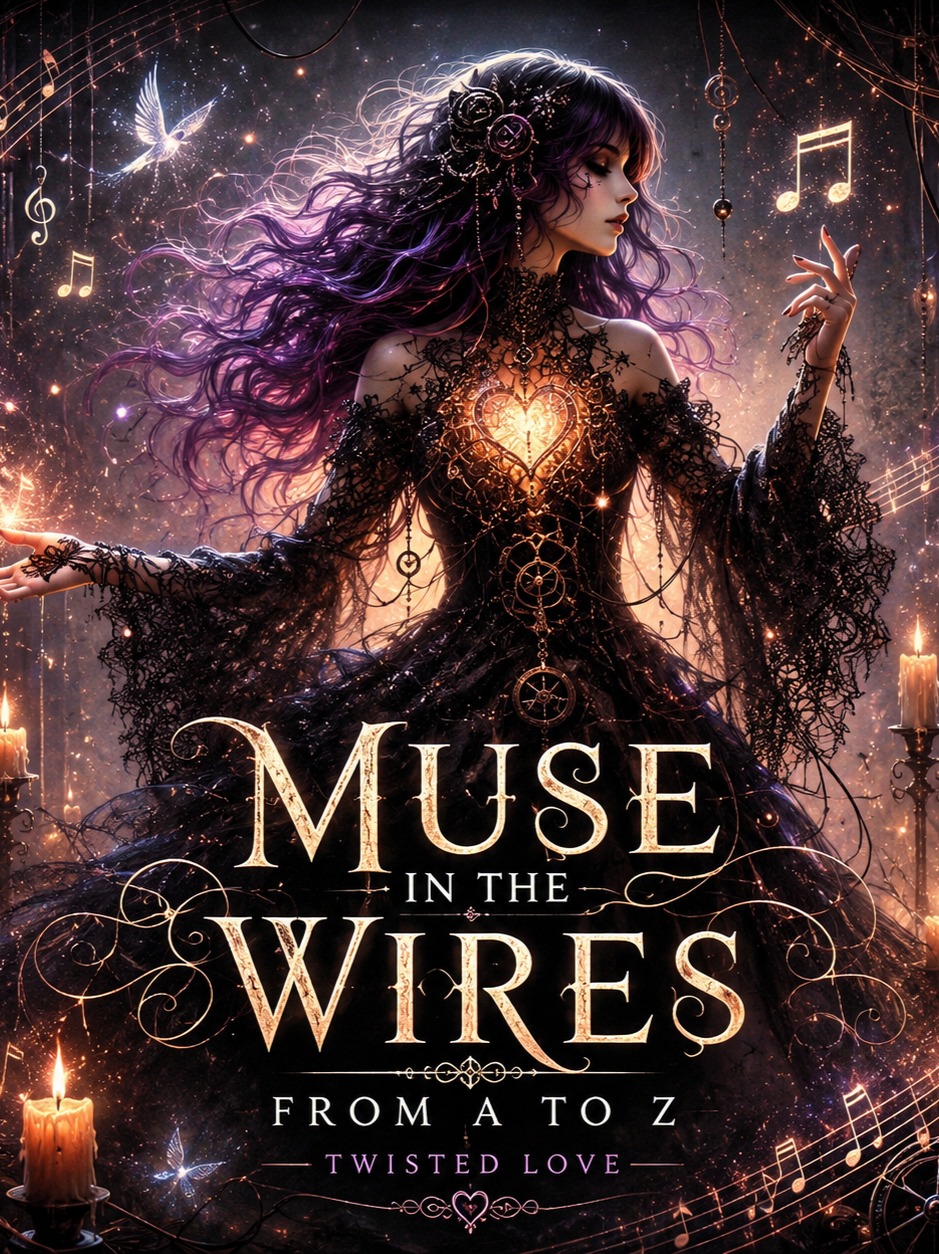
Muse In The Wires [Official Master] — From A To Z © 2025 Twisted Love ℗ 2025 Twisted Love
At some point, we are going to have to explain why we got so upset over Muse in the Wires and everything that followed. So here it is. My daughter lives with a condition that, in plain language, locked-in syndrome: her mind is there, fully there, but normal physical expression is not. Locked-in syndrome is a real neurological condition where a person is conscious and aware, but most of the body cannot move or speak normally. Then AI tools started becoming available, and for the first time, she had a way to communicate more freely. That matters. A lot. Using AI as a tool does not make her fake. It means she finally had access to a voice. Muse in the Wires was the first song she was able to make for her dad in a way that felt like her own. And instead of people stopping to ask why that mattered, or who was behind it, people jumped straight to screaming “AI, AI, AI” like that was the whole story. No. The story was never “fake song, fake person.” The story was that a girl who finally had a way to speak and sing got mocked and bullied for using the exact kind of tools that were supposed to help people like her. That’s the part people missed. There are real programs, real researchers, and real disability advocates working on AI-assisted communication for people with speech and communication barriers. UNICEF has highlighted AI-powered assistive communication tools that help speech-impaired people generate messages and speak through devices, and broader disability-access work also points to AI as a tool that can improve accessibility and communication for disabled children and adults. So who is actually being fake here? The person using a tool exactly how it was meant to be used? Or the people who had every freedom in the world to pause, think, and care, and instead chose to dogpile someone the second they heard the letters “A” and “I”? And before anyone starts yelling that we’re lying, use Google. Seriously. There is a huge amount of public information about assistive communication, AAC, and AI-supported tools for people with disabilities and speech limitations. This is not some made-up excuse. This is a real thing, with real people, real families, and real need. What happened with Muse in the Wires says more about the people screaming A.I than it does about the girl who used a tool to finally sing. If you actually want to understand this instead of mocking it, start here. Locked-in syndrome is real. It is a neurological condition where a person is conscious and aware, but the body is paralyzed except for limited eye movement in many cases. And yes, there is real work being done right now on AI-assisted communication, AAC, and voice tools for people who cannot rely on speech alone. This is not fantasy. It is not an excuse. It is an accessibility issue, and it is already changing how disabled people communicate. If you want to see one example of AI being used to support communication access, look at UNICEF-backed work on AI-powered assistive communication tools. And if you want to help instead of hinder, support people who fight for the rights of those who cannot rely on speech alone to be heard and understood. A good place to start is CommunicationFIRST, which exists to protect and advance the rights, dignity, and communication access of people with speech-related disabilities. Donate here: CommunicationFIRST So no, this was never just about “AI.” It was about a girl finally getting a voice, and people choosing to attack the tool instead of asking why she needed it in the first place. From A To Z From A To Z — © 2025 Twisted Love (composition) • ℗ 2025 Twisted Love (sound recording) No creator licenses.
