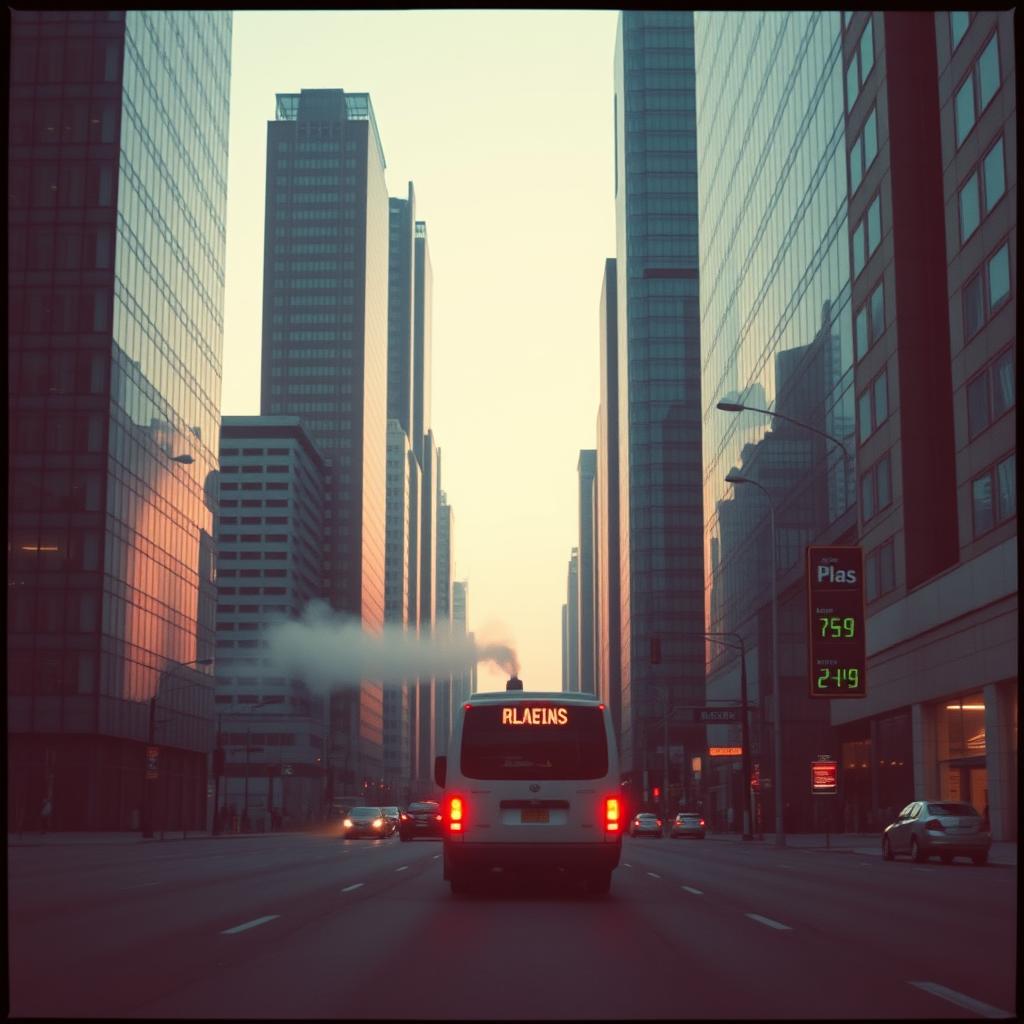

G Title: Tailpipe Truth (Global Playbook) — Spoken [Intro] (low rumble, distant traffic) (Spoken, heavy) Listen. Vehicle pollution isn’t a mystery. It’s math. Engines + congestion + weak rules equals… air that steals your breath in small daily cuts. [Verse 1] (spoken) Every morning— key turns, engine wakes, and the city exhales what it didn’t choose. Not just “smoke.” Particles that slip into lungs. Gases that irritate the throat. Black carbon that paints the air—without permission. And it’s not only driving fast. It’s crawling. Idling. Stop-start. A million little accelerations, turning fuel into fumes, turning time into toxins. (beat drops in) We call it “traffic.” But it behaves like a factory— distributed across every lane. [Break] (2–3 seconds silence) [Verse 2] (spoken, pivot) So what actually works? Not slogans. Systems. Look at London they didn’t beg cars to disappear— they priced the privilege. Congestion charging to cut the jams, and low-emission rules that say: “If your vehicle is dirty, you pay… or you don’t enter.” Look at Singapore they treat road space like a scarce resource— electronic road pricing that changes by time and place, so peak-hour driving costs more, and the city stays moving instead of choking. And they control car growth— because if every household adds “just one more car,” the air collapses. Look at Japan you can’t hide behind “it looks fine.” They run strict periodic inspections— real checks, real maintenance, so high-emitting vehicles don’t just roam forever. And they make parking real: prove you have a parking space, or don’t bring another car into the neighborhood. That’s not punishment. That’s design. Look at Sweden—Stockholm congestion tax that reduces traffic and makes the alternatives stronger. And streets that protect people first— safe walking, cycling, and public transport priority, so “not driving” isn’t a sacrifice, it’s a normal choice. (Spoken, slower) Different cultures. Same principle: manage demand, clean up what remains, and make the healthy option the easy one. [Instrumental Break] (10–12 sec, strings rise) [Verse 3] (spoken, India-context translation) Now bring it home: We don’t need magic. We need courage. Price parking like land matters. Stop free curb space that invites more cars. Create low-emission zones around schools and hospitals. No-idling rules—enforced, not suggested. Fix inspections so they’re real— not stamps, not shortcuts. Retire the oldest, dirtiest vehicles— with support to replace, not just punish. Upgrade the fleet that moves everyone: buses that arrive on time, routes that connect, last-mile that doesn’t humiliate you. Electrify buses and high-usage corridors first— because one clean bus replaces dozens of tailpipes. And redesign streets: safe footpaths, safe cycling lanes, so short trips don’t require a car by default. (Spoken, firm) This isn’t “anti-car.” This is pro-breath. Pro-child. Pro-heart. Pro-future. [Bridge] (heartbeat pulse, quieter) (Spoken) Yes—there’s a cost. A little less convenience. A little more discipline. A few new rules. But think about the trade: tiny discomfort… for lungs that don’t burn, for mornings that don’t ache, for a city that doesn’t sound like suffering. [Final Verse / Outro] (hopeful crescendo then calm) (Spoken) We already know what works. Charge the jam. Clean the zone. Control the growth. Inspect for real. Design streets for people. Build public transport you’re proud to ride. And then—watch what happens: traffic eases, air improves, and the city… breathes back. (quiet) That’s the playbook. Now we run it.
