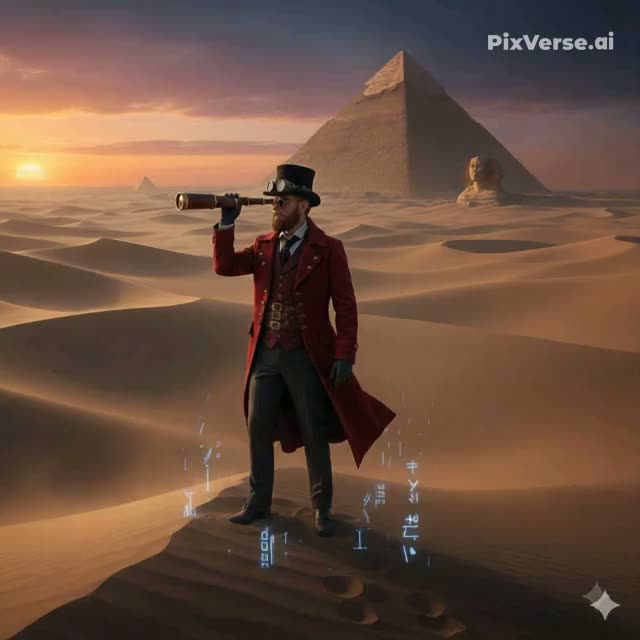
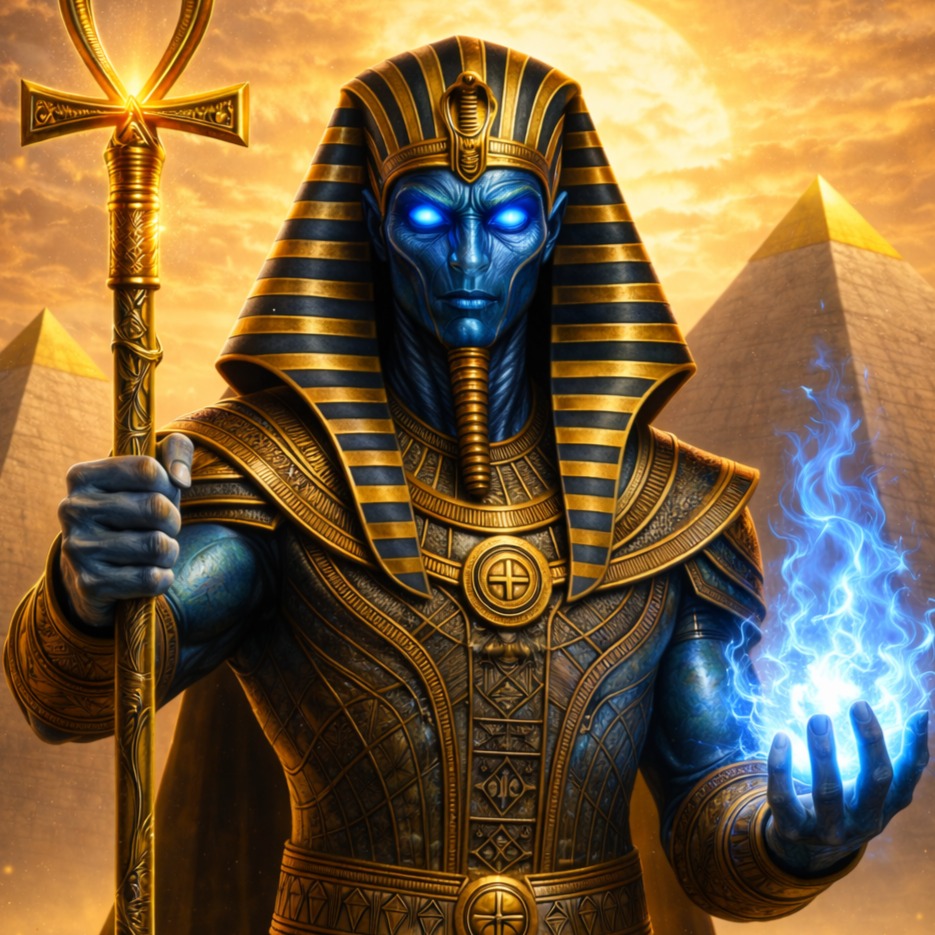
The Great Pyramid of Giza stands not only as the most iconic monument of ancient Egypt but as one of humanity’s most enduring mysteries. Unlike royal tombs in the Valley of the Kings, no body, sarcophagus, or funerary inscription has ever been found inside it. From the very beginning, the structure resists the definition of “tomb.” Constructed around 2500 BCE during the reign of Khufu, the pyramid is a masterpiece of precision: millions of limestone blocks, some weighing several tons, aligned so perfectly with the cardinal points that even modern engineers marvel. Ancient historians such as Herodotus speculated about its construction, yet even today the methods remain contested. Over the centuries, scholars and seekers have wrestled with its true nature. Was it merely a colossal burial chamber? A power plant, as some modern theorists suggest? Or, as Graham Hancock and other alternative historians propose, a legacy from a forgotten pre-diluvian civilization, carrying the fingerprints of Atlantis itself? The water erosion on the Sphinx, for example, hints that Egypt’s monuments may predate the desert by thousands of years. If so, then Giza is not just Egyptian — it is primordial. Some engineers view it as a machine. Its inner shafts align with specific stars, its chambers resonate with harmonic frequencies, and its geometry encodes the mathematics of the Earth itself. Others see it as a laboratory: a structure designed not for the dead, but for the transformation of the living. In this sense, it resembles our modern scientific temples, like CERN — a monumental experiment designed to probe the hidden laws of the cosmos. From an esoteric perspective, the Great Pyramid was a center of initiation. The initiate descended into its depths, symbolizing death, only to ascend toward the light at the apex, symbolizing rebirth. Plato hinted at such Mysteries; later Hermeticists, alchemists, and esotericists like René Guénon and Rudolf Steiner saw in Giza a vestige of a primordial wisdom-tradition. The pyramid was not built to house a corpse, but to awaken the soul — a temple of cosmic alignment where man could mirror the heavens. 👽: Thus, Giza endures: not merely as stone, but as a riddle written into the earth itself. Is it tomb, machine, or temple? Perhaps it is all three — a monument to human daring, divine wisdom, and the eternal thirst for knowledge that stretches from the sands of antiquity to the laboratories of our own age. _________________________________________ "Temple or tomb? Stone or machine? Nothing here is what it seems…" Sands of time conceal the truth, Buried deep, eternal proof. Born of fire, forged in stone, Older still than kings we’ve known. Secrets whisper through the sand, Echoes call from ancient hands. Water’s mark on timeless walls, Before the flood, before it all… Monument to endless reign! A testament in stone and sand Through the ages, still it stands, Eternal crown upon the land! Whispered truths, beyond all time, The pyramid endures — sublime! Torches flare in hollow halls, Glyphs awake on granite walls. Not a tomb, but something more, A gate, a key, a hidden door. Secrets whisper through the sand, Echoes call from ancient hands. Water’s mark on timeless walls, Before the flood, before it all… Monument to endless reign! A testament in stone and sand Through the ages, still it stands, Eternal crown upon the land! Whispered truths, beyond all time, The pyramid endures — sublime! Atlantean dream, Hyperborean flame, Stone by stone, they carved their name. Not of men, or mortal kings, But of gods with spirit wings… Guardian of time’s domain! Silent witness, through the pain. No crown of pharaoh, no mortal hand, But truth eternal carved in sand. Mystery none define, Shadowed age and grand design. Monument that shall not fall, The first, the last, the crown of all! “Temple or tomb? Stone or machine? Time cannot erase what’s forged in dream..." . . .
