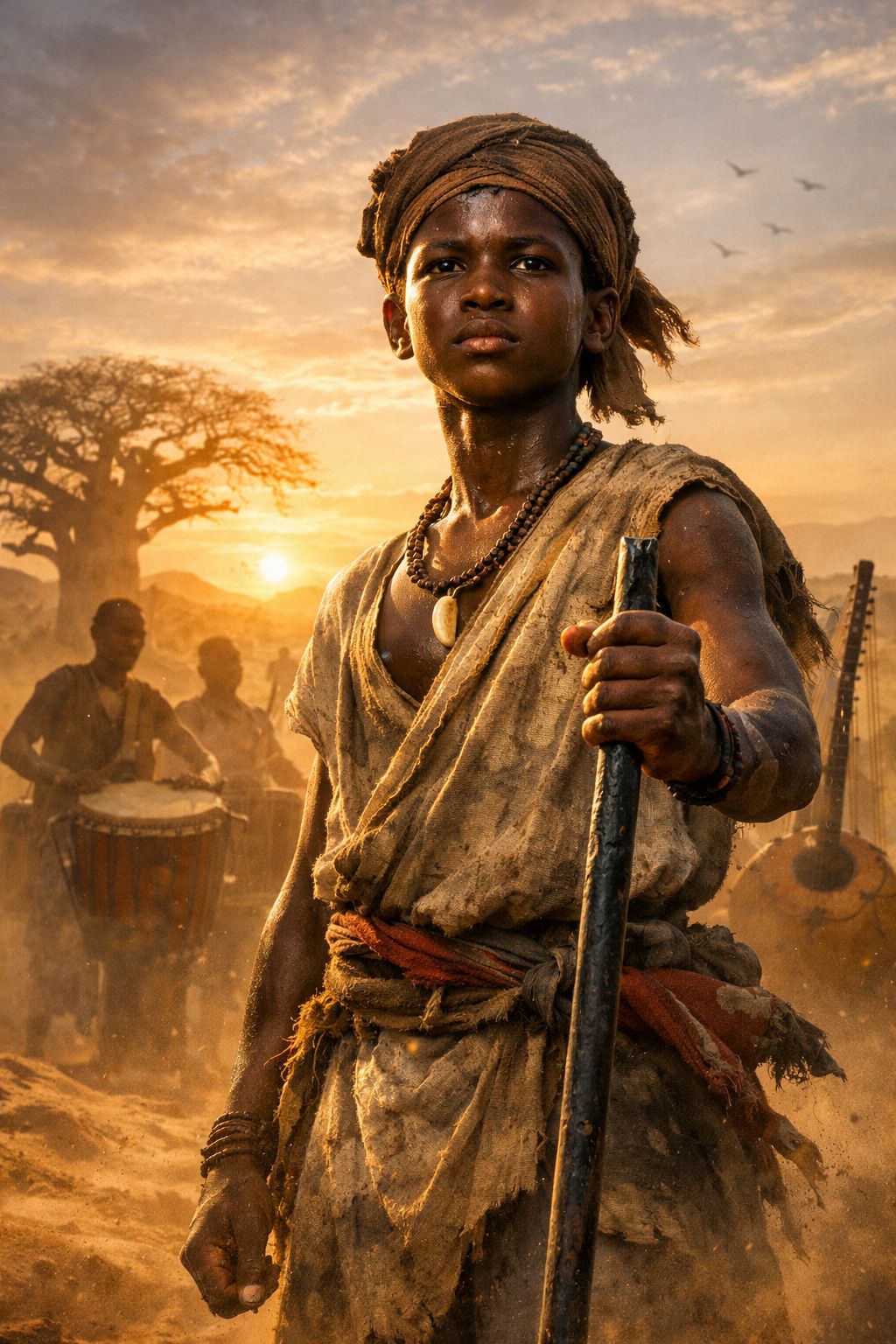
Building this song was much harder than I expected because this isn’t just any story. It’s the Epic of Sundiata Keita, one of West Africa’s great foundational epics. I didn’t want to simply “sound African” I wanted to honor the griot tradition the language, the rhythm, and the way the story is carried from voice to voice. And honestly I feel like I mixed this track a thousand times trying to get it right blending different styles until everything finally spoke the same language. At its heart, the epic is about rising through ridicule, exile, return, and dignity about how a broken beginning can become kingship. And even though it’s centuries old, it still feels painfully current power struggles, violence, displacement, poverty but also pride, community, and hope remain part of today’s reality across many regions of Africa. That’s why I wanted this epic not only to be told, but to be felt. Strophe 1 [Verse 1] Ilu ko: "I si dulo la, Sundiata Keita They said, "You will never rise, Sundiata Keita, kolo koto tɛ se ka sira taa." "lame bones cannot bear a man down the road." Kafu kɛra i ko kunbulu; u la nyagami kɛra sanda kɛndɛ-kɛndɛ. The crowd gathered like storm clouds, their laughter hissed like sand. N ba muso ye ja ta a la fini fɔlɔfɔlɔw kɔnɔ, My mother stood there in her oldest clothes, nka a la ɲɛw kɔnɔ, jigi bɛ tɛlɛn, i ko tasuma dɔ. but in her eyes hope was burning bright, like fire. "Di n na jɔrɔmɔ-iron n bolo la!" n bɛ n yɛrɛ bɔ sanda kɛnɛ kɔnɔ, "Put the blacksmith’s iron in my hand!" I pulled myself up out of the dust, ani n bɛ sisan min na, sira bɛ yira ka taa Manden na. and from that very moment the road opened back to Manden. HOOK [Hook] N bɛ yéla i b’a mɛn? djembé bɛ n kɔnɔ! I rise, can you hear it? The djembe beats in me. N bɛ yéla sanda bɛ ɲɛgɛn ka kɔrɔ. I rise while the sand still scrapes and swirls. Kora bɛ fɔ fɔɲɔ la, kalebasse bɛ tili la The kora speaks upon the wind, the calabash keeps the time, u ko: "i dɔɔnin"… o kɛra mansa la fanga. they said, "You are too small," but that became a king’s own strength. N bɛ yéla i ko wara kɔkɔrɔ kɔnɔ; I rise like a lion in the wild, n bɛ segin dunun tɛgɛ bɛ n joli kɔnɔ. I return with the dunun beating in my blood. Strophe 2 [Verse 2] O kɔfɛ, kuma "Exil" na i ko Harmattan n ɲa la: After that, the word exile struck my face like Harmattan, fɔntɔrɔ kelen, sira wula-wula, sitoo tɛ fɔ foyi. one lonely wind, bare roads, and stars that would not speak. Tasuma tɔgɔfɛ kɔnɔ, n ye jigi ka dɔn, n’a mɛn mɔgɔw la kan. Inside the smoke of fire, I learned what hope could sound like, and heard it rising in the voices of the people. Ngoni bɛ kɛ su la hali susun fanan kɛra ɲuman. The ngoni played all through the night until even silence turned beautiful. N ye ji tila, n ye suma tila mangoro tulu kɔnɔ; I drank water, I rested in the cool beneath the mango trees, ani n ka sigida bɛɛ kɛra dɔn kelen-kelen, i ko tarikikan kɔrɔ. and every place I stayed became a lesson, like an old story told again. Strophe 3 [Verse 3] Waati dɔ, denbaya ye n wele kɔɲɔya la Manden kɔnɔ dimi bɛ: Then one day my people called me home, and Manden was aching deep inside. "I segin! foro bɛ kɔgɔ; siranya bɛ kɔnɔ!" "Come back. The land is wounded. The old order is breaking." N ye n ka marka ta i ko gɛmɛ; n ye kanuya ta i ko furu. I raised my standard like a spear, I carried love like a wedding vow. N ye sìra bɔ dugukɔnɔ, n t’a ta ka di n ba muso ma kɔɲɔya la. I took the road out from the village, not for pride, but to give my mother back her joy. Tɛ ka bonya fɔ, tɛ ka yɛrɛ tɔgɔ bon No need for boasting, no need to praise my own name. a kɛra dɔrɔn: a ye a ɲɛ ɲɛ, a ye a jɛ ɲuman. It was enough to see clearly, and to set things right. Min ye jirikolo sɔrɔ, o se ka taa; Whoever was lifted can keep going, min ye bɔra, o bɛ se ka segin ka yéla. whoever was cast out can still return and rise. BRIDGE [Bridge] I b’a mɛn, jaliw bɛ fɔ su fɛ, ni tile bɛ bɔ ka tarikikanw ɲɛ? Can you hear it? The griots speak at night while the sun comes up and lights the ancient stories. Ilu ko: "Mansa bɛ kɛ min ye, o tɛ tɛmɛn dibi la a bɛ yélen tugu a kɔnɔ." They say, "What makes a mansa is not the darkness around him, but the light he carries within." Ni i miiri i dɔɔnin i mɛn! If you think you are too small, listen. Soumaoro bɛ na ni dibi, nka i le ye yélen i b’a ye! Soumaoro may come with darkness, but you are the light, and you can see it. K’a sɔrɔ, sigida dɔɔnin dɔɔnin kɛra sira kelen; Little by little, every stopping place became one road. k’a sɔrɔ, sanda kɛra masafugula; Little by little, the dust became a bridge across the distance. k’a sɔrɔ, dɔgɔya kɛra fanga. Little by little, humiliation became strength. [HOOK Finale] [Final Hook] N bɛ yéla i b’a mɛn? djembé bɛ n kɔnɔ! I rise, can you hear it? The djembe beats in me. N bɛ yéla n bɛ taa, fo sanda kɛ an ta. I rise, I keep on walking until the sand itself is ours. Kora bɛ fɔ fɔɲɔ la, kalebasse bɛ tili la The kora speaks upon the wind, the calabash keeps the time, u ko: "i tɛ se"… o kɛra mansa la fanga. they said, "You cannot do it," but that became a king’s own strength. N bɛ yéla i ko wara kɔkɔrɔ kɔnɔ; I rise like a lion in the wild, n bɛ segin Kirina la, dunun tɛgɛ bɛ an joli kɔnɔ. I return at Kirina with the dunun beating in our blood.
