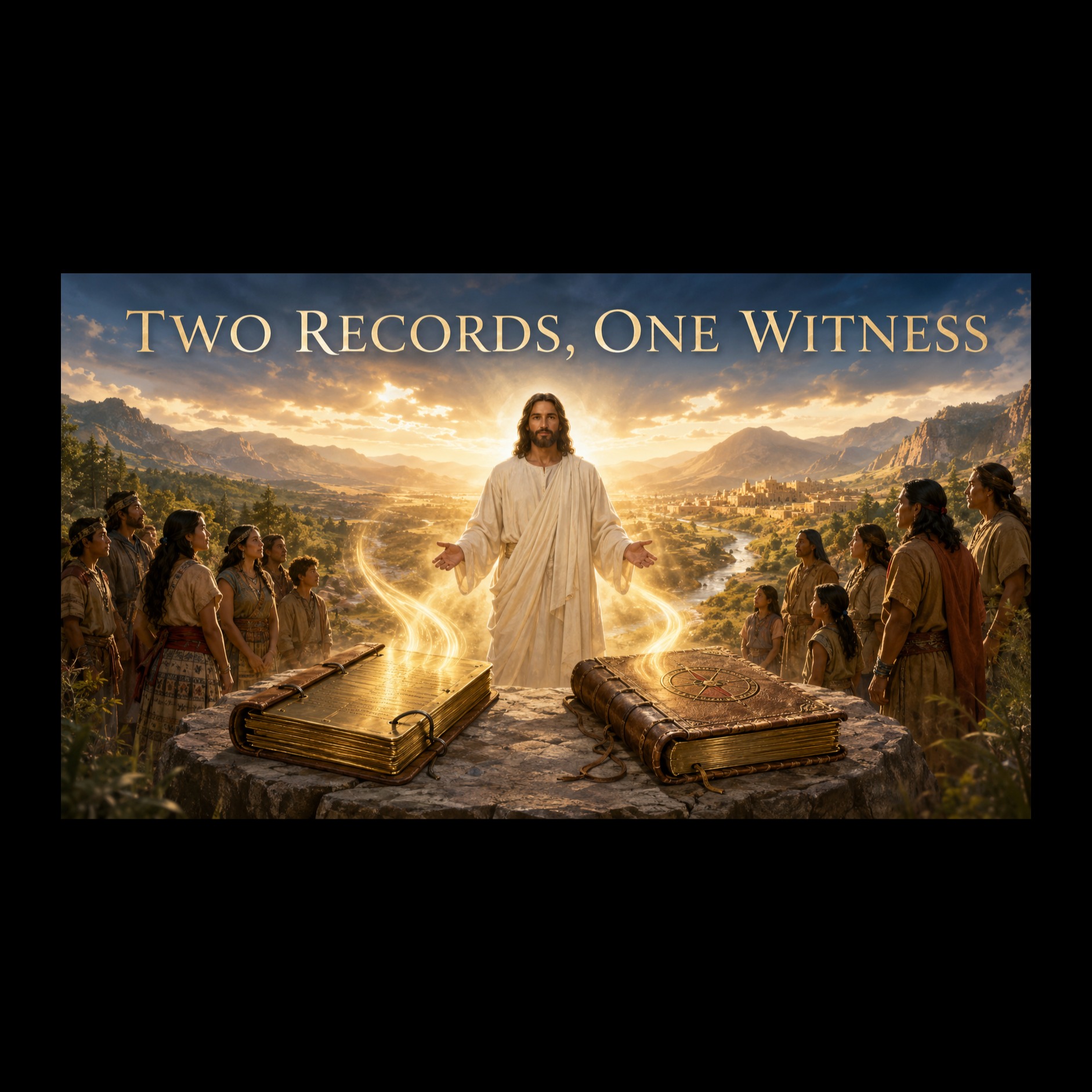
Two Records, One Witness

[Spoken Narration] This morning, I arose and had a beautiful conversation with the Spirit concerning the Nemenhah Records. I felt peace, gratitude, and renewed assurance. These records have become precious to me—not because another person told me I must believe them, and not because every historical question has been answered. They are precious because they continually lead me back to Jesus Christ. As I pondered, two questions entered my heart: How do the Nemenhah Records strengthen the witness of the Book of Mormon? And how does the Book of Mormon help us recognize the word of God within the Nemenhah Records? The answer flows in both directions. The Book of Mormon tells us that God speaks to more than one nation. He commands His children to preserve their sacred experiences so that, someday, their testimonies may come together. It also leaves several stories unfinished. Hagoth built ships, and families traveled northward into lands unknown to the Neephite record keepers. Corianton also traveled northward to carry provisions to those people. The Nemenhah Records continue that story. They tell of Hagoth’s descendants, their migrations, their struggles, and their desire to preserve the Way of the Peacemaker. The Book of Mormon tells us that the resurrected Christ had other sheep whom He would visit. The Nemenhah Records testify that the Peacemaker came among their ancestors—healing the sick, comforting the sorrowful, teaching the gospel, and calling the people to become one. The Book of Mormon promises that three disciples would remain upon the earth and continue bringing souls to Christ. The Nemenhah Records speak of those translated servants continuing their ministry among a righteous remnant. The Book of Mormon gives us the promise. The Nemenhah Records describe its possible fulfillment. But the witness is not merely historical. Both records teach the same Doctrine of Christ: faith, repentance, baptism, spiritual rebirth, and following the Holy Ghost. Both warn against pride, priestcraft, secret combinations, riches, and unrighteous dominion. Both teach that sacred authority must never become an excuse to control another soul. And both lead us toward Zion. Fourth Neephi describes a people with all things in common, without rich or poor, contention, classes, or divisions. The Nemenhah Records preserve this same vision through stewardship, Common Consent, sacred councils, and voluntary care for every member of the community. Zion is not created by declaring ourselves chosen. Zion appears when Christ changes our hearts—when there are no poor among us, no compulsion over us, and no desire within us to rise above another. We should remain honest. One record cannot scientifically prove every historical claim made by the other. But each can help us recognize the sacred patterns within the other. The Book of Mormon gives us the measuring rod: Does a teaching invite us to believe in Christ? Does it preserve our agency? Does it produce humility, charity, healing, and peace? Does it call us to repentance instead of flattering us? Does it awaken within us a desire to become one and build Zion? And, above all, does the Holy Ghost confirm its truth? For me, the Nemenhah Records have not replaced the Book of Mormon. They have caused the Book of Mormon to open more fully. And I do not receive the Nemenhah Records because I have rejected the Book of Mormon. I receive them because the Book of Mormon prepared me to recognize them. Two records. One witness. One living Christ. One invitation to experience a mighty change of heart and walk together toward Zion. [Short Musical Transition] [Sung Verse] Two records rising from the dust, Two voices calling us to trust, Two sacred paths that join as one, And lead us to the living Son. [Sung Chorus] Two records, one witness, One Savior, one Way, One Spirit still speaking To our hearts today. Come, gather in His goodness, Let pride and conflict cease. Build Zion with the Peacemaker, And walk His Way in peace. [Soft Closing] Two records, one witness, One Savior—Jesus Christ.
