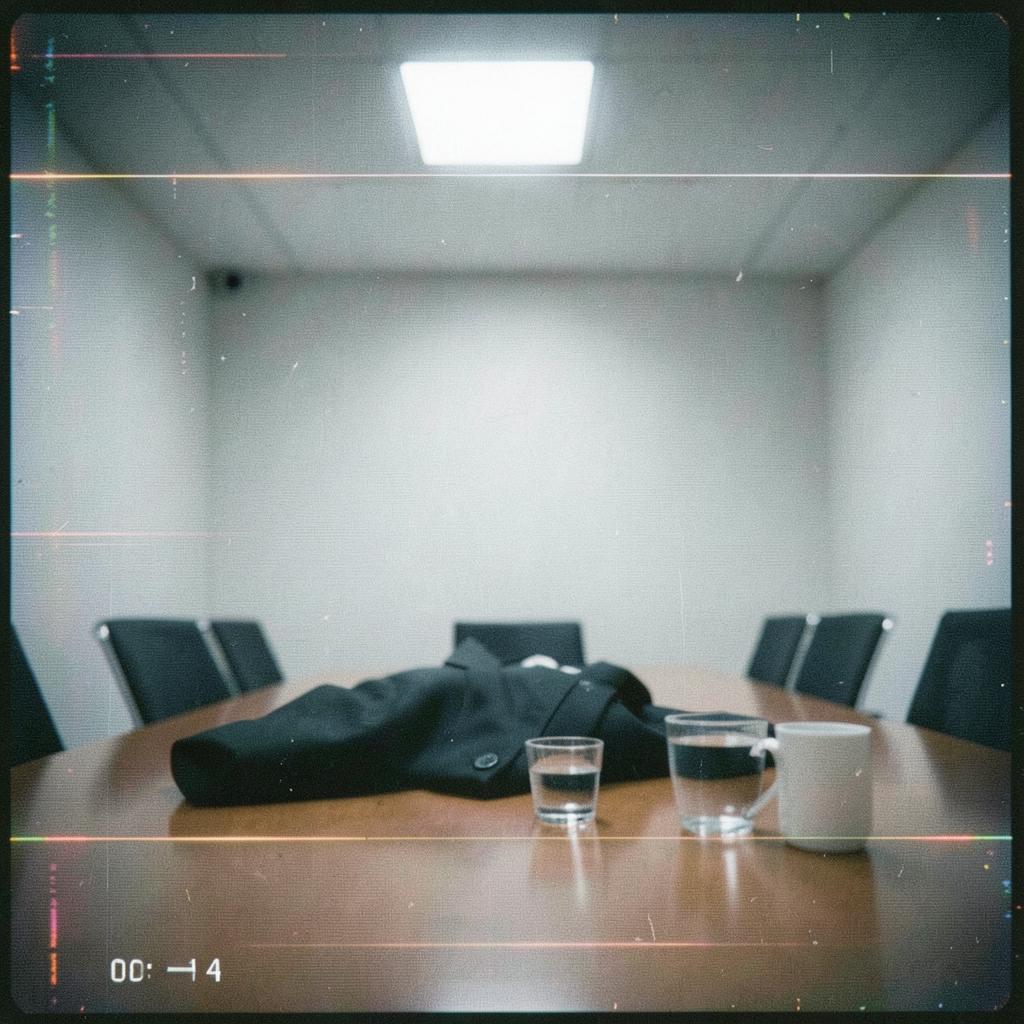

[Intro — spoken / sparse piano] Camera ready. Company logo. Black suits, forty-five degrees. Don’t ask what broke. Watch how they bow. Scandal ain’t the rupture— it’s how the system heals. Deep in Japan. [Verse 1] Flashbulbs burst like judgment in the room, black suits, clean table, perfume, the script says hontō ni, the face says regret, everybody knows where cameras are set. Transgression. Performance. Ritual. Turn the unacceptable habitual. Durkheim in the bloodstream, Turner in the wings, Goffman backstage pulling invisible strings. Sacred to profane when the headline lands, kegare on the name, resignation on demand. From uchi to soto, send the sinner out, cleanse the institution while the structure stays whole. That’s the trick of the spectacle: one face takes the shame while the machine keeps its name. Confession. Exclusion. Reintegration. Misogi in a necktie, microphones in a row— bow deep enough, maybe nobody asks what you know. [Hook] Twenty-two tears and they counted every one. Zoom in on the face— tell me, is the sorrow done? Bow for the cameras, bow for the crowd, kokoro kara owabi, soft, slow, loud. If the ritual cleans what the system won’t change, is that justice— or theater managing shame? Twenty-two tears. Wash the face clean. Leave the structure the same. [Verse 2] Noripī on the screen, seijunha turned mother, ryōsai kenbo split open by another version of the self the public never knew— expectation violated, spectacle grew. Ten-minute confession, every gesture dissected, cry at the wrong moment, tears get inspected. Waterproof makeup? Repentance gets tried; look authentic while performing for the eye. That’s the paradox: perform that you’re not performing, manufacture sincerity while cameras are swarming. “I deeply regret.” “We take this seriously.” “From the bottom of our hearts—” Then cut to commercial. Scandal sells sorrow, ratings eat pain, humiliation converted to gain. The transgressor disappears when the cycle is through; lights go dark, the audience moves. Don’t stare at the fall. Who built the stage? Who owns the hall? [Hook] Twenty-two tears and they counted every one. Bow for the cameras, bow for the crowd. From kegare to misogi, from outside back in— confess, disappear, then begin again. Twenty-two tears. Wash the face clean. Leave the structure the same. [Verse 3 — heavier] Inside media, outside media—watch how it moves, kisha kurabu access determines the grooves. Big desks near the center got sources to guard, while the weeklies hit the perimeter hard. Watchdog? Guard dog? Depends where you stand. Who gets fed information? Who bites the feeding hand? Shūkanshi trickster with a leak and a match, Bunshun kicks the door till the networks catch. Rumor turns allegation, allegation turns event, event becomes spectacle, outrage gets spent. A whisper outside gets polished and framed, then everybody joins when it’s safe to name names. What gets amplified? What quietly dies? Whose apology loops while another story hides? Media don’t just report the ritual— they make it. Cut it. Frame it. Broadcast it. From leak to scandal, from scandal to brand, from moral disturbance to product in your hand. [Bridge — stripped] Kegare. Pollution. Misogi. Purification. Shazai kaiken. Confession under lights. Uchi. Soto. Who gets brought back inside? Who gets sacrificed so the center survives? When everybody bows but nobody moves— what exactly did the scandal prove? [Verse 4 — Fuji turn] Then Fuji hit different. Ten minutes became ten hours twenty-three. The old choreography stopped setting them free. Too many cameras, too many bows, too many polished phrases everybody knows: kokoro kara, fukaku, hontō ni, makoto ni. But ritual without reform started sounding phony. Call it toraburu when the word feels too raw, soften the language, put velvet on the flaw. Euphemism cracks when the outside gets loud, and performance can’t pacify the crowd. That might be the fracture: when apology stops functioning as institutional art. When scapegoating fails. When the old script stalls. When washing one body doesn’t disinfect the walls. Maybe that’s change. Maybe cosmetic. Maybe the ritual dies. Maybe it returns. But once you recognize the choreography plain, you can’t watch that bow quite the same way again. [Final Hook] Twenty-two tears— count every one. Twenty-two tears— then ask what got done. Bow for the cameras. Bow for the crowd. A deeper bow doesn’t make the truth loud. Sacred and profane, hare and kegare, old rhythm in a digital glare. Confession. Exclusion. Reintegration. A nation watching its own narration. Twenty-two tears in the flashbulb rain— wash the face clean... but did anything change? [Outro — spoken] The scandal isn’t only what somebody did. It’s what gets exposed. What gets hidden. Who speaks. Who bows. Who gets expelled. Who gets welcomed home. And who— behind the curtain— never left.
