
5:49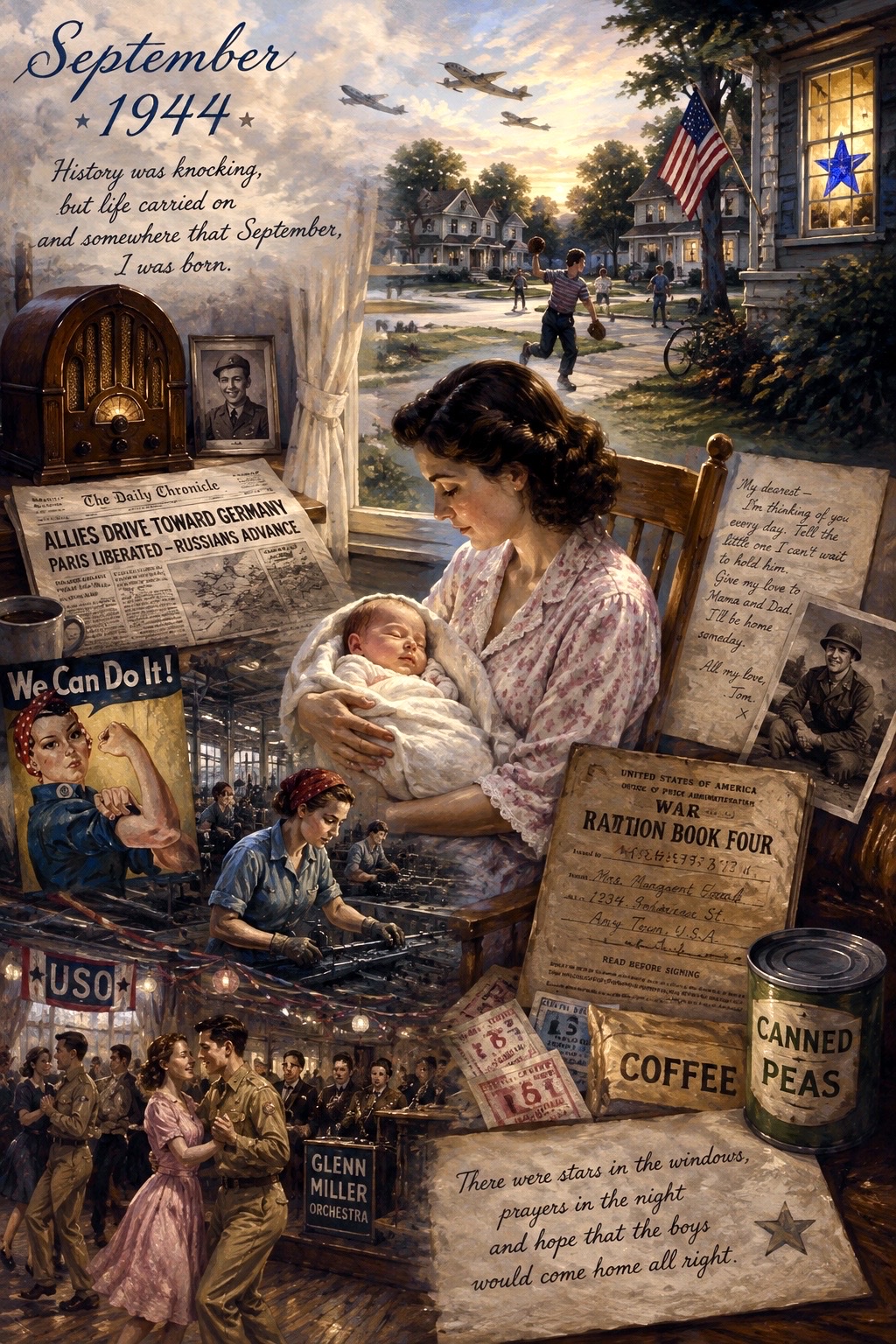
September 1944
v5.5
Nostalgic cinematic Americana / roots folk-pop with a warm, reflective 1940s American atmosphere, mid-tempo around 82 BPM, 4/4, Intimate weathered male lead vocal, conversational and deeply human, singing as an older man looking back across a lifetime, Begin with sparse fingerpicked acoustic guitar, soft upright piano and subtle room ambience, Gradually introduce brushed drums, upright bass, gentle harmonica, muted trumpet and occasional mandolin, The instrumentation should evoke an American neighborhood in September 1944 without becoming novelty 1940s music, Verses should feel like personal memories: newspapers on the breakfast table, ration books, factory whistles, letters from overseas, children playing, Saturday-night dances and families listening to the radio, Chorus should expand emotionally with warm harmony vocals and fuller acoustic instrumentation, Add a brief instrumental passage featuring harmonica, piano and muted trumpet, After the bridge, gradually build toward a power
7:28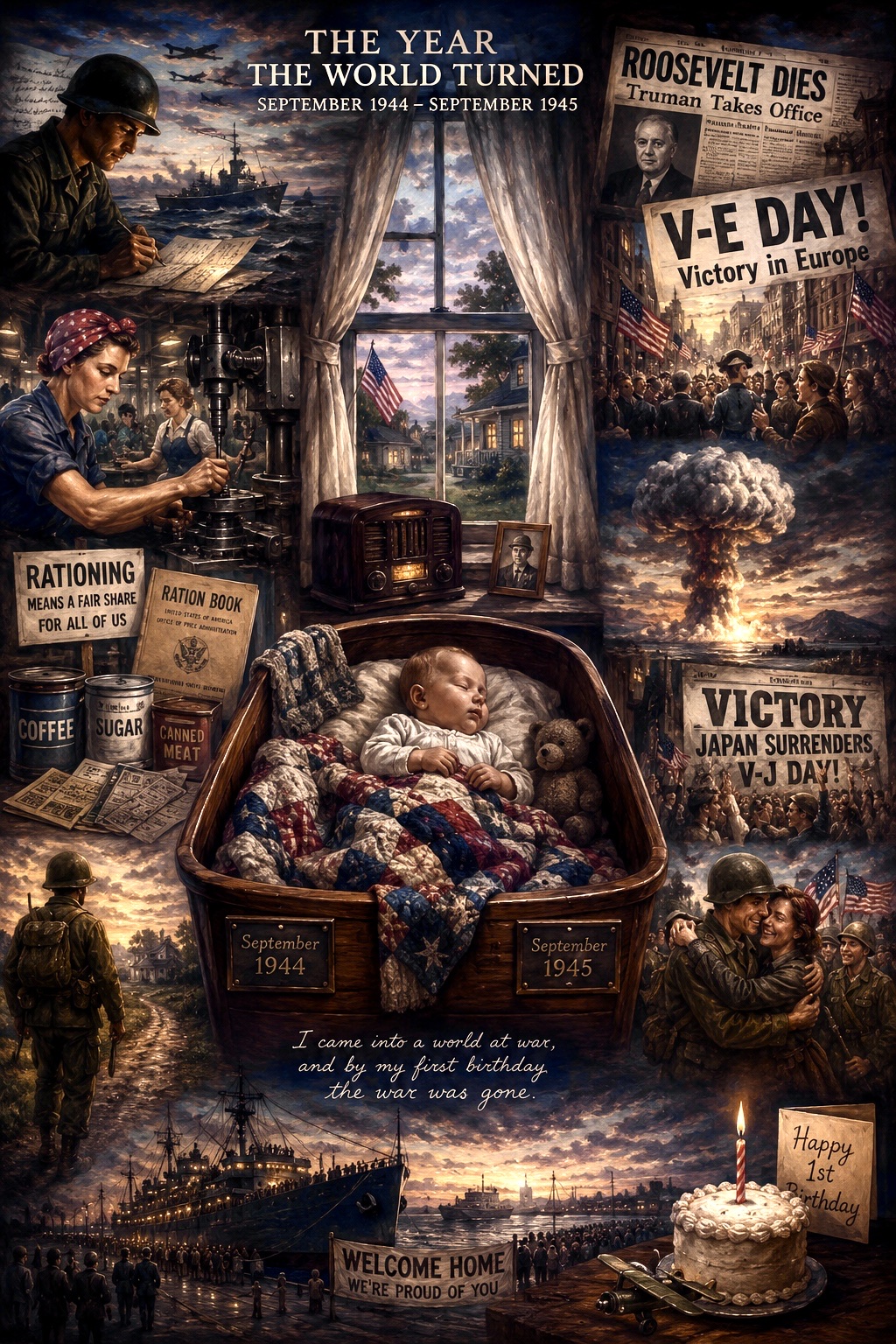
Cinematic Americana roots-rock ballad, deeply dramatic and reflective, 78 BPM, minor-key verses gradually opening into a powerful major-key chorus, Weathered mature male storyteller vocal, intimate and conversational at first, carrying the perspective of a man looking back across a lifetime at his first year in the world, Begin with sparse solo upright piano and faint room ambience, almost like a lullaby, Slowly introduce fingerpicked acoustic guitar, warm upright bass, subtle harmonica, brushed drums and restrained cello, Verses should feel intimate, historical and personal, never overly sentimental, Build dramatically through April 1945 and V-E Day with expanding strings, electric guitar swells and stronger drums, The atomic-bomb section becomes stark and haunting: nearly silent piano, low cello and distant sustained tones, Then explode into an emotionally overwhelming final chorus representing V-J Day and soldiers coming home, Full acoustic/electric band, cinematic strings, harmonic
7:21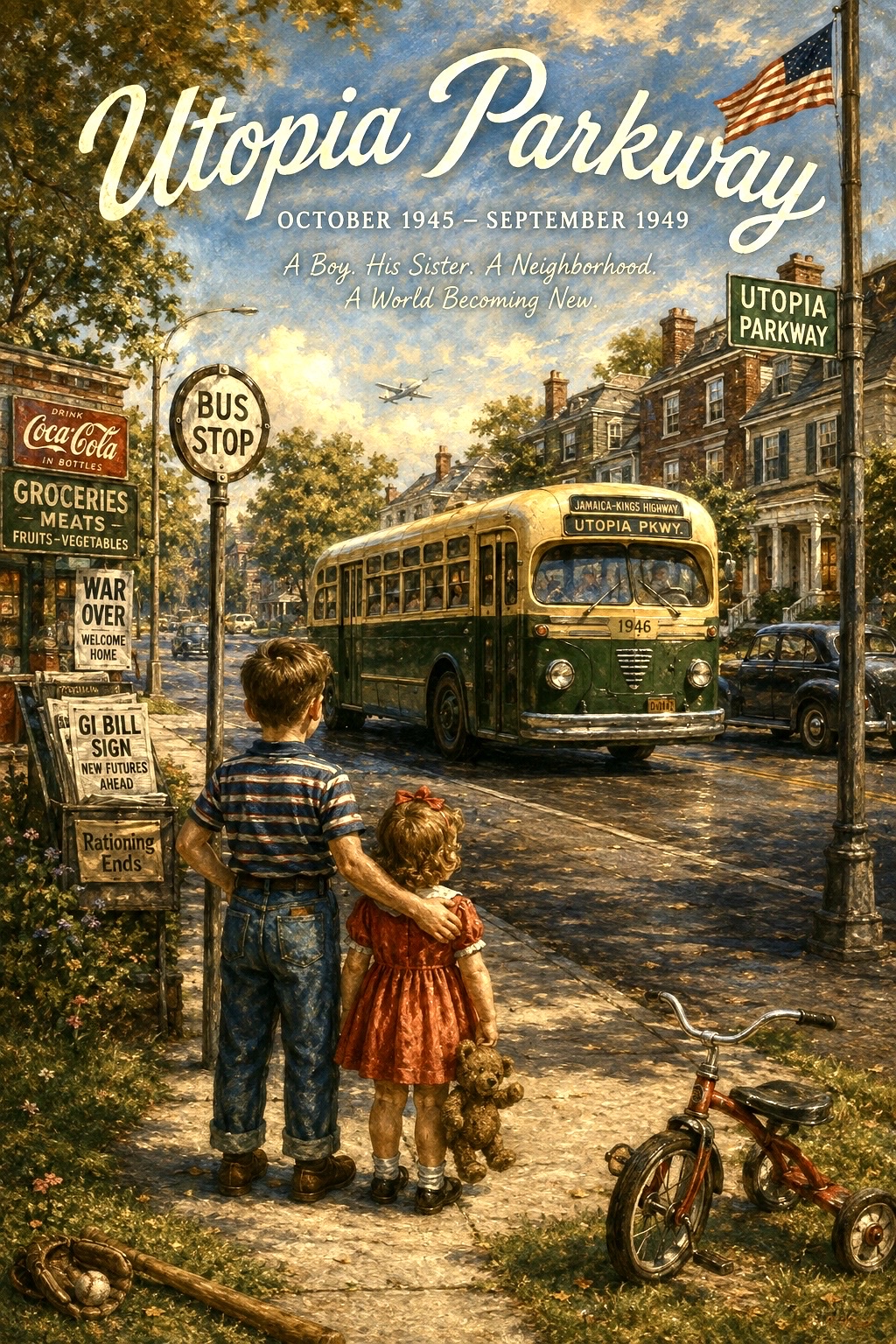
Utopia Parkway
v5.5
Cinematic Americana / 1940s–early 1950s roots-folk storytelling, warm nostalgic male vocal, 82 BPM, gentle 4/4 groove, The song should feel like an autobiographical memory unfolding through the eyes of a young boy growing up in Queens after World War II, Begin with intimate piano and fingerpicked acoustic guitar, soft upright bass and subtle brushed drums, Gradually add harmonica, mandolin, warm electric guitar, cello and understated strings, The opening should feel like the end of wartime and the beginning of peace, Verses are conversational and highly visual, telling ordinary American life from October 1945 through September 1949: returning soldiers, rationing disappearing, new cars and appliances, GI Bill optimism, neighborhood children, radios, buses, baseball, sidewalks, changing America, and the emerging Cold War heard mostly as distant adult conversation, The music should become brighter and more adventurous as the boy begins exploring his neighborhood, Make “Utopia Parkway” the
3:36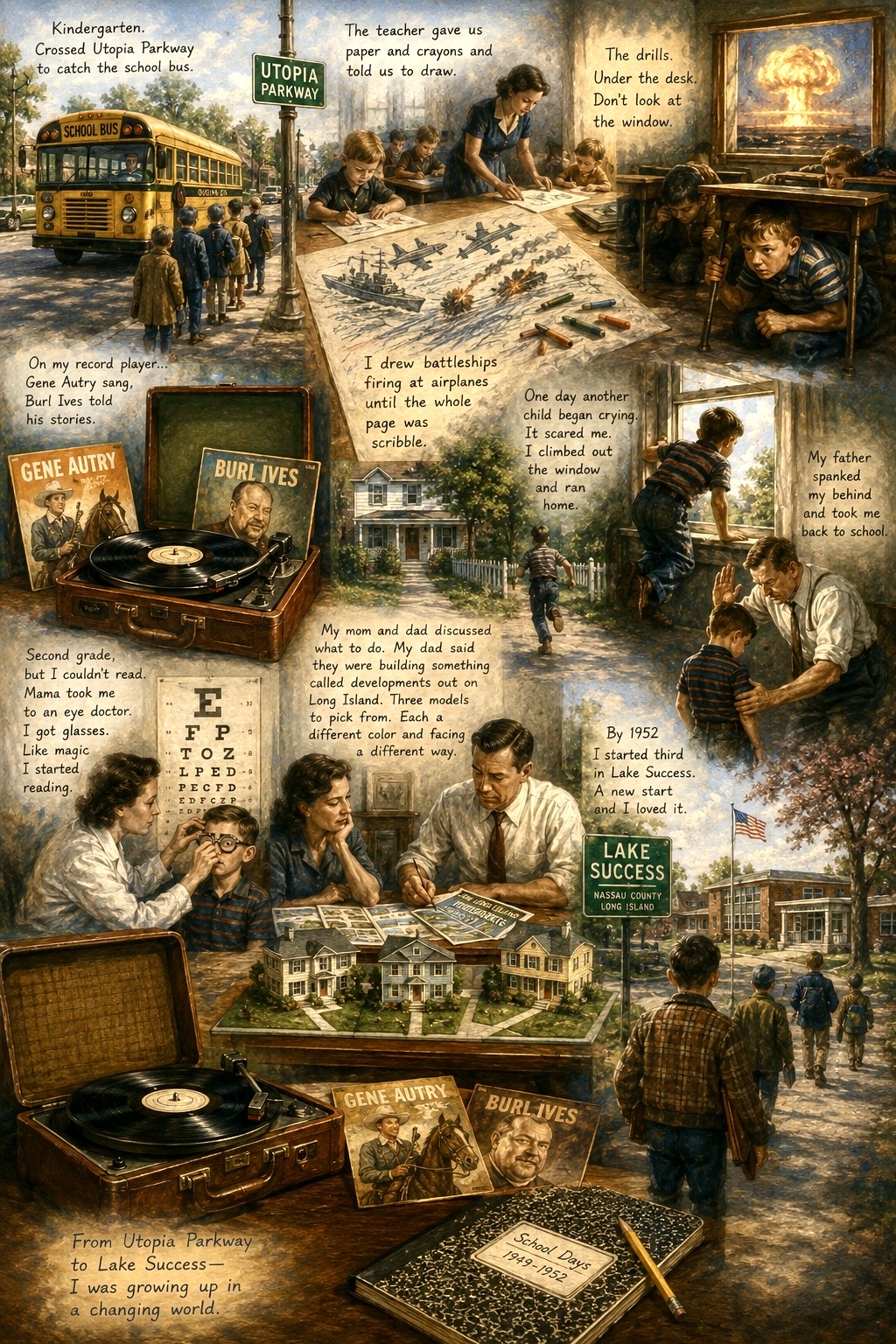
A New Beginning
v5.5
Warm early-postwar American folk / Western-pop storytelling, inspired by the innocent acoustic warmth of Gene Autry and Burl Ives recordings, but not a direct imitation of either artist, 86 BPM, gentle 4/4, concise song designed to stay comfortably under 7:59, Mature male storyteller vocal remembering childhood with affection, humor and occasional vulnerability, Acoustic guitar is the foundation, supported by upright bass, gentle fiddle, harmonica, light brushed drums and occasional mandolin, Simple memorable melodies, short verses and short choruses, with generous instrumental spaces rather than long vocal sections, Opening: intimate acoustic guitar and harmonica, evoking an old 78-rpm record being played in a child’s home, Kindergarten: bright, innocent acoustic arrangement; the song should feel like a five-year-old discovering school, Battleships and airplanes: slightly more energetic fiddle and guitar, playful rather than militaristic, Nuclear-bomb drills: suddenly strip the ar
7:33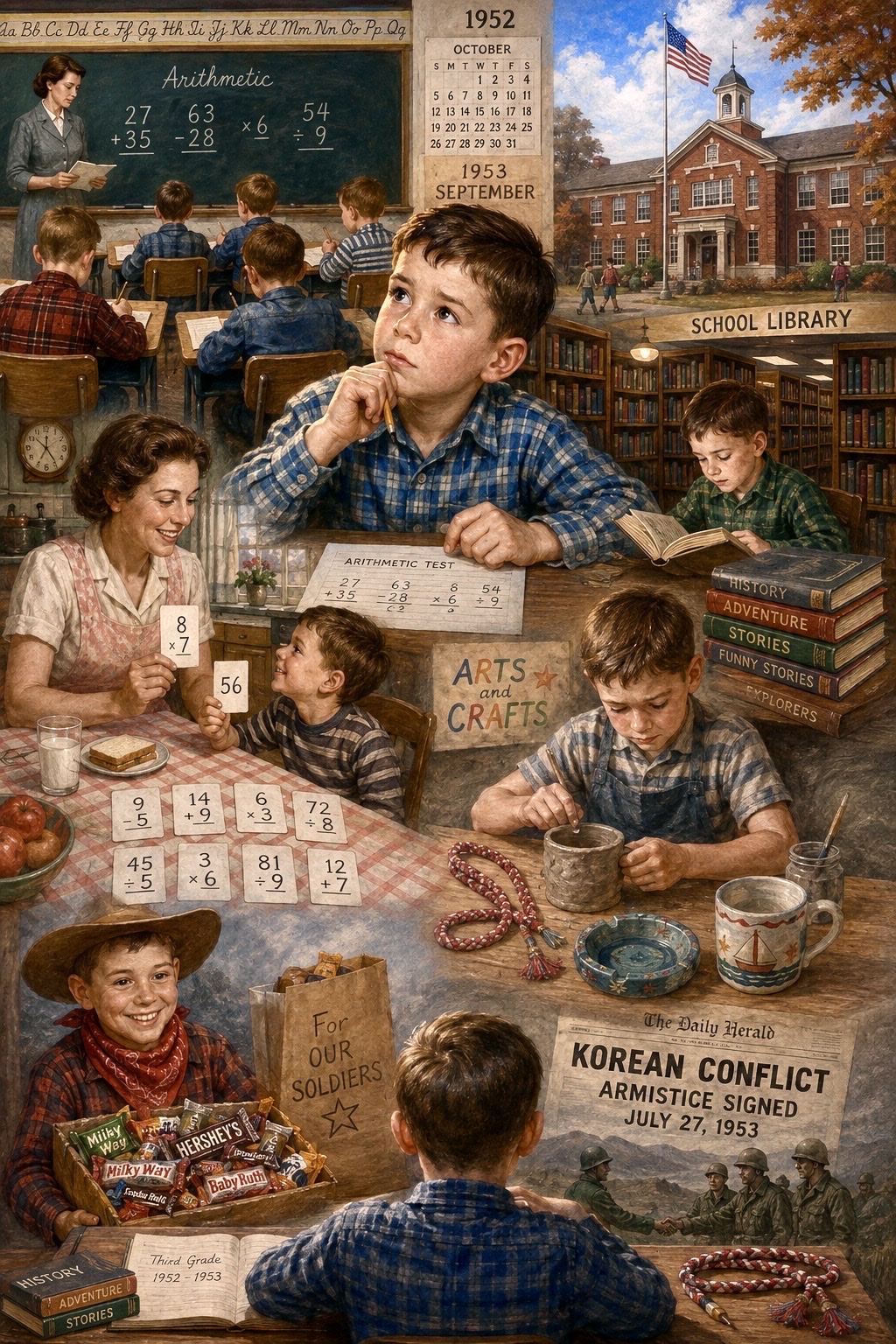
Warm cinematic Americana folk-pop storytelling, nostalgic but unsentimental, evoking an ordinary American childhood in 1952–1953, Mid-tempo 4/4, approximately 88 BPM, Intimate weathered male storyteller vocal, conversational and slightly gravelly, sounding like an older man remembering his childhood with genuine wonder rather than performing nostalgia, Begin with fingerpicked acoustic guitar, soft upright piano and very light brushed percussion, Gradually add warm upright bass, subtle electric guitar, mandolin, harmonica and restrained fiddle, The arrangement should feel handcrafted and organic, like an old family photograph slowly coming to life, VERSes should be intimate and highly narrative, with short vocal phrases and plenty of breathing room between lines, Let the lyrics tell the story clearly: third grade, the arithmetic test, counting on fingers, seeing other children already knowing the answers, telling Mom, daily arithmetic flash cards at lunchtime, becoming fast at additio
6:46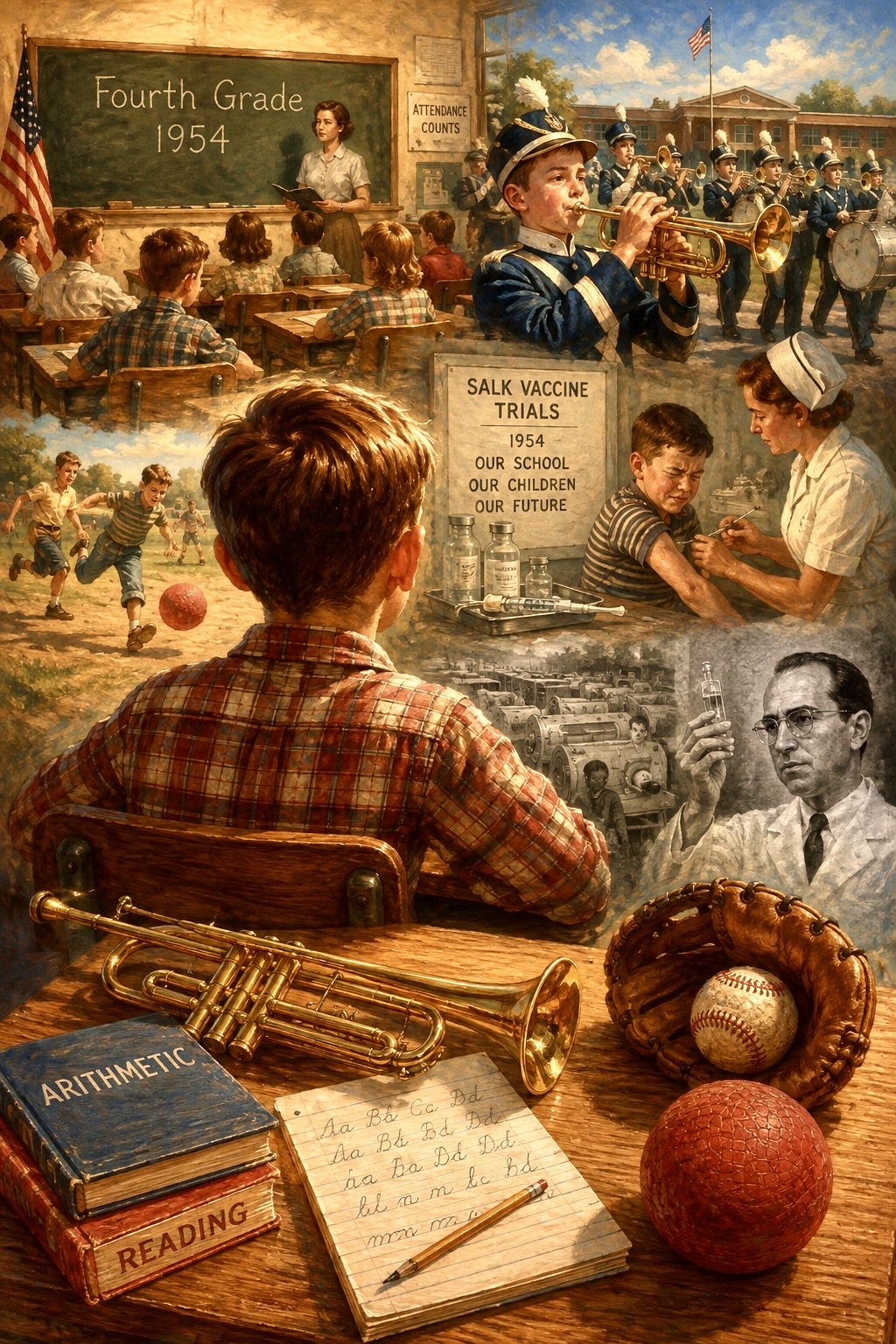
Fourth Grade
v5.5
heartland rock storytelling rock late 1970s early 1980s american roots rock feel inspired by the narrative warmth and emotional honesty of rock, heartland rock, classic rock mid tempo around 104 bpm nostalgic but not sentimental conversational storytelling gradually building emotional intensity lead vocal weathered warm expressive male storyteller intimate and conversational in the verses stronger and more impassioned in the choruses natural american phrasing slight grit believable lived in delivery the singer should sound like an older man looking back on his childhood not a polished pop vocalist instrumentation warm electric piano acoustic steel string guitar understated electric guitar melodic electric bass restrained drums with a solid heartland rock groove occasional hammond b3 organ swells subtle tambourine tasteful electric guitar fills add a realistic trumpet prominently in the musical arrangement as a callback to the fourth grade band experience trumpet should appear n