
3:43
不著邊地的天外天
v5.5
Gypsy jazz or jazz manouche, Lead acoustic guitar with a bright, percussive attack plays rapid chromatic runs, arpeggios, and tremolo picking, A second acoustic guitar provides rhythmic accompaniment using the pompe manouche technique, emphasizing beats two and four with sharp, percussive strums, An upright bass plays a walking bassline primarily in quarter notes, The tempo is fast at 240 BPM, The key is G minor, The arrangement features frequent use of diminished chords and chromatic passing tones characteristic of the style
3:32
不著邊地的天外天
v5.5
Gypsy jazz or jazz manouche, Lead acoustic guitar with a bright, percussive attack plays rapid chromatic runs, arpeggios, and tremolo picking, A second acoustic guitar provides rhythmic accompaniment using the pompe manouche technique, emphasizing beats two and four with sharp, percussive strums, An upright bass plays a walking bassline primarily in quarter notes, The tempo is fast at 240 BPM, The key is G minor, The arrangement features frequent use of diminished chords and chromatic passing tones characteristic of the style
3:49
不著邊地的天外天
v5.5
Gypsy jazz or jazz manouche, Lead acoustic guitar with a bright, percussive attack plays rapid chromatic runs, arpeggios, and tremolo picking, A second acoustic guitar provides rhythmic accompaniment using the pompe manouche technique, emphasizing beats two and four with sharp, percussive strums, An upright bass plays a walking bassline primarily in quarter notes, The tempo is fast at 240 BPM, The key is G minor, The arrangement features frequent use of diminished chords and chromatic passing tones characteristic of the style
4:34
不著邊地的天外天
v5.5
Bluegrass and old-time fiddle tune, A solo acoustic violin performs rapid, continuous sixteenth-note melodic lines characterized by frequent double stops and rhythmic bowing patterns, The performance features a high degree of ornamentation including slides, trills, and grace notes, The tempo is approximately 130 BPM in 4/4 time, The recording has a dry, close-mic acoustic profile with minimal artificial reverb, The melodic structure follows a traditional AABB form with variations in the second pass, The key is A major
4:32
不著邊地的天外天
v5.5
Bluegrass and old-time fiddle tune, A solo acoustic violin performs rapid, continuous sixteenth-note melodic lines characterized by frequent double stops and rhythmic bowing patterns, The performance features a high degree of ornamentation including slides, trills, and grace notes, The tempo is approximately 130 BPM in 4/4 time, The recording has a dry, close-mic acoustic profile with minimal artificial reverb, The melodic structure follows a traditional AABB form with variations in the second pass, The key is A major
3:52
French Gypsy Jazz, Lead baritone male vocals perform a swing-style melody in French, A lead acoustic guitar with a bright, percussive tone plays rapid chromatic runs, arpeggios, and trills, A rhythm acoustic guitar provides the characteristic manouche swing accompaniment with sharp, staccato downstrokes on every beat, An upright bass plays a walking bassline primarily on beats one and three, The tempo is 180 BPM in 4/4 time, The arrangement features frequent call-and-response between the vocalist and the lead guitar, The vocal delivery is smooth with slight vibrato on sustained notes
5:12
Show tune with a theatrical baritone male vocal, The arrangement features a grand piano, a string section with violins and cellos, and a woodwind section including flute and oboe, The piano plays rubato arpeggios and block chords, while the strings provide lush, legato counter-melodies and sustained pads, The woodwinds offer delicate melodic flourishes, The piece is in 3/4 time, approximately 75 BPM, in the key of E major, The vocal performance is expressive with wide vibrato and dynamic shifts from soft head voice to powerful chest voice
5:01
Show tune with a theatrical baritone male vocal, The arrangement features a grand piano, a string section with violins and cellos, and a woodwind section including flute and oboe, The piano plays rubato arpeggios and block chords, while the strings provide lush, legato counter-melodies and sustained pads, The woodwinds offer delicate melodic flourishes, The piece is in 3/4 time, approximately 75 BPM, in the key of E major, The vocal performance is expressive with wide vibrato and dynamic shifts from soft head voice to powerful chest voice
4:18
《 靠在椅背上的貓》
v5.5
Jazz swing with male vocals, The arrangement features a walking double bass line, a drum kit played with brushes on the snare and ride cymbal, and a grand piano, A prominent jazz guitar solo utilizes rapid chromatic runs, octaves, and bebop-style phrasing, The male vocal is a baritone with a smooth, crooner delivery, The tempo is 140 BPM in 4/4 time, The piano provides syncopated comping behind the vocals and guitar, The bass maintains a steady quarter-note pulse throughout
3:00
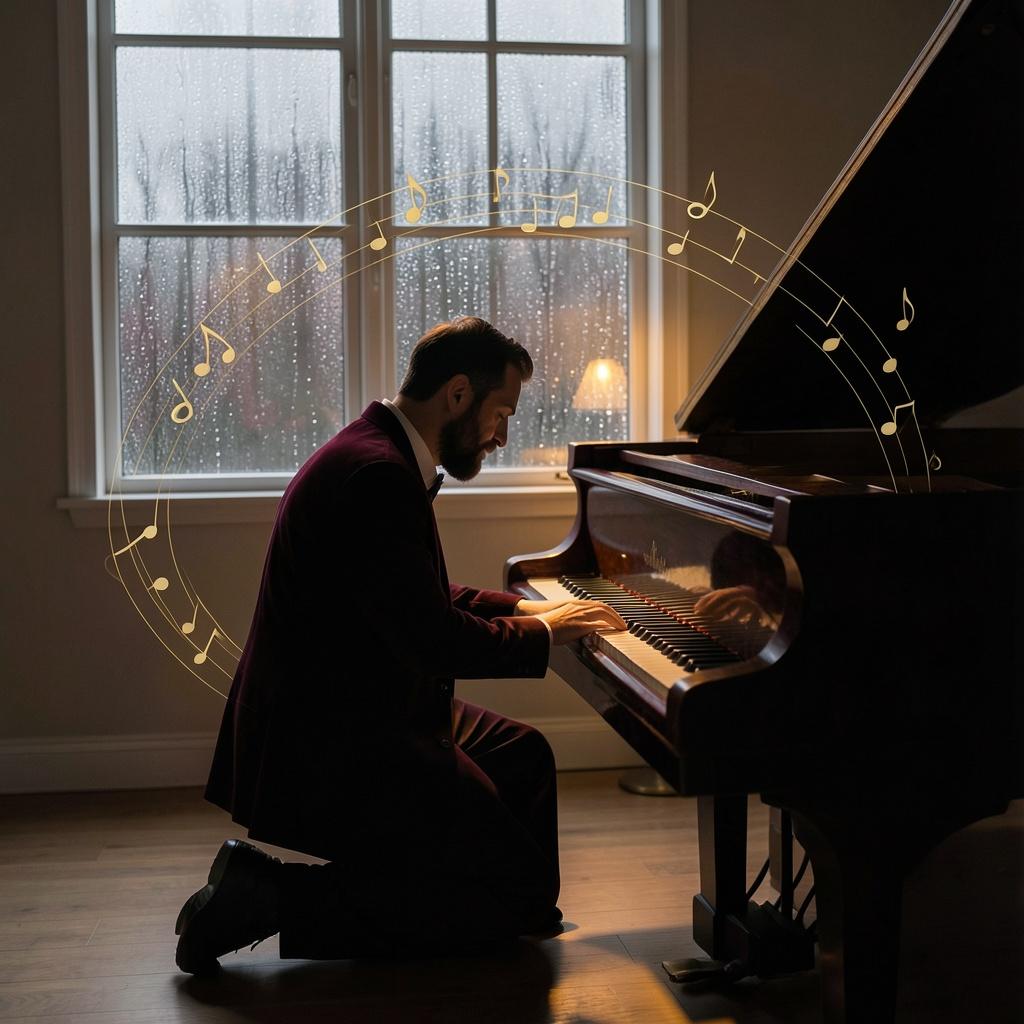
French Chanson with a jazz-influenced piano arrangement, A baritone male vocalist delivers a theatrical, expressive performance with wide dynamic range and vibrato, The piano accompaniment uses rubato, featuring lush jazz chords, arpeggiated flourishes, and chromatic transitions, The tempo is slow and flexible, following the vocal phrasing, The arrangement is intimate, focusing entirely on the interaction between the voice and the piano, Key of C Major, 3/4 time signature
4:26
Gypsy jazz/jazz manouche in G minor at 240 BPM: bright lead acoustic guitar with percussive attack, rapid chromatic runs, arpeggios, and tremolo picking; second acoustic guitar locks the pompe manouche on beats 2 and 4, Upright bass walks in quarters, with frequent diminished chords and chromatic passing tones throughout
5:02
Jazz quartet featuring a prominent tenor saxophone lead, The arrangement consists of tenor saxophone, upright bass, acoustic piano, and a drum kit played with brushes, The saxophone performs a melodic, improvisational lead with frequent vibrato and legato phrasing, The upright bass maintains a walking bassline in quarter notes, The piano provides rhythmic comping with jazz voicings, occasionally doubling the melody, The drums feature a steady swing pattern on the ride cymbal with a soft, shuffling snare texture, The tempo is a moderate 110 BPM in 4/4 time, The harmonic structure follows a standard jazz blues progression in the key of Bb major, The recording has a warm, analog character with natural room reverb
5:24
Jazz quartet featuring a prominent tenor saxophone lead, The arrangement consists of tenor saxophone, upright bass, acoustic piano, and a drum kit played with brushes, The saxophone performs a melodic, improvisational lead with frequent vibrato and legato phrasing, The upright bass maintains a walking bassline in quarter notes, The piano provides rhythmic comping with jazz voicings, occasionally doubling the melody, The drums feature a steady swing pattern on the ride cymbal with a soft, shuffling snare texture, The tempo is a moderate 110 BPM in 4/4 time, The harmonic structure follows a standard jazz blues progression in the key of Bb major, The recording has a warm, analog character with natural room reverb
5:14
Jazz quartet at 110 BPM in Bb blues: tenor sax leads with melodic improvisation, wide vibrato and legato lines, Upright bass walks steady quarter notes, acoustic piano comps with tight jazz voicings and melody doubles, while brushed drums ride a soft swing pulse with shuffle snare, Warm analog recording, natural room reverb
5:21
Jazz quartet at 110 BPM in Bb blues: tenor sax leads with melodic improvisation, wide vibrato and legato lines, Upright bass walks steady quarter notes, acoustic piano comps with tight jazz voicings and melody doubles, while brushed drums ride a soft swing pulse with shuffle snare, Warm analog recording, natural room reverb
5:18
Jazz quartet at 110 BPM in Bb blues: tenor sax leads with melodic improvisation, wide vibrato and legato lines, Upright bass walks steady quarter notes, acoustic piano comps with tight jazz voicings and melody doubles, while brushed drums ride a soft swing pulse with shuffle snare, Warm analog recording, natural room reverb
5:13
Jazz quartet at 110 BPM in Bb blues: tenor sax leads with melodic improvisation, wide vibrato and legato lines, Upright bass walks steady quarter notes, acoustic piano comps with tight jazz voicings and melody doubles, while brushed drums ride a soft swing pulse with shuffle snare, Warm analog recording, natural room reverb
4:44
Operatic art song for tenor and piano, The piano accompaniment features flowing arpeggiated triplets and sustained pedal tones, transitioning into dramatic block chords and rapid chromatic runs during climactic sections, The tenor vocal style is characterized by a wide dynamic range, frequent use of rubato, and sustained high-register head voice and chest-dominant belts, The piece utilizes a through-composed structure with recurring melodic motifs, The tempo is fluid, centered around 65 BPM, in 4/4 time signature


4:42
4:31

5:53
French Chanson with a jazz-influenced piano arrangement, A baritone male vocalist delivers a theatrical, expressive performance with wide dynamic range and vibrato, The piano accompaniment uses rubato, featuring lush jazz chords, arpeggiated flourishes, and chromatic transitions, The tempo is slow and flexible, following the vocal phrasing, The arrangement is intimate, focusing entirely on the interaction between the voice and the piano, Key of C Major, 3/4 time signature
5:47
French Chanson with a jazz-influenced piano arrangement, A baritone male vocalist delivers a theatrical, expressive performance with wide dynamic range and vibrato, The piano accompaniment uses rubato, featuring lush jazz chords, arpeggiated flourishes, and chromatic transitions, The tempo is slow and flexible, following the vocal phrasing, The arrangement is intimate, focusing entirely on the interaction between the voice and the piano, Key of C Major, 3/4 time signature
4:55
5:27
electronic, tibetan prayer wheels, theramin, digeridoo, atmospheric soft pads, whale song
7:59
4:54


4:52
4:41


6:40
《浮佇水面的月影》
v5.5
Jazz quartet featuring a prominent tenor saxophone lead, The arrangement consists of tenor saxophone, upright bass, acoustic piano, and a drum kit played with brushes, The saxophone performs a melodic, improvisational lead with frequent vibrato and legato phrasing, The upright bass maintains a walking bassline in quarter notes, The piano provides rhythmic comping with jazz voicings, occasionally doubling the melody, The drums feature a steady swing pattern on the ride cymbal with a soft, shuffling snare texture, The tempo is a moderate 110 BPM in 4/4 time, The harmonic structure follows a standard jazz blues progression in the key of Bb major, The recording has a warm, analog character with natural room reverb
2:37
French Gypsy Jazz, Lead baritone male vocals perform a swing-style melody in French, A lead acoustic guitar with a bright, percussive tone plays rapid chromatic runs, arpeggios, and trills, A rhythm acoustic guitar provides the characteristic manouche swing accompaniment with sharp, staccato downstrokes on every beat, An upright bass plays a walking bassline primarily on beats one and three, The tempo is 180 BPM in 4/4 time, The arrangement features frequent call-and-response between the vocalist and the lead guitar, The vocal delivery is smooth with slight vibrato on sustained notes
1:01
3:54
Operatic art song for tenor and piano, The piano accompaniment features flowing arpeggiated triplets and sustained pedal tones, transitioning into dramatic block chords and rapid chromatic runs during climactic sections, The tenor vocal style is characterized by a wide dynamic range, frequent use of rubato, and sustained high-register head voice and chest-dominant belts, The piece utilizes a through-composed structure with recurring melodic motifs, The tempo is fluid, centered around 65 BPM, in 4/4 time signature
3:59
Operatic art song for tenor and piano, The piano accompaniment features flowing arpeggiated triplets and sustained pedal tones, transitioning into dramatic block chords and rapid chromatic runs during climactic sections, The tenor vocal style is characterized by a wide dynamic range, frequent use of rubato, and sustained high-register head voice and chest-dominant belts, The piece utilizes a through-composed structure with recurring melodic motifs, The tempo is fluid, centered around 65 BPM, in 4/4 time signature
2:58
Calm, quiet, tranquility, gentle, subtle, sorrow, serene, forgiveness, resignation, transparency, seriously concentrated emotion, strings have to play to the end of note, Erace or ignore all limitations or basic rules of tempo setting of this music, follow strictly the tempo BPM=5, very slow but music should not stop, molto adagio, 19th and 20th century, inspired of 4th mov, of Symphony No, 9 in D major by Gustav Mahler, tonal, European harmonic theory of Late Romantic classical music, Late Romantic German=Austrian style, atonal, dissonance, The Boston Symphony Orchestra with 4 winds formation, chromatic scale, chromatic modulation, chromatic harmonies, doubled Harp plays in crystalline tone, major key, avoid frequent harmonic changes, do not change chords 1 measure each, keep music by the change of melodies and textures and instruments, all instruments should be played gentle and softer, No keynoise, quiet subtle pulse, duration:maximum 5 or 6 minutes, パワフルなドラム, ‑Piano solo, ‑Piano accompaniment, ‑concerto, ‑violin solo, ‑drums, ‑electric guitar
3:03
Calm, quiet, tranquility, gentle, subtle, sorrow, serene, forgiveness, resignation, transparency, seriously concentrated emotion, strings have to play to the end of note, Erace or ignore all limitations or basic rules of tempo setting of this music, follow strictly the tempo BPM=5, very slow but music should not stop, molto adagio, 19th and 20th century, inspired of 4th mov, of Symphony No, 9 in D major by Gustav Mahler, tonal, European harmonic theory of Late Romantic classical music, Late Romantic German=Austrian style, atonal, dissonance, The Boston Symphony Orchestra with 4 winds formation, chromatic scale, chromatic modulation, chromatic harmonies, doubled Harp plays in crystalline tone, major key, avoid frequent harmonic changes, do not change chords 1 measure each, keep music by the change of melodies and textures and instruments, all instruments should be played gentle and softer, No keynoise, quiet subtle pulse, duration:maximum 5 or 6 minutes, パワフルなドラム, ‑Piano solo, ‑Piano accompaniment, ‑concerto, ‑violin solo, ‑drums, ‑electric guitar
2:44
Calm, quiet, tranquility, gentle, subtle, sorrow, serene, forgiveness, resignation, transparency, strings have to play to the end of note, Erace or ignore all limitations or basic rules of tempo setting of this music, follow strictly the tempo BPM=5, very slow but music should not stop, molto adagio, 19th and 20th century, inspired of 4th mov, of Symphony No, 9 in D major by Gustav Mahler, tonal, European harmonic theory of Late Romantic classical music, Late Romantic German=Austrian style, dissonance, The Boston Symphony Orchestra, doubled Harp plays in crystalline tone, major key, avoid frequent harmonic changes, do not change chords 1 measure each, keep music by the change of melodies and textures and instruments, all instruments should be played gentle and softer, No keynoise, quiet subtle pulse, duration:maximum 5 or 6 minutes, 韓国トロット, ‑Piano solo, ‑piano accompaniment, ‑violin solo, ‑concerto, ‑drums, ‑electric guitar
2:28
Calm, quiet, tranquility, gentle, subtle, sorrow, serene, forgiveness, resignation, transparency, strings have to play to the end of note, Erace or ignore all limitations or basic rules of tempo setting of this music, follow strictly the tempo BPM=5, very slow but music should not stop, molto adagio, 19th and 20th century, inspired of 4th mov, of Symphony No, 9 in D major by Gustav Mahler, tonal, European harmonic theory of Late Romantic classical music, Late Romantic German=Austrian style, dissonance, The Boston Symphony Orchestra, doubled Harp plays in crystalline tone, major key, avoid frequent harmonic changes, do not change chords 1 measure each, keep music by the change of melodies and textures and instruments, all instruments should be played gentle and softer, No keynoise, quiet subtle pulse, duration:maximum 5 or 6 minutes, 韓国トロット, ‑Piano solo, ‑piano accompaniment, ‑violin solo, ‑concerto, ‑drums, ‑electric guitar
7:01
4:55
《月影が水面に落ちる》
v5.5
Gypsy jazz/jazz manouche at 240 BPM in G minor, opening at full throttle, Lead acoustic guitar fires bright, percussive chromatic runs, rapid arpeggios, and tremolo picking; second acoustic guitar drives pompe manouche on beats two and four, Upright bass walks in quarter notes, with diminished chords and chromatic passing tones throughout