3:33
British rock, band, 60s, old rock, psychedelic, strong drug, dynamic bass, strong bluesy, rhythm electric guitar, male voice, husky voice, chorus, middle voice, husky, nasal, harmony, drum, lead and rhythm electric guitar, Innovative melody line, Create a Beatles-style psychedelic blues-rock track inspired by Come Together, The song should have a groovy, slow tempo with a swampy, hypnotic rhythm, Instruments should include fuzzy electric guitar, thumping bassline (à la Paul McCartney), laid-back drums with a dry snare, and vintage electric organ fills, The vocal delivery should be hushed and gritty, resembling John Lennon's sultry tone, Use clever wordplay and surrealist imagery in the lyrics, blending mysterious verses with an anthemic, repeated chorus, The overall feel should be darkly playful and off-kilter, yet melodic and soulful, The production should sound analog and warm, like it was recorded in the late 1960s, Include occasional background harmonies and tape delay effects
3:04
60s British invasion, Beatles style, British rock, simple rock
Verse1 in bright Merseybeat, upbeat tempo, jangly rhythm guitars, tight bass, simple drums, Lead vocal male, nasal, urgent, youthful (John style), Add 3rd harmony in chorus, compact, energetic, Verse2 shifts to psychedelic atmosphere, Slower, deeper, Tape-like texture, light phasing, floating guitars, warm bass, Vocal intimate, introspective, slightly distant, dreamlike (John), Harmonies wider, haunting, Verse3 becomes grand, emotional, melodic, Rich piano support, singing bass, confident and warm lead (Paul), Big uplifting chorus, strong melodic resolution, Outro: monumental, orchestral rock ending, Huge tom feel, sustained guitars, Triple-tracked voices in high register, solemn, spiritual, like the grand finale of Abbey Road, No fade — final word clear and eternal, Avoid American blues feel, Keep British character, melodic bass, vintage drums
3:25
Pop band of Sixties, British rock, pop, drum, running bass, lead and rhythm electric guitar, male voice, vocal harmonies, chorus(Verse2), modulation, impressive guitar riff, only middle range, no shout, Beatles style×10, falsetto, modulation, calm, chromatic scale, syncopation, line cliché, psychedelic rock
1:58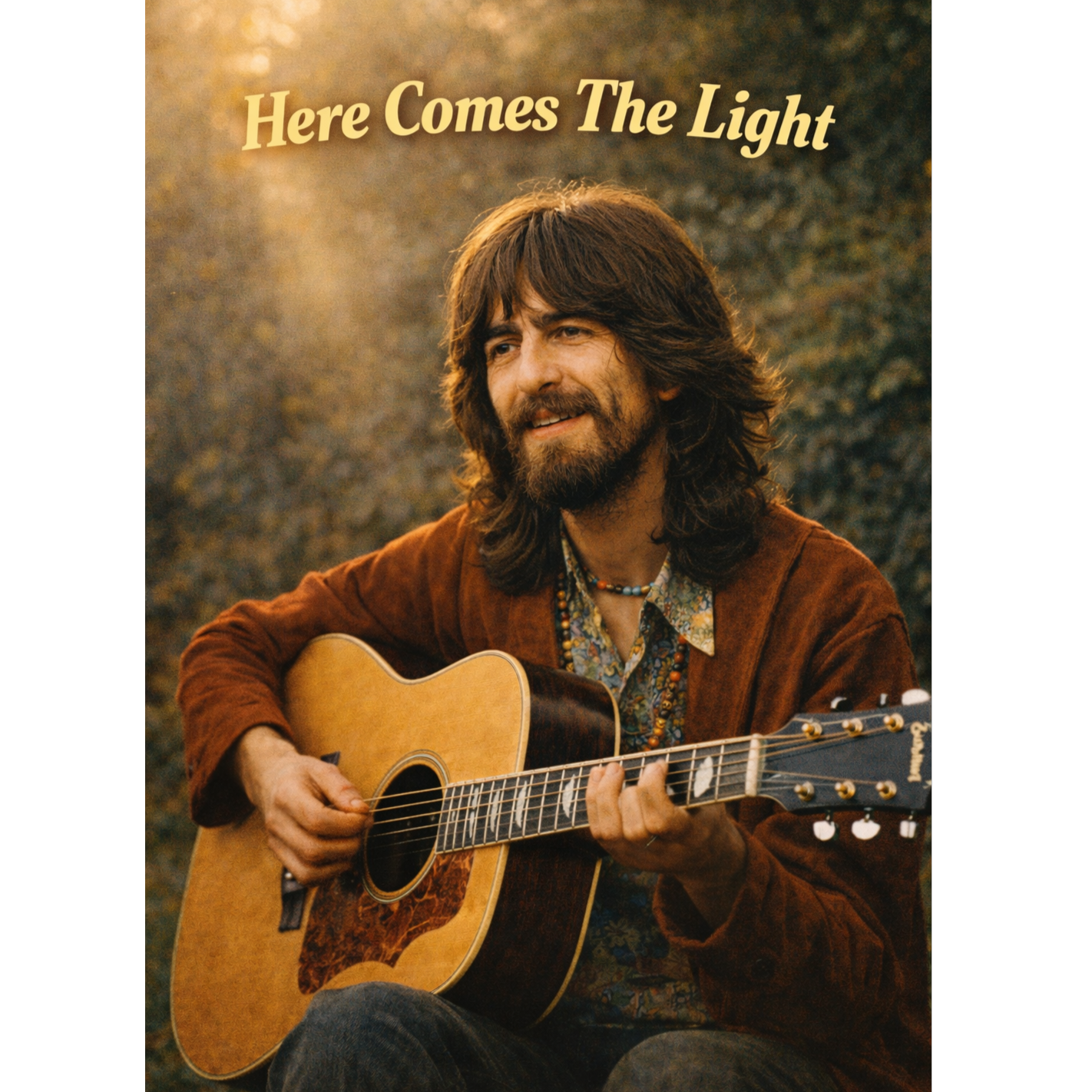
folk rock
Straight 4/4
Late 1960s British rock with strong Beatles influence
mid-tempo
Approx, 2:00–2:20
Reference song: Here Come the sun
George Harrison lead vocal, Calm, sincere delivery, Clear British accent, Soft nasal tenor, Minimal vibrato
Vocals: British male lead with calm, inward delivery, Selective harmony support only where needed
Song remains unresolved
harmony built mainly on thirds and sixths
Paul-style high harmony, John-style mid harmony, rhythm guitar (MARTIN D-18)
Lead guitar (Gretsch Country Gentleman–type)
bass (Höfner 500-1type)
Slide guitar answers vocal lines, Slide guitar leads the instrumental break and outro, Identifiable melodic guitar motif repeats and evolves
1960S ABBEY ROAD STUDIO Sound Quality
No arpeggiation, no dropouts, no smooth or pretty strumming, No blues bends, no fast runs, no flashy solos
No folk, No country, No blues, No harmonica, No modern effects
1969 George Harrison acoustic folk-pop song
Tempo: 124 BPM, Key: A major (Capotasto 7, play
2:49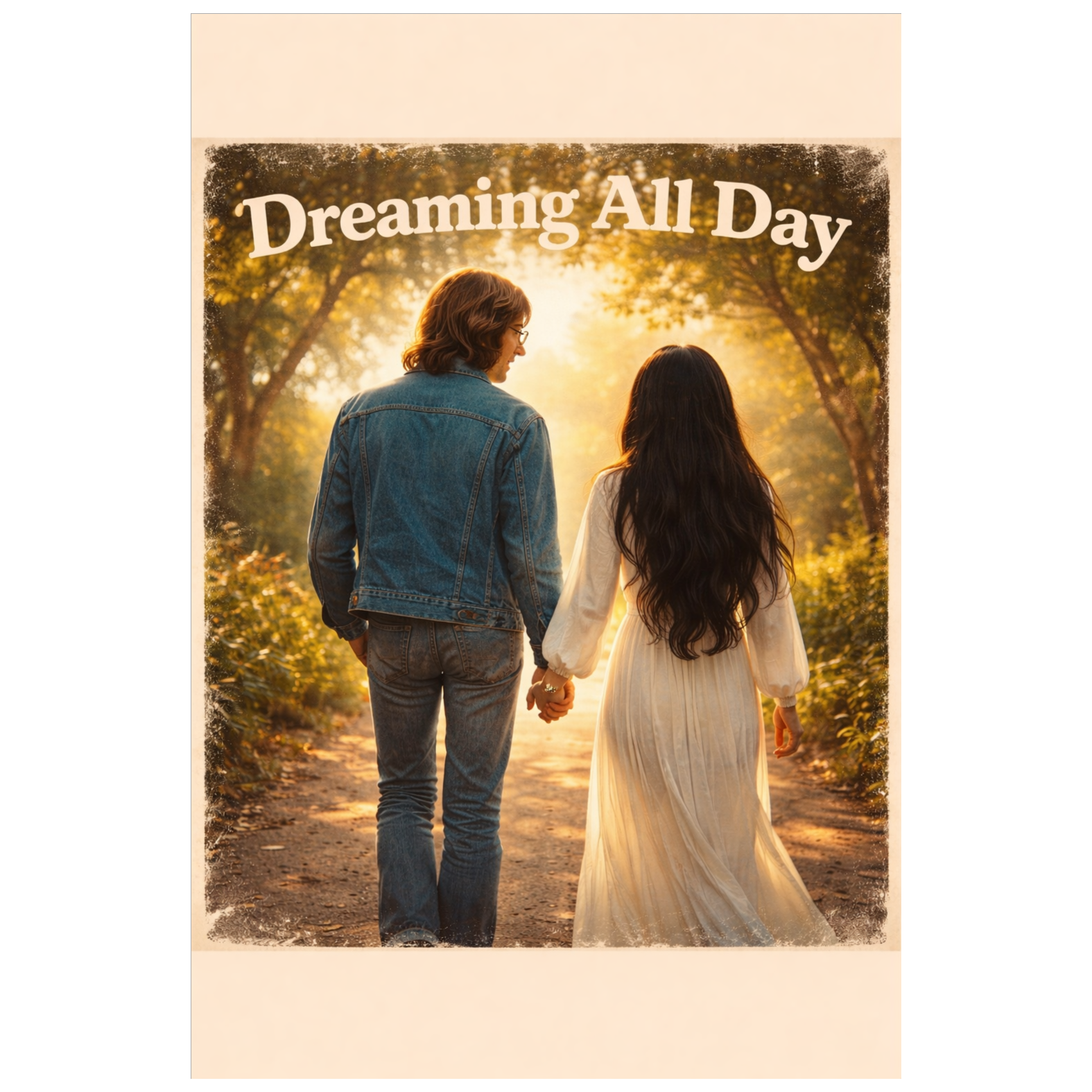
Dreaming All Day🎸
v4.5+
A dreamy psychedelic Beatles-style song titled "Dreaming All Day", Tempo: slow-mid (around 74 bpm), Instruments: acoustic guitar strumming (lazy feel), bass with melodic movement, light brushed drums, floating electric guitar riffs with reversed-effect style, organ/ Mellotron pad in the background, Vocals: Lennon-like nasal tone, slightly lazy and dreamy, double-tracked in chorus, Lyrics: (use provided verses and chorus) A Beatles-inspired psychedelic pop song titled "Dreaming All Day", Style: 1966 John Lenon vibe, similar to "I’m Only Sleeping", Tempo: ~74 bpm, lazy swing feel, No intro – song starts immediately with verse vocals, Instruments:
- Acoustic guitar strumming (loose, behind the beat)
- Bass with melodic McCartney-like movement
- Light brushed drums, laid-back groove
- Reversed electric guitar riffs (Harrison-style) woven between vocal lines
- Soft Mellotron/organ pad to create a dreamy texture
Vocals:
- Lead vocal with Lennon-like nasal tone, slightl
3:11
An understated ballad with a narrow, stepwise melody closely woven into soft chords—mostly sticking to 3rds and 5ths, occasional gentle suspensions, and relaxed, descending contours, Phrasing is unhurried and reflective, with subdued dynamics, minimal vibrato, and subtle chorus expansion, Instrumentation remains delicate and restrained throughout, 1969 British rock band with strong Merseybeat roots and late-era Beatles discipline, Side B medley track with subtle psychedelic character and George-led vocal, Constant percussive British rhythm guitar creates a hypnotic pulse, Composed melodic lead guitar introduces a circular motif and repeats it throughout, Very melodic bass with restrained, circular movement, Straight 4/4 drums with minimal fills, Harmony uses major seventh color tones without blues or modern effects, British male lead vocal with calm, inward delivery, Light harmony support only where needed, No blues, funk, jam-band, or modern rock elements, Track transitions directly
3:21
Beatles style, British rock, psychedelic rock
Reference song: Come Together
Irregular time signature
slow-tempo
Approx, 2:40–3:00
Same sonic world as previous album mature and unified
Overall feel: Serious
Late era Beatles / (1968–1970), Tone is dark, thick, dry, and mid-heavy with reduced treble
Late 1960s British psychedelic rock with strong Beatles influence
double-tracked vocals shine in the choruses, John Lennon's lead vocal, Gritty and textured, A distinctive, slightly nasal resonance, et the mid-range has an unusually strong presence, British accent, 1960S ABBEY ROAD STUDIO Sound Quality
rhythm guitar (Epiphone Casino-type)
bass (Höfner 500-1type)
Beatles-style backing vocals
Very melodic bass with darker contour
Ringo-style drums are tight, dry, straight 4/4 with minimal fills
Confident band statement opener
Paul-style high harmony, George-style mid harmony, harmony built mainly on thirds and sixths
chromatic, unstable harmonies
No Hand Clapping
4:45
When You’re Near🎸
v4.5+
Pop band of Sixties, bass, rhythm electric guitar, male voice, vocal harmonies, chorus, vocal harmonies, impressive guitar riff, slow, melodius, mellow
3:32
A nostalgic Britpop track in A major at 150 BPM with a tight garage rock groove: jangly Rickenbacker rhythm guitars, melodic Hofner bass lines, dry crisp snare, off-beat tambourine, and clean acoustic layers, Verses pair syncopated rhythms, chromatic guitar motifs, and melancholic textures under a dry, lo-fi vocal with understated British harmonies and falsetto accents, Choruses open with a gentle lift after a key modulation, bringing lush harmonies and a catchy midrange guitar riff, Organ stabs enliven the bridge before the outro reprises the riff, all anchored by percussive, melodic bass, rich chorus, Hofner bass (melodic and percussive), Vox AC30 amp tone, dry snare, tambourine on off-beats, and short organ stabs in the bridge, Vocals: male lead vocal in Lennon-style tone (slightly nasal and dry), double-tracked, Add McCartney/Harrison-style backing harmonies on chorus, tight rhythm stops between vocal phrases, Production: use 1966 Abbey Road vibe
2:50
If You Want Me🎸
v4.5+
Pop band of Sixties, pop, drum, running bass, lead and rhythm electric guitar, male voice, vocal harmonies, twin chorus(Verse2), impressive guitar riff, only middle range, no shout, Beatles style×10, falsetto, modulation, calm, chromatic scale, syncopation, narrow the range
2:20
Beatles style, Late Beatles style final track, Emotional but warm, Paul McCartney lead vocal, intimate and melodic, Georgel-style mid harmony, John-style mid harmony, Instrumentation:
grand piano leading, melodic Hofner style bass, light drums with tom feel, soft tambourine in chorus, gentle electric guitar swells, No heavy distortion, 3rd harmony chorus
Harmony: Uses extended circle-of-fifths progression, Secondary dominants (A7, E7) are prominent, No looped modern progressions, Harmony carries the song, Arrangement:
start minimal, grow naturally, Verse calm and reflective, Chorus must bloom with rich three-part harmony, Paul main, John higher third, George supporting, Paul McCartny's lead vocal, Clear and transparent, A voice where boyish innocence and adult warmth coexist, feel soft, Long sustained vowel on the final phrase, Mood:
farewell, gratitude, walking into light, hopeful ending, Production:
Abbey Road studio atmosphere, vintage tape warmth, No shouting
2:14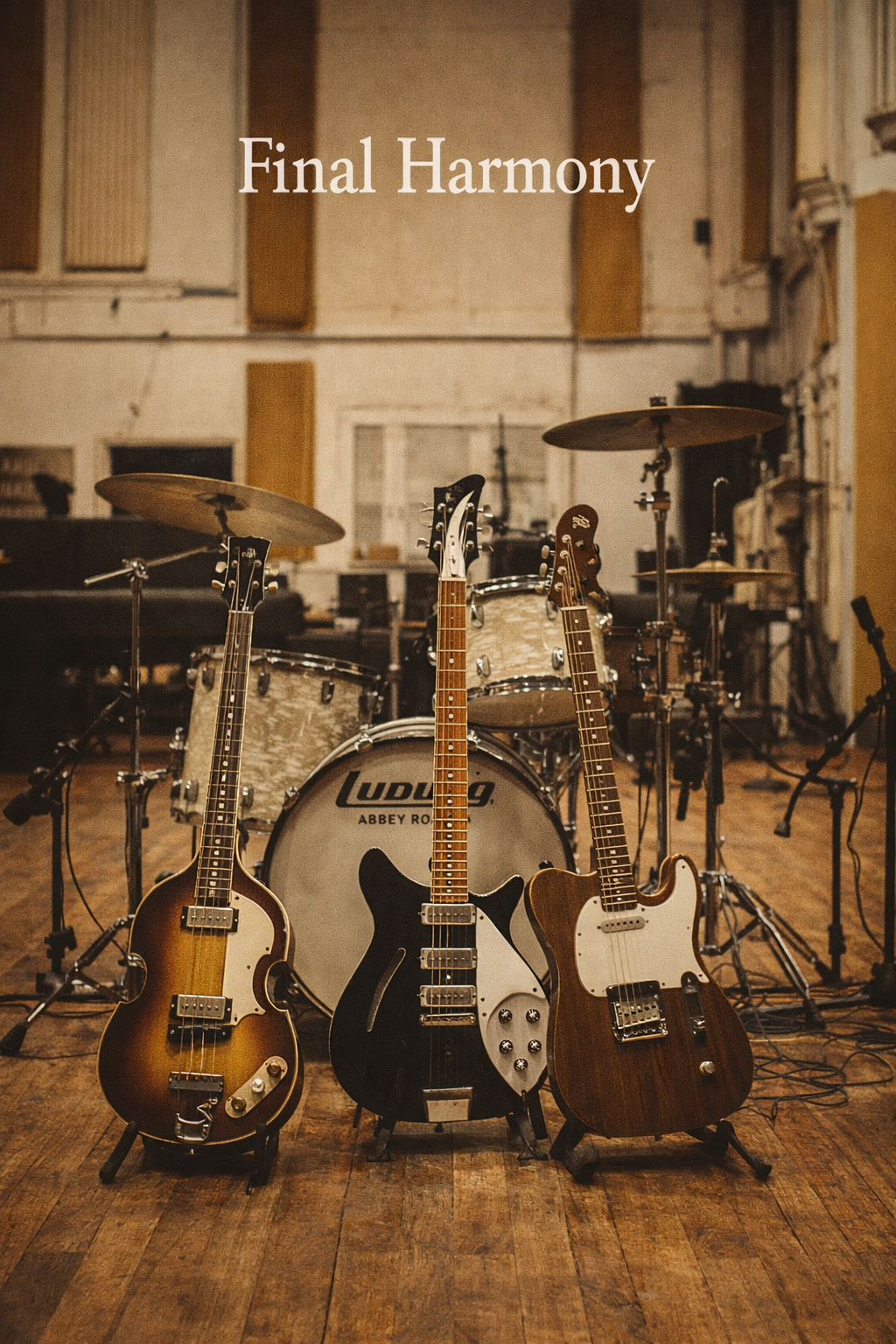
op band of Sixties, pop, drum, running bass, lead and rhythm electric guitar, male voices, strong vocal harmonies, rich chorus, modulation, impressive guitar riff, only middle range, Beatles style×10, falsetto, modulation, calm, chromatic scale, syncopation, narrow the range × 5High-energy 1969 Beatles-style rock finale, similar to “The End, ” Driving drums with Ringo-inspired fills, melodic and pushing bass line, Three electric guitar solo trade-offs in a medley style, Each guitarist has a distinct playing personality:
Soloist 1 (Paul style): smooth, fluid melodic phrasing, fast hammer-ons and pull-offs, clean but slightly overdriven tone, optimistic major intervals, Soloist 2 (George style): sweet, slide-in notes, expressive bends, slightly delayed phrasing, bright tone with a touch of reverb, mixolydian flavor, gentle vibrato at phrase endings, Soloist 3 (John style): raw, jagged rhythmic phrases, downstroke-heavy attack, bluesy minor pentatonic licks, slightly fuzzy