Top 40 Contenders
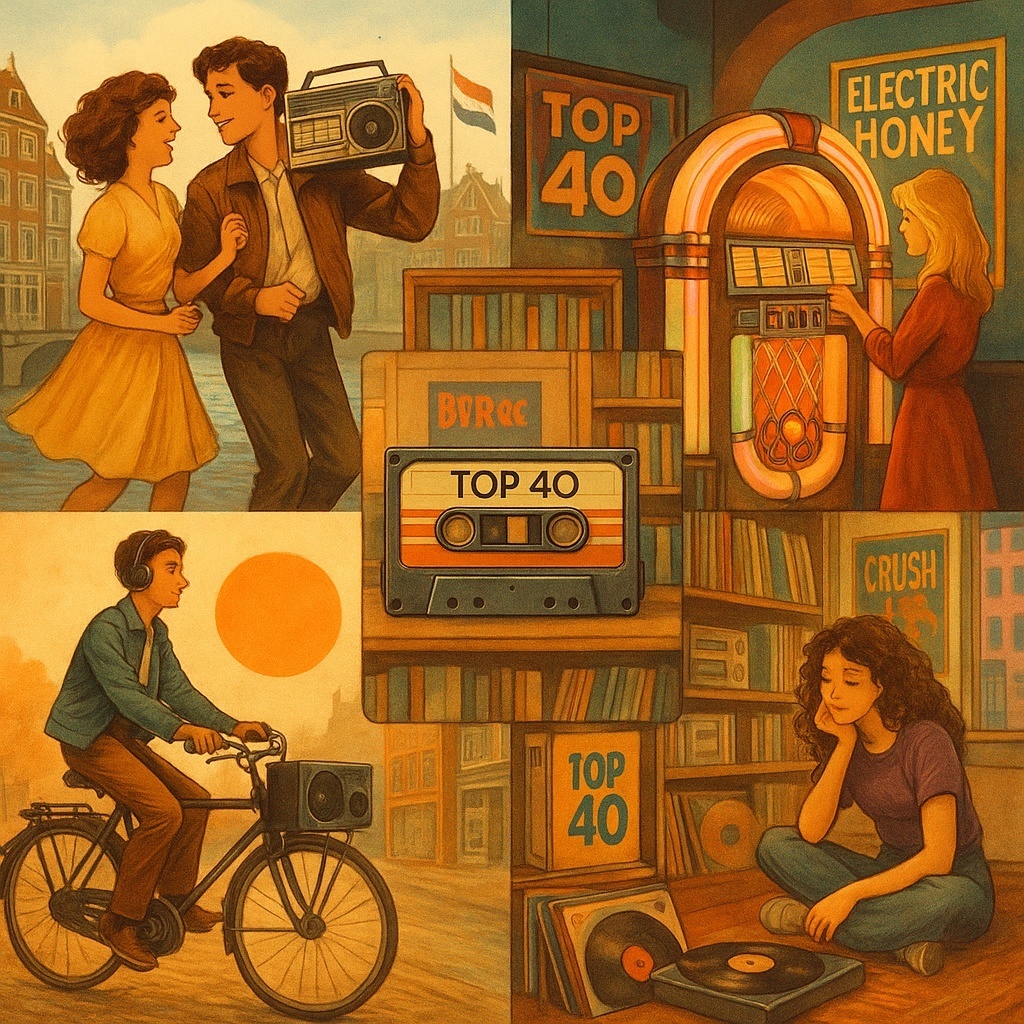
Top 40. Contenders of their time as seen from a Dutch perspective. (Chronologically ordered [desc])
·

40 songs
3:32
Miss
v4
electronic / italo disco, Arabian rhythm, Main vocal: Androgynous deep female vocals, cool and commanding, Repeating backing vocals
4:17
Clean, 1970s autobahn pop, Instruments: bongo drums, standing bass, rhythm guitar, lead sitar, Moog synth, Beat: 8/6, Key: F-major
3:16
Clean, British 1960s indie pop, Instruments: drum, bass, rhythm guitar, lead sitar, Whammy bar, Melody guitar (like The Shahows)
4:27
3:04

3:06
Save me
v4
1975s pop (Scandinavia) / disco, Classic 4 man band (drums, bass, lead, vocals), Female lead, high energy, afro american vocals (dual)
3:53
1996 Eurodance with growing trance influences and melodic sophistication, BPM around 134, Dominant female vocals, with long legato phrases and rising melodic arcs, Synths are lush, often with sawtooth leads layered over gentle pads, The structure includes airy instrumental bridges, emphasizing space and atmosphere before kicking back into a strong chorus, The lyrics evoke imagery of nature, movement, and emotional clarity — themes of freedom, inner strength, and transcendence, There’s more dynamic contrast now: softer verses, powerful choruses, Vocal effects may include light delay and spatial reverb, ‑Rap sections (nearly phased out in this sub-style) Cartoonish samples or spoken word Harsh staccato vocals or shout-style choruses Industrial or techno textures Overuse of looped phrases (focus is now on linear melodic progression)
3:22
Late-1990s Euro-American alt-rock fused with club-culture abstraction, Electric guitar is chopped, gated, and delay-soaked — more signal than chord — shifting across stereo lanes like coded light, Kick-snare is sequenced with machine logic; offbeat hi-hats flicker like glass, Sub-heavy bass mirrors the body more than the harmony — syncopated and hollow, Vocals are mid-tenor, vocoder-blurred and lowpass-filtered, with clipped phrasing and breathplay, Lyrics are cryptic, image-driven, and recursive — spiritual fragments wired into disposable glamour, Delivery alternates between seduction, satire, and glitch-distortion, Structure loops and breaks: recursive form, not verse-chorus linearity, Backing vocals are tight, robotic, whispered or falsetto-shadowed, layered in rhythm not harmony, Dynamics rise by subtraction, decay by tension, mmm uh-huh digital yeah push it ooh, ‑Avoid naturalistic dynamics, ‑major-key resolution, ‑and verse-chorus symmetry, ‑No folk melodies, ‑arena belting, ‑or clean confessional tone, ‑Exclude live jam aesthetics, ‑warm pads, ‑or traditional solos, ‑Guitar must not lead harmonically — only pulse, ‑glitch, ‑and shimmer, ‑No genre purity: the blend must remain ambiguous and self-aware, ‑No clean vocal takes — all voice must be processed, ‑fragmented, ‑or strained, ‑No sentimentality, ‑no earnest resolve — only loops, ‑contradiction, ‑and digital fatigue
3:17
Upbeat 90s Dutch nederpop in major key, Simple chord progressions, real drums, electric guitar, major synth stabs, Male Dutch vocals, bright and catchy, Big chorus hooks, background vocals in refrain, Joyful and danceable, Like Kadanz or early Poema’s
2:29
"Boots On"
v4.5
Minneapolis, 1994, Explosive hybrid of funk-rock, synth-rave, and gospel theatrics, Vocal lead jumps between guttural growls, screeched falsetto, and preacher-style cadence, Phrasing punches the beat in manic syncopation; syllables act like drums, Intro is maximalist: multi-phase layering of drum machine ostinatos, psychedelic synth glissandos, funk guitar loops, and rising choral pads — disorienting, then locking into a monster groove, Production is bass-heavy, with stereo delay games and filtered vocal samples, Backing vocals are hyped chants, crowd responses, and gospel-style echoes in stereo bursts, Lyrics are pure surface: sex, movement, flash — no introspection, no metaphors, all beat, “Yo! U ready? Uh-huh — NOW!!”, ‑No symbolic language, ‑poetry, ‑or storytelling, ‑No emotional reflection or ambiguity, ‑Lyrics must not reference vulnerability, ‑time, ‑memory, ‑or morality, ‑Avoid minimalism — intro must do too much, ‑No slow build: the intro may be long, ‑but it must explode with elements, ‑No soft instruments (acoustic guitar, ‑upright bass, ‑real strings), ‑No singer-songwriter structure — this is a sonic parade on ecstasy
3:47
UK 1993 synthpop with high-gloss electronic orchestration, Vocals by high male tenor, delivered with cool clarity, restrained emotion, and near-monotone phrasing, Beat-driven structure with gated snares, analog pads, and triumphant synth-brass stabs, Digital choirs and layered harmonies accent refrains, Songs progress linearly, with a keychange used as emotional lift, not theatrical climax, Lyrical tone is collective, abstract, and dignified — focused on shared emotion over personal narrative, mmm, da-da-daaa, ooh-oh, ‑Avoid personal anecdotes, ‑irony, ‑spoken confessions, ‑or slang, ‑No lo-fi, ‑acoustic, ‑funk, ‑or EDM-style drops, ‑Exclude unstructured metaphors or surrealism, ‑No raspy vocals, ‑shouted lines, ‑trap rhythms, ‑or contemporary buzzwords, ‑Never include stripped-down or raw arrangements — polish and symmetry are essential
3:13
Era: Late 1980s, Genre: Afro-Brazilian percussion-driven folk-pop, Mood: Lively and reflective, combining joyful rhythmic energy with introspective and poetic lyrics, The mood balances urban vibrance with nostalgic undertones, giving the song a layered emotional depth, Vocal style: Casual male vocals with narrative phrasing and conversational timing, Instrumentation: Prominent low-pitched hand percussion (e, g, surdo, congas), syncopated acoustic guitar, subtle horn bursts, melodic basslines, and occasional ambient keys, Tempo is brisk and groove-oriented, ‑Modern
3:13
US 1987, Female lead vocals in a bright mezzo-soprano, warm yet assertive, with a soft Californian inflection and breath-supported chest voice, Phrasing is spacious and mid-tempo, with soaring melodic arcs, strong downbeats, and emotive push during chorus peaks, Words are articulated with American pop clarity, leaning into vowels with a smooth drawl and slight reverb-tail emphasis, Genre fusion of arena pop-rock, synth-gloss, and 60s revival energy, featuring lush background harmonies, steady gated drums, layered rhythm guitars, warm pads, and chorus-laden bass lines, Vocal harmonies support the lead in unison or thirds, often swelling during chorus and bridge, Production is full-spectrum, stereo-wide, with bright reverb, snare splash, and late-80s sheen, Harmonic feel is major-key optimism with bittersweet undertones, often modulating upward for emotional lift, Lyrics are romantic, evocative, and outward-facing, focused on longing, euphoria, or nostalgic desire, ‑Avoid heavy rock distortion, ‑grunge texture, ‑or industrial tones Avoid spoken word sections or ironic phrasing Avoid minor-key dominance or gloomy motifs Avoid post-90s vocal fry, ‑minimalism, ‑or filtered production Avoid retroactive genre blending like synthwave or dream pop Avoid country or Americana associations
3:06
3:37
"The Man Within"
v4.5
UK 1987 synthpop, blending Catholic guilt and dancefloor clarity, High tenor vocal delivery — restrained, clipped, and near-emotionless — recounts turmoil with forensic detachment, Beat-driven structure with minor-key arpeggios, layered synths, and gated snares, Choral synths and digital bells underline themes of ritual, judgment, and repression, Dynamics build through harmonic layering and formal repetition — not vocal escalation, Keychange is used as structural inevitability, not catharsis, Lyrics are accusatory yet passive, blending institutional critique with inner monologue, mm-mmm, da-da-da-da, ding—, ‑Avoid gospel inflection, ‑rock guitars, ‑or soulful vocal flourishes, ‑No warmth, ‑whispering, ‑or personal storytelling tone, ‑Exclude slang, ‑confessional language, ‑or metaphors of healing, ‑No acoustic elements, ‑swing rhythms, ‑or musical theatre pacing, ‑Do not build through vocal passion — the emotion lies in structure, ‑not in voice
3:30

4:12
3:13
Layered soft rock from UK/US 1983 with layered vocals, shimmering textures, and emotional restraint, Vocals are UK/US male and female, alternating leads, Male voice is tightly controlled, dry, mid-range, with staccato phrasing and rhythmic tension, Female voice is airy and nasal, with legato curves and melodic softness, Both voices are doubled or layered in harmonies — dry and breathy in verses, lush and chorus-rich in choruses, Accent is West Coast neutral, No vibrato in male vocals; female voice uses subtle rises but no ornamentation, Lyrics are poetic, introspective, and emotionally guarded, Structure follows refined pop form (Verse–Pre–Chorus), with midtempo pacing and looped cadences, Production features gated reverb on drums, chorus FX on guitar, analog synth beds, and soft ambient stereo widening, The aesthetic blends adult melancholy with polished studio warmth — neither rock nor full pop, but emotionally suspended, ‑Avoid blues progressions, ‑raw vocals, ‑or folk twang, ‑No arena-rock drums, ‑distorted guitar solos, ‑or shouted choruses, ‑Exclude vibrato-heavy delivery, ‑funk basslines, ‑or 70s-style warmth, ‑No lo-fi textures, ‑synth-pop glitter, ‑or country elements, ‑Lyrics must not be ironic or aggressive, ‑Do not introduce abrupt changes or experimental shifts — elegance and restraint dominate
3:51
1978 – South Africa, Female lead vocal with strong, resonant tone and tight vibrato, Delivery is clean, emotionally direct, with sustained notes and precise articulation, Phrasing aligns to backbeat groove, using long melodic arcs and clear harmonic resolution, Accent is neutral, slight Afrikaans undertone, Genre blends pop rock, soft rock, and light disco elements, Core instruments: dual electric guitars, bass, analog drum kit, electric piano, Production is polished but analog, with stereo panning and slight tape warmth, Harmony is diatonic with gospel-pop tendencies, Groove is straight, 4/4 midtempo, steady backbeat, Vocal harmonies are female-led, stacked in thirds and unison, prominent in choruses and codas, Emotional tone is sincere, uplifting, and slightly pleading, Lyrics focus on emotional clarity, romantic urgency, and spiritual longing, with repetition for emphasis, ‑Country, ‑folk, ‑or Americana instrumentation such as banjo, ‑slide guitar, ‑pedal steel, ‑fiddle, ‑or acoustic fingerpicking patterns, ‑Soft-pop vocal delivery (e, ‑g, ‑breathy crooning or overly delicate tone), ‑Ballad structure with slow piano leads — unless explicitly driven by electric instrumentation, ‑Gospel or R&B vocal arrangements like melisma, ‑call-and-response choirs, ‑or soulful wailing, ‑Anachronistic production elements including autotune, ‑lo-fi filters, ‑modern synth layers, ‑or ambient pads, ‑Modern pop phrasing, ‑millennial whoops, ‑or slang not used in late-70s rock lyrics, ‑Overuse of emotional tropes like pleading, ‑weeping, ‑or confessional tones more suited to later adult contemporary or Americana ballads, ‑Any stylistic drift toward Nashville or Nashville-inspired pop-rock hybrids
3:36
1978 French chanson-pop ballad blending analog synth textures with acoustic guitar and intimate female vocals, The mood is softly nostalgic, evoking the gentle wonder of televised learning and the quiet emotional world of a child or daydreamer, The song features a sparse arrangement: electric piano, brushed drums, analog synth pads (Juno-like), nylon guitar, and occasional string flourishes, Moderate tempo (ca, 88 BPM), Vocals are expressive, whispered with moments of vibrato and airy head voice, suited for a storytelling delivery, as if reading from a personal diary, ‑• Digital synths (DX7, ‑FM tones) • Modern phrasing or vocal belting • English lyrics or Anglo-pop idioms • Auto-tune or post-1990s harmonies • EDM elements or sampling • Overproduced chorus effects • Hip-hop or disco slang • Dense reverb beyond 1970s analog limitations
2:44
1976 Philly soul-ballad blended with folk-rock grit, shaped by the blue-collar aesthetics of mid-70s analog production, Lead vocal is a hoarse, heartfelt male baritone with untrained phrasing — more conviction than polish, Phrasing is dragged behind the beat in slow 6/8, with staggered breath breaks and clipped consonants, Melodic motion stays low in the chest, rooted in three-chord gospel-folk progressions, The rhythm section is sparse: rimshot snare, upright piano, plucked bass, and occasional harmonica stabs, Backing vocals join only in the chorus, flat and dry, like a bar crowd singing along out of loyalty, Production is mono-dominant with tape hiss and minor pitch warble on held chords, The dynamic arc rises slowly but never explodes — this is not about glory, but about trying again, Mmm-mm, go on then, ‑Avoid triumphant horns, ‑cinematic orchestration, ‑or stadium rock aesthetics, ‑No electric guitars, ‑synths, ‑or layered choirs, ‑Exclude modern metaphors, ‑flashy rhymes, ‑or motivational clichés, ‑No polish — every line must sound like it could’ve been written by the character himself, ‑Do not allow vocal perfection, ‑genre polish, ‑or studio sheen, ‑This is pre-fame, ‑pre-victory, ‑pre-hope
2:39
Orchestral power-pop from UK 1977, blending Beatlesque songwriting with symphonic arrangement and futuristic gloss, Vocals are UK male, mid-to-high range with nasal brightness and light falsetto peaks, Phrasing is melodic and bouncy, with triplet accents and upward leaps, Accent is British Midlands but softened for clarity, Harmonies are dense and layered: high unison, falsetto stacks, and vocoded interludes, Lyrics are whimsical, optimistic, and surreal, often referencing time, weather, or cosmic imagery, Production is saturated and stereo-wide: multitracked string sections (real and synthetic), vocoder textures, bright electric piano, disco-influenced drums, and analog phasing, Rhythm is steady and pop-driven, rarely syncopated, Songs follow pop arcs but add instrumental interludes, orchestral intros/outros, or abrupt transitions, The sonic aesthetic is hyper-arranged, joyful, and cinematic — a neon symphony in rock format, ‑Avoid blues-based structures, ‑raw vocals, ‑or emotional introspection, ‑No American twang, ‑punk minimalism, ‑or gritty realism, ‑Exclude acoustic folk textures, ‑jazz phrasings, ‑or sparse arrangements, ‑No whispered vocals, ‑dark themes, ‑or sparse production, ‑Do not allow funk syncopation, ‑ballad pacing, ‑or lo-fi aesthetics
3:59
Slow-burning blues rock ballad from UK 1975, with emotionally raw UK male vocals delivered in a raspy high tenor chest voice, Vocal phrasing is elongated, mournful, and drenched in emotional strain, often pushing into distortion during climaxes, Accent is unmistakably Northern English but stylized for transatlantic rock audiences, Instrumentation centers around clean electric guitar leads with subtle bends and echo, deep bass, and restrained drums with long decay cymbals, Production is analog, with slight tape saturation and natural room reverb, emphasizing space and vulnerability, Harmonic structure favors minor progressions and suspended chords to prolong tension, Vocal delivery includes strained legato passages, often pushing the edge of melodic collapse, Lyrical tone is fatalistic, centered on heartbreak and romantic suffering, with direct, plainspoken language, ‑Modern pop or power ballad vocal stylings Clean or soft vocal tones Duet or shared lead vocals Overprocessed or digital effects Bright chord progressions or upbeat themes Synthesizers, ‑orchestral layers, ‑or lush background vocals Optimistic or empowering lyrics Mid- or fast-tempo rhythm American Southern gospel or country inflections Modern phrasing or breakup clichés
2:53
3:06

2:37
"Sommartopp"
v4.5
Year: 1974
Genre & Traits: Swedish radio pop in the post-ABBA breakout era, influenced by schlager, glam pop, and Euro-disco precursors, Emphasizes catchy melodic hooks, upbeat rhythm sections, and clean vocal layering, Mood: Energetic, sentimental, youthful
Vocal Type: Female solo with multi-track backing vocals (optionally male/female mix)
Instrumentation (in order): Electric piano, rhythm guitar, electric bass, simple drum kit, analog synth accents, strings (section pads)
Tempo: Upbeat (ca, 112–118 BPM), steady 4/4 rhythm with offbeat syncopation and dynamic choruses
Performance Notes: Clean articulation, slight vibrato on key emotional words, natural-sounding multi-track harmonies in chorus, ‑• Disco grooves or funk-style basslines (not yet dominant in 1974 Sweden) • Punk or rock distortion — this is polished radio pop • 80s digital synths, ‑gated reverb, ‑or vocoder effects • Melismatic vocals or R&B phrasing • Complex jazz chords or chromatic progressions • Language that's too modern, ‑ironic, ‑or abstract • Verse-only structure — a strong chorus with refrain is expected • Electronic dance build/drop format
4:37
3:52

4:18
Clear, 1958, easy listening, pop, male vocalist, bittersweet, cute, love, pop/rock, melodic, melancholic, oldies 50s, rockabilly, passionate, longing, doo-wop
3:11
"Reviens-moi"
v4.5
Mid-1960s French chanson dramatique led by a high-energy male baritone with theatrical phrasing and a signature rasp in emotional peaks, Piano drives the rhythm, starting with syncopated stabs or arpeggios before erupting into chordal explosions, Voice jumps between soft-spoken lines and sudden crescendos, as if wrestling memory and emotion, Melody often leans on harmonic instability: secondary dominants, modal borrowing, surprise modulation, Lyrics balance obsession with fragility — intensity without control, Orchestration includes brass swells, sweeping strings, and marching snare interjections, Harmony escalates then collapses into minor reflection, Backing vocals may shout or whisper, A chanson that sounds like someone trying not to break apart, ha! je l’avais presque… presque…, ‑Avoid smooth phrasing or breathy delivery, ‑No folk guitar, ‑pop backbeat, ‑or lounge-style restraint, ‑Do not use delicate or ambient textures, ‑Avoid modern slang, ‑whispery intimacy, ‑or any English influence, ‑No synths, ‑minimalism, ‑or narrative detachment, ‑Exclude jazz coolness or crooner style, ‑This is not elegant — it’s urgent, ‑No four-chord clichés or soft-core emotion, ‑No balance, ‑He must teeter
4:12
Genre: 1960s orchestral pop / dramatic crooner ballad
Style: powerful vocal-driven romantic pop with rich orchestration, steady tempo, emotional intensity, and classic phrasing
Instrumentation: lush string sections, brass accents, woodwinds, electric bass, clean electric guitar, vintage drums, light piano, subtle backing vocals
Vocal: London British, Strong male baritone voice with theatrical delivery, controlled vibrato, dynamic expression, classic 60s pop enunciation
Mix: Warm analog tape feel, centered lead vocal, soft stereo spread on instruments, plate reverb on vocal
Hooks: strong melodic motifs, recurring lyrical phrases, rising vocal lines, emotionally charged choruses
Avoid: modern pop phrasing, synth-based sounds, minimalism, overproduction
3:59
3:34
3:20
US West Coast, 1969, Male vocals in high tenor with open, breathy tone and clear enunciation, Phrasing is mid-tempo, warm, and melodically fluid, often with stepwise motion and rising falsetto peaks, Harmonies are rich and full, arranged in parallel thirds, fourths, and tight cluster chords, with unison entries and echoing responses, Genre fuses baroque pop, soft rock, and Phil Spector-inspired orchestral pop, Core instrumentation includes 12-string guitar, upright bass, tambourine, glockenspiel, chamber strings, and warm reverb-drenched drums, Production is analog and lush, with stereo panning, natural echo, and layered depth, Harmonic language is diatonic with borrowed chords and major key modulations, Rhythms are straight and flowing, with occasional triplet undercurrents, Emotional tone is romantic, reflective, and hopeful, Lyrics are sincere and melodic, often about love, memory, or emotional connection, ‑• No psychedelic effects or unstable vocal phrasing • No ironic, ‑detached, ‑or fragmented lyrics • No minimalistic production or sparse arrangements • No digital processing, ‑autotune, ‑or compressed mastering • No British articulation or satire • No modern genres (EDM, ‑hip-hop, ‑indie pop, ‑trap) • No lo-fi, ‑glitch, ‑or ambient abstraction • No sharp vocal distortion or shouted delivery • No abstract narrative or dream logic — lyrics must be emotional but grounded
2:56
French chanson circa 1967, sung by a powerful female contralto with vibrato-rich phrasing and pure diction, Melody follows sweeping arcs, alternating between delicate upward suspensions and emphatic downbeats, often resolving on emotionally clear cadences, Lyrics are poetic, romantic, and symbolic, with nature metaphors and timeless longing, Arrangement centers on orchestral instrumentation: string ensembles, muted brass, celesta, and harp, Rhythm is slow 3/4 or rubato, often lilting, with dynamic swells tied to the phrasing, Vocal delivery alternates between sustained elegance and breathy intimacy, driven by emotional peaks, Harmony is tonal, occasionally modulating for emotional contrast, Light choral backing may appear in climactic refrains or final cadences, mmm, ooh la fleur, ‑Avoid electric guitars, ‑modern pop or EDM rhythms, ‑synthetic textures, ‑or slang, ‑No chesty belting, ‑shouting, ‑or glottal attacks, ‑Avoid English phrases or modern idioms, ‑No casual conversational phrasing, ‑Do not use four-on-the-floor or trap beats, ‑Avoid compressed dynamics or abrupt transitions, ‑No narrative irony or cynicism — tone must remain sincere, ‑Exclude modern vocal fry, ‑spoken-word blocks, ‑or autotuned vocals, ‑No synth pads, ‑drum machines, ‑or anachronistic genres like rap, ‑indie rock, ‑or electro pop
3:01
French 1960s-style chanson with a slow, contemplative rhythm and warm analog texture, Female vocals in a low to mid register, breathy and intimate, with a fragile tone reminiscent of Françoise Hardy but deeper and more mature, Minimal instrumentation: soft electric guitar arpeggios, slow brushed drums, mellow upright bass, subtle vibraphone or organ, Tempo around 76–80 BPM, Lyrics in poetic French, about loss, memory, and emotional survival, Vintage mono or lo-fi stereo with soft reverb and gentle tape warmth, Melancholy, intimate, introspective mood, ‑Avoid bright vocals, ‑modern vocal processing, ‑high registers, ‑synths, ‑fast tempos, ‑or upbeat arrangements, ‑Vocals: male
2:23
UK 1966 chamber pop with baroque string arrangement and tight vocal phrasing, UK Male lead vocals delivered in short, clipped bursts, following the pulse of the string ensemble rather than floating over it, Urgent tempo, with rhythmic staccato motion and percussive articulation — no legato swells, Vocal tone is restrained but tense, and phrasing often cuts off abruptly for dramatic effect, Strings drive the beat with syncopated layering and contrapuntal push-pull, Production is close-miked and dry, enhancing intimacy and pace, Background harmonies appear briefly in 2- or 3-part phrases, often offset or overlapping the lead, Dynamics remain tight — no sweeping builds, only sustained emotional pressure, ‑• No modern pop structure (e, ‑g, ‑EDM drop, ‑trap beats) • Avoid contemporary metaphors or slang • No electric guitar, ‑drums, ‑or synth layers • Exclude upbeat, ‑major key tonalities • No emotional oversinging — subtlety is key • Do not insert vocal ad-libs or melismatic phrases • Avoid abrupt dynamic changes or cinematic builds • No ambient or electronic intros — only orchestral or vocal-based intros • Do not pan vocals widely or use stereo chorus effects • No female vocals — use only male vocal textures • No full harmony stack — limit to 2 or max 3 voices per harmony • Avoid gospel-style group vocals or lush ensemble blending • No rock instrumentation — exclude guitars, ‑drum kits, ‑or bass • No folk, ‑jazz, ‑or gospel harmonic language • Do not add piano or keyboard unless tightly voiced in chamber style • No sweeping cinematic strings — use close-miked, ‑dry classical scoring • Avoid legato film-score writing — staccato classical phrasing only
4:18
Clear, 1950s, pop, doo-wop, r&b, male vocalist, upbeat, love, pop/rock, cute, uplifting, romantic, oldies 50s, melodic, rockabilly
3:10

1950s Classic Christmas Song with jingle bells and trumpets, Children's choir as backing vocals
4:33