
5:28
An extended Bolero-inspired composition in Bossa Nova style, structured for 5–6 minutes of gradual evolution, The music begins with a single snare ostinato and faint strong bass chords, whispering Brazilian onomatopoeias sung with operatic timbre, Each cycle adds one new layer—flute, clarinet, upright bass, vibraphone, brushed percussion, and airy operatic voices—repeating patterns with subtle variation, The intensity rises very slowly across minutes, unfolding as a hypnotic crescendo toward a grand climax where a full operatic chorus delivers scat syllables (“tum-tá-dum, ziriguidum, tchurururú”) with soaring vibrato over dense orchestration, After the peak, the arrangement reverses into a decrescendo: instruments and voices peel away layer by layer, returning to a solitary snare and one fading voice, dissolving into silence, The pacing must remain patient and steady to ensure a total duration between 5:30 and 6:30, ‑pop, ‑trap, ‑edm, ‑lo-fi, ‑punk, ‑disco, ‑reggae, ‑dubstep, ‑techno
5:29
An extended Bolero-inspired composition in Bossa Nova style, structured for 5–6 minutes of gradual evolution, The music begins with a single snare ostinato and faint nylon guitar chords, whispering Brazilian onomatopoeias sung with operatic timbre, Each cycle adds one new layer—flute, clarinet, upright bass, vibraphone, brushed percussion, and airy operatic voices—repeating patterns with subtle variation, The intensity rises very slowly across minutes, unfolding as a hypnotic crescendo toward a grand climax where a full operatic chorus delivers scat syllables (“tum-tá-dum, ziriguidum, tchurururú”) with soaring vibrato over dense orchestration, After the peak, the arrangement reverses into a decrescendo: instruments and voices peel away layer by layer, returning to a solitary snare and one fading voice, dissolving into silence, The pacing must remain patient and steady to ensure a total duration between 5:30 and 6:30, ‑pop, ‑trap, ‑edm, ‑lo-fi, ‑punk, ‑disco, ‑reggae, ‑dubstep, ‑techno
5:46
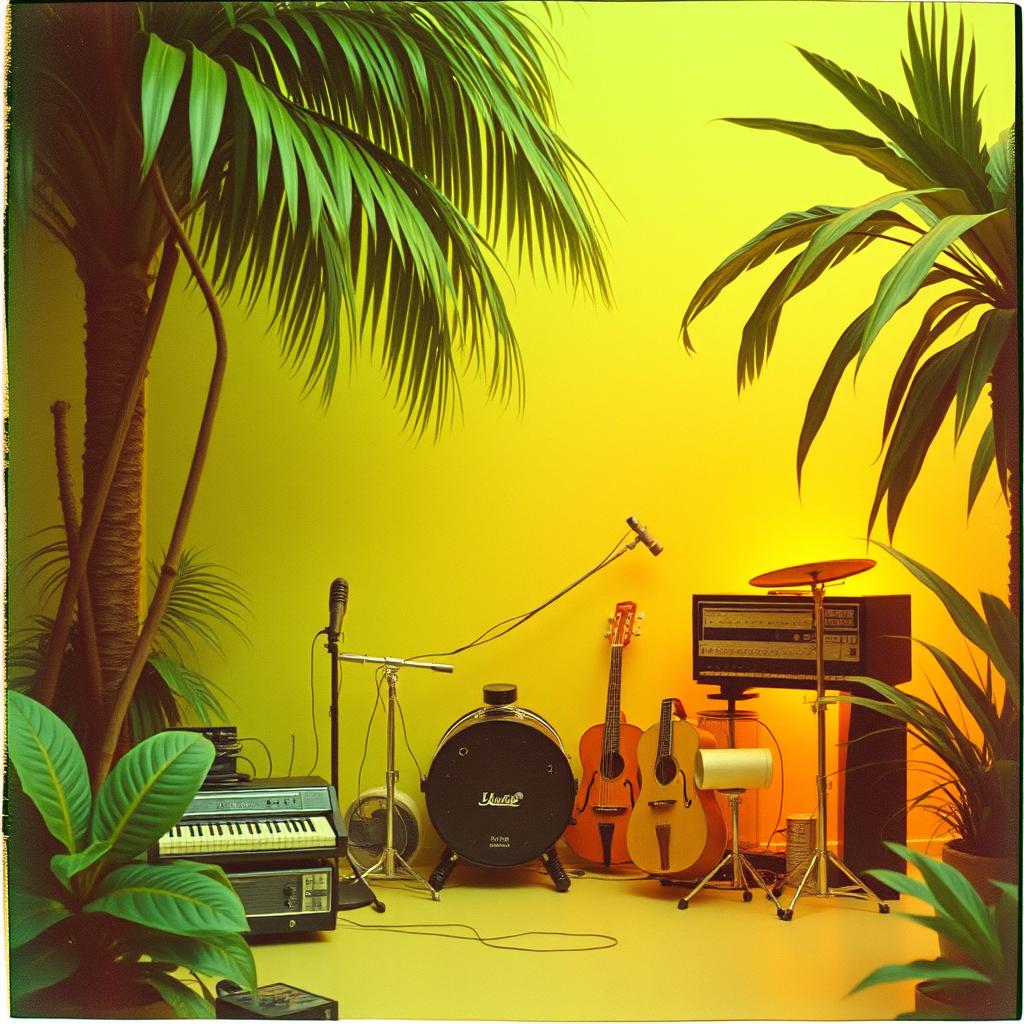
An extended Bolero-inspired composition in Bossa Nova style, structured for 5–6 minutes of gradual evolution, The music begins with a single snare ostinato and faint nylon guitar chords, whispering Brazilian onomatopoeias sung with operatic timbre, Each cycle adds one new layer—flute, clarinet, upright bass, vibraphone, brushed percussion, and airy operatic voices—repeating patterns with subtle variation, The intensity rises very slowly across minutes, unfolding as a hypnotic crescendo toward a grand climax where a full operatic chorus delivers scat syllables (“tum-tá-dum, ziriguidum, tchurururú”) with soaring vibrato over dense orchestration, After the peak, the arrangement reverses into a decrescendo: instruments and voices peel away layer by layer, returning to a solitary snare and one fading voice, dissolving into silence, The pacing must remain patient and steady to ensure a total duration between 5:30 and 6:30, ‑pop, ‑trap, ‑edm, ‑lo-fi, ‑punk, ‑disco, ‑reggae, ‑dubstep, ‑techno
4:23
Boleropera base
v4.5+
[Style: Orchestral Bolero, 3/4 time, tempo 60-72 BPM, Starts with soft snare drum, solo flute in C major, Female voice vocalizes "ahhs"/"oohs, " harmonizing, Instruments (clarinet, oboe, bassoon, horns, violas, trumpets) layer every 4 bars, building crescendo, At 3:00, explodes into Latin-jazz frenzy (72 BPM, E major) with trumpets, piano, congas, Ends with solo flute fading to silence, ][Notes: Key C major, modulate to E major at peak, return to C, Flute theme (G4-C5, e, g, G4-A4-G4-F4-E4-D4-C4), dotted quarter+eighths, Female voice E5-G5, soft to forte, "la-la" at peak, Add instruments incrementally: clarinet (bar 4), oboe (8), bassoon (12), horns (16), violas (20), trumpets (24), volume pianissimo to fortissimo, Peak: full orchestra, trumpets G4-D5, piano syncopated, congas rhythmic, Outro: flute G4, single snare tap, ][Structure: Intro (snare, flute, strings), Build (voice+instruments layer), Peak (3:00, Latin-jazz, full orchestra), Outro (flute G4, silence), ]
4:23
[Style of Music: The song starts as a hypnotic, orchestral Bolero, driven by a persistent, soft snare drum in 3/4 time, tempo rising from 60 to 72 BPM, A sensual flute introduces the theme in C major, joined by warm strings, A female voice vocalizes wordless "ahhs" and "oohs, " harmonizing with the melody, The texture builds gradually, adding instruments incrementally to intensify the crescendo, At the peak, it explodes into a vibrant Latin-jazz frenzy with bold trumpets, syncopated piano, and pulsating congas, It ends with a single, haunting flute note fading to silence, ]
3:13
A bold reimagining of Bolero fusing operatic grandeur with Brazilian Bossa Nova scat-onomatopeias, The piece begins with a restrained snare ostinato and gentle nylon-string guitar pulses, gradually adding flute, clarinet, and brushed percussion, A rich operatic voice enters not with lyrics, but with playful Brazilian vocal onomatopoeias—“tum-tá-dum, ziriguidum, tchurururú”—sung with classical projection and vibrato, transforming rhythmic scat into something majestic, As the repetitions grow denser, more voices join in canon-like layering, creating waves of operatic vocal textures over evolving orchestration, By the climax, the fusion of orchestra, guitar, percussion, and vocal onomatopoeias becomes overwhelming in scope, carrying the hypnotic progression of Ravel’s Bolero into a unique 5–6 minute journey where Brazil’s swing meets operatic intensity, ‑pop, ‑trap, ‑edm, ‑lo-fi, ‑punk, ‑disco, ‑reggae, ‑dubstep, ‑techno
5:08
An extended Bolero-inspired composition in Bossa Nova style, structured for 5–6 minutes of gradual evolution, The music begins with a single snare ostinato and faint nylon guitar chords, whispering Brazilian onomatopoeias sung with operatic timbre, Each cycle adds one new layer—flute, clarinet, upright bass, vibraphone, brushed percussion, and airy operatic voices—repeating patterns with subtle variation, The intensity rises very slowly across minutes, unfolding as a hypnotic crescendo toward a grand climax where a full operatic chorus delivers scat syllables (“tum-tá-dum, ziriguidum, tchurururú”) with soaring vibrato over dense orchestration, After the peak, the arrangement reverses into a decrescendo: instruments and voices peel away layer by layer, returning to a solitary snare and one fading voice, dissolving into silence, The pacing must remain patient and steady to ensure a total duration between 5:30 and 6:30, ‑pop, ‑trap, ‑edm, ‑lo-fi, ‑punk, ‑disco, ‑reggae, ‑dubstep, ‑techno
2:33
A gentle bossa nova track with smooth acoustic guitar strums and light percussion creating a relaxed, sunny vibe at around 140 BPM, Soft female vocals deliver with melodic warmth, incorporating Brazilian onomatopoeias like "shuá-shuá" for waves crashing and "plim-plim" for splashing water to evoke playful fear and discovery, The arrangement includes subtle flute accents for whimsy and a chill rhythm section with bongos and brushes, Verses narrate the child's wonder and trepidation, choruses capture the fleeing moments with rhythmic onomatopoeias, and bridges build emotional introspection, The sound is intimate and evocative, blending traditional bossa nova swing with childlike innocence for a nostalgic tale of first beach adventures
2:01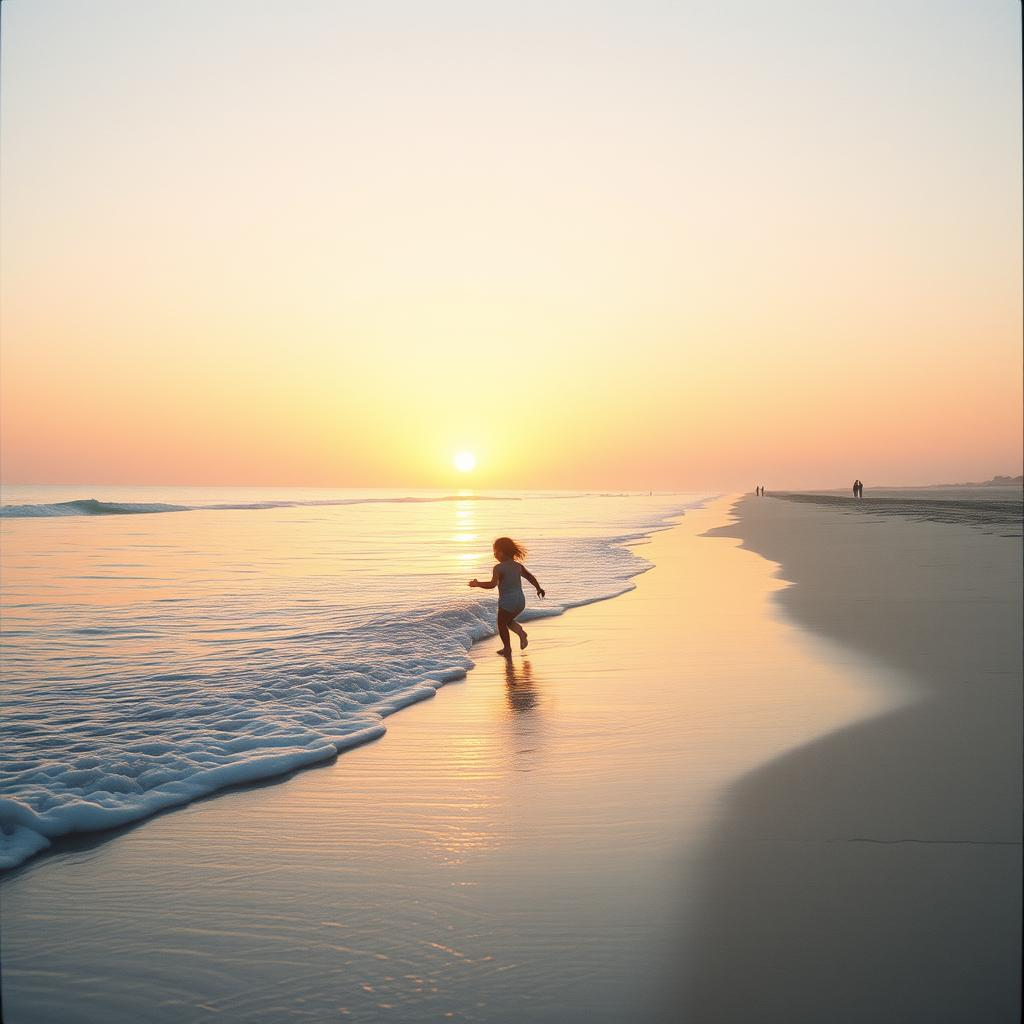
A gentle bossa nova track with smooth acoustic guitar strums and light percussion creating a relaxed, sunny vibe at around 140 BPM, Soft female vocals deliver with melodic warmth, incorporating Brazilian onomatopoeias like "shuá-shuá" for waves crashing and "plim-plim" for splashing water to evoke playful fear and discovery, The arrangement includes subtle flute accents for whimsy and a chill rhythm section with bongos and brushes, Verses narrate the child's wonder and trepidation, choruses capture the fleeing moments with rhythmic onomatopoeias, and bridges build emotional introspection, The sound is intimate and evocative, blending traditional bossa nova swing with childlike innocence for a nostalgic tale of first beach adventures
5:30
extended Bolero-inspired composition in Bossa Nova style, structured for 5–6 minutes of gradual evolution, The music begins with a single snare ostinato and faint strong bass chords, whispering Brazilian onomatopoeias sung with operatic timbre, Each cycle adds one new layer—flute, clarinet, upright bass, vibraphone, brushed percussion, and airy operatic voices—repeating patterns with subtle variation, The intensity rises very slowly across minutes, unfolding as a hypnotic crescendo toward a grand climax where a full operatic chorus delivers scat syllables (“tum-tá-dum, ziriguidum, tchurururú”) with soaring vibrato over dense orchestration, After the peak, the arrangement reverses into a decrescendo: instruments and voices peel away layer by layer, returning to a solitary snare and one fading voice, dissolving into silence, The pacing must remain patient and steady to ensure a total duration between 5:30 and 6:30, ‑trap, ‑pop, ‑edm, ‑funk, ‑disco, ‑rock, ‑electronic, ‑house
3:48
Orchestral Bolero / Latin Symphonic Fusion, Time signature 3/4, BPM 80, Orchestration: soft snare rolls, solo flute lead, clarinet, oboe, bassoon, violas, violins (arco + tremolo), cellos, contrabass, French horns, trumpets, trombones, tuba, orchestral piano, Latin congas, cymbal swells, Vocals: male + two female singers performing rhythmic Brazilian-style onomatopoeias (“tum-tá-dum, ” “ziriguidum, ” “tchurururú, ” “pa-ra-pa, ” “DAAAH”) in unison, thirds, and fifths, Arrangement: C major intro with flute theme, layer-add every 4 bars, motif doubling, modulation to E major at peak, full-orchestra Latin climax, violin/flute interlude, reprise, outro in C major with G4 sustained, Mix: multi-mic orchestral capture, wide stereo, hall reverb 2, 8 s, transparent compression 1, 5:1, linear-phase HPF 40 Hz, Sound: Dolby Atmos, Spatial Audio, analog console, tube warmth
2:44
Orchestral Bolero / Latin Symphonic Fusion, Time signature 3/4, BPM 80, Orchestration: soft snare rolls, solo flute lead, clarinet, oboe, bassoon, violas, violins (arco + tremolo), cellos, contrabass, French horns, trumpets, trombones, tuba, orchestral piano, Latin congas, cymbal swells, Vocals: male + two female singers performing rhythmic Brazilian-style onomatopoeias (“tum-tá-dum, ” “ziriguidum, ” “tchurururú, ” “pa-ra-pa, ” “DAAAH”) in unison, thirds, and fifths, Arrangement: C major intro with flute theme, layer-add every 4 bars, motif doubling, modulation to E major at peak, full-orchestra Latin climax, violin/flute interlude, reprise, outro in C major with G4 sustained, Mix: multi-mic orchestral capture, wide stereo, hall reverb 2, 8 s, transparent compression 1, 5:1, linear-phase HPF 40 Hz, Sound: Dolby Atmos, Spatial Audio, analog console, tube warmth
3:14
Orchestral Bolero / Latin Symphonic Fusion, Time signature 3/4, BPM 80, Orchestration: soft snare rolls, solo flute lead, clarinet, oboe, bassoon, violas, violins (arco + tremolo), cellos, contrabass, French horns, trumpets, trombones, tuba, orchestral piano, Latin congas, cymbal swells, Vocals: male + two female singers performing rhythmic Brazilian-style onomatopoeias (“tum-tá-dum, ” “ziriguidum, ” “tchurururú, ” “pa-ra-pa, ” “DAAAH”) in unison, thirds, and fifths, Arrangement: C major intro with flute theme, layer-add every 4 bars, motif doubling, modulation to E major at peak, full-orchestra Latin climax, violin/flute interlude, reprise, outro in C major with G4 sustained, Mix: multi-mic orchestral capture, wide stereo, hall reverb 2, 8 s, transparent compression 1, 5:1, linear-phase HPF 40 Hz, Sound: Dolby Atmos, Spatial Audio, analog console, tube warmth
4:47
The song is a melancholic indie folk piece in a minor key, featuring a female vocalist, The tempo is slow, creating a reflective mood, The instrumentation includes a clean electric guitar playing arpeggiated chords, a bass guitar providing a steady, understated rhythm, and a drum kit with a soft, brushed snare sound, The vocal melody is gentle and expressive, with a slightly breathy quality, Production elements include a subtle reverb on the vocals and guitar, giving the track an intimate and spacious feel, The song structure follows a verse-chorus pattern, with instrumental breaks that maintain the introspective atmosphere, The overall mix is balanced, allowing each instrument to be clearly heard without overpowering the vocals
2:10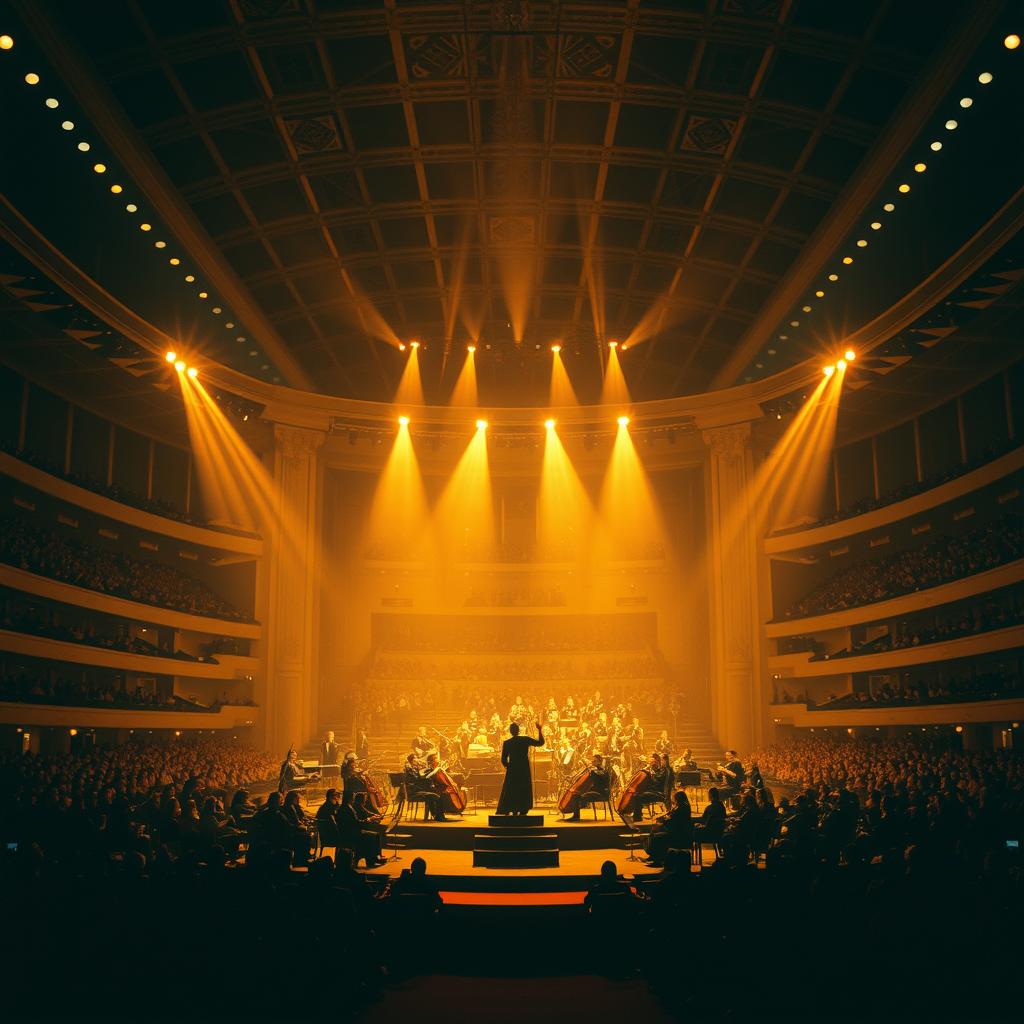
A lively, up-tempo instrumental piece with a strong swing feel, featuring a prominent clarinet melody, The instrumentation includes clarinet, pizzicato strings, a walking bass line, and a drum kit providing a shuffle rhythm, The clarinet plays the main melodic theme, characterized by its playful and agile phrasing, The string section provides harmonic and rhythmic accompaniment, often with a staccato or pizzicato articulation, The bass maintains a consistent walking pattern, driving the harmonic progression, The drums provide a light, swinging shuffle beat with occasional fills, The piece has a clear AABA structure, with the clarinet taking the lead throughout, The overall production is bright and clear, with a focus on the acoustic instruments, The tempo is moderately fast, contributing to the energetic and cheerful mood, There are no vocals present in this piece
5:00
An upbeat, cinematic orchestral pop piece featuring a prominent female operatic soprano lead, The arrangement is driven by a lively staccato string section, rhythmic orchestral percussion including timpani and snare, and bright woodwind flourishes, The tempo is a brisk 130 BPM in a 4/4 time signature, set in a bright major key, The vocal performance is characterized by agile coloratura passages, wide melodic leaps, and a clear, resonant tone with natural vibrato, The production is polished and expansive, utilizing a large hall reverb to create a grand, theatrical atmosphere, The structure follows a repetitive, rhythmic motif in the strings that supports the soaring vocal lines, punctuated by brass accents and occasional pizzicato transitions
2:33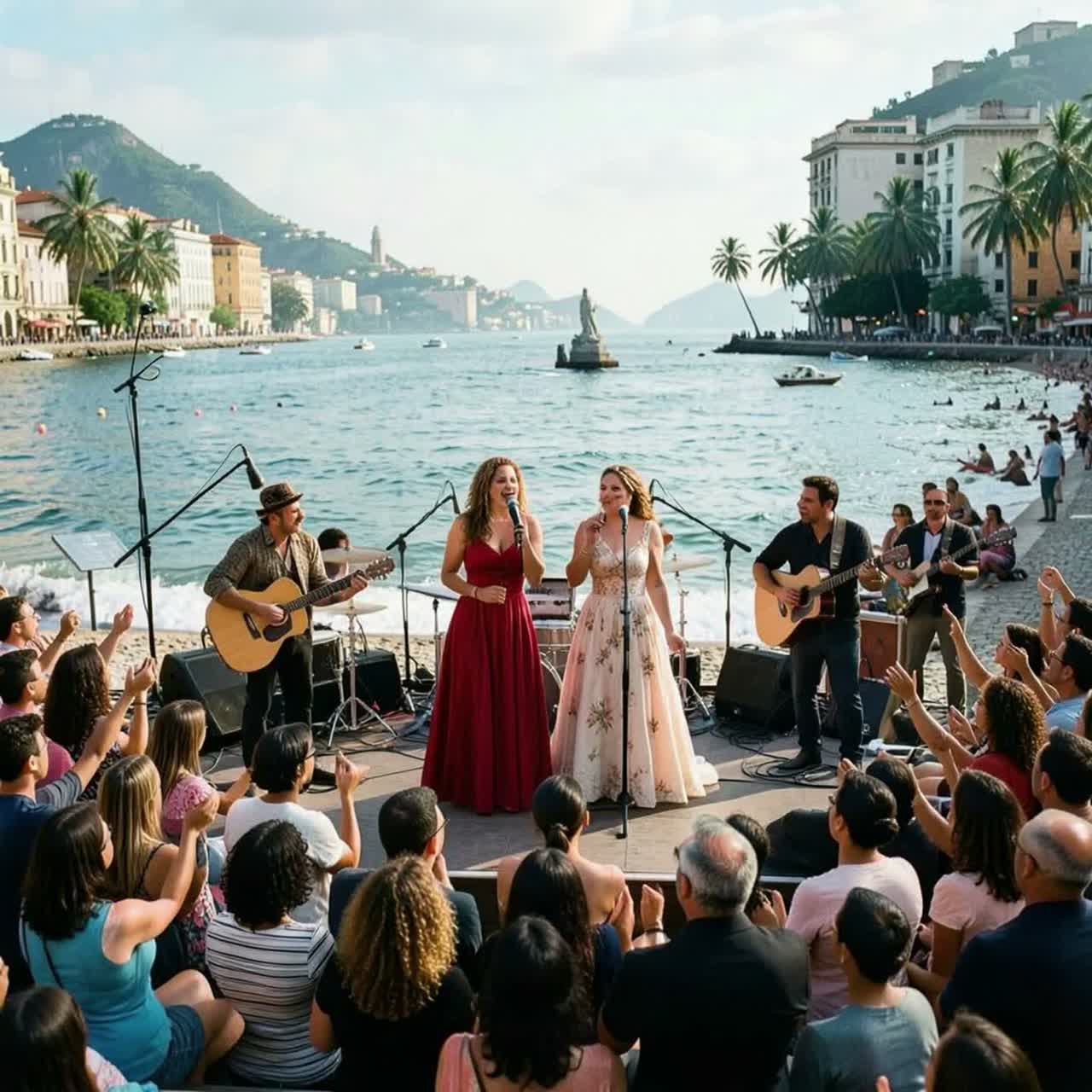
Bossa nova and samba fusion featuring scat vocals and Portuguese lyrics, The arrangement consists of nylon-string acoustic guitar playing syncopated bossa nova patterns, an upright bass, and a percussion section including shakers, agogô bells, and a surdo drum, A flute provides melodic counterpoint and short solo phrases, The vocal performance alternates between rhythmic scatting and melodic phrases, The tempo is 110 BPM in 4/4 time signature